WHO ARE THE ELECT?


bible tulip

        Pastor Don Fortner

Everyone who reads the Bible, even casually, knows that it teaches the doctrine of election. All God’s saints rejoice in that doctrine. Nothing sounds sweeter in the believer’s ear than the voice of the Son of God saying, “Ye have not chosen me, but I have chosen you.”

Yet, no mere man can open and read the Lamb’s Book of life. No mortal can ever know who the elect are until they are regenerated and called by God the Holy Spirit. However, each of us can prove our own selves. We can make our calling and election sure.

In 1 Thessalonians, the Apostle Paul, writing by Divine inspiration, tells us that he knew those men and women in the Church at Thessalonica were elect, chosen of God, and precious by five distinct marks of grace upon them. If you are one of God’s elect, these five marks are upon you. If I am one of the elect, these marks are upon me.

Who are God’s elect? Look into the Word of God, and you will see. Continue reading

Getting Past the TULIP

Tulip Nico

Michael S. Horton

“Like Christ’s redeeming work, then, faith is not merely offered but is actually conferred, by sheer grace and without any obligation to grant it.”

Just as Luther’s followers preferred to be called “evangelicals” but were labeled “Lutherans” by Rome, around 1558 Lutherans coined the term “Calvinist” for those who held Calvin’s view of the Supper over against both Zwingli and Luther. Despite self-chosen labels such as “evangelical” and “Reformed” (preferred because the aim was always to reform the catholic church rather than start a new one), “Calvinism” unfortunately stuck as a popular nickname.

No Central Dogma  Continue reading

“Abba” is not “Daddy”

father-holding-a-baby-hand-wallpaper_3715

Charismatics love to use the word “Daddy” when they refer to God. Praise the Lord, however,  for the Scriptures that reveal the truth to us.

Many years ago, while I was still attending a Charismatic church, a speaker on the day referred to God as his daddy. It irks me when people speak of God in such a derogatory way.  Who are we then, to bring God down to our level? It is shameful to say the least.)

We are called to show reverence, humility and honour to God.
Somehow “Daddy” just doesn’t cut it in that regard.

Jesus Himself never used such terminology and He knew God better than anyone else, being the Son of God.

Jesus said:

Father take this cup from me.
Our Father who art in heaven.
No one comes to the Father except through me.
Go into your closet and pray to your Father.

Our daddy who art in heaven? (It’s just not right)

We can, however, clearly see where overplayed humanism has again brought changes and altered meanings to what is written in Scripture. Continue reading

GOD’S SOVEREIGNTY DEFINED

550644_188893077915195_157526972_n

People who vehemently fight against the Doctrines of Grace,  have NO understanding of Scripture,  it is due to a lack of understanding and reading the Word of God. This is why there are so many , stupid , senseless ugly arguments about the doctrines of election on Social media. People are not taught the Bible at most churches today, hence the lack of and rejection of the Bible. People wake up and study the Word! Continue reading

The Wisdom of Proverbs

540415_230600840407234_1278694670_n

Proverbs 13:1-25

A wise son hears his father’s instruction, but a scoffer does not listen to rebuke. (2) From the fruit of his mouth a man eats what is good, but the desire of the treacherous is for violence. (3) Whoever guards his mouth preserves his life; he who opens wide his lips comes to ruin. (4) The soul of the sluggard craves and gets nothing, while the soul of the diligent is richly supplied. (5) The righteous hates falsehood, but the wicked brings shame and disgrace. (6) Righteousness guards him whose way is blameless, but sin overthrows the wicked. (7) One pretends to be rich, yet has nothing; another pretends to be poor, yet has great wealth. (8) The ransom of a man’s life is his wealth, but a poor man hears no threat. (9) The light of the righteous rejoices, but the lamp of the wicked will be put out. (10) By insolence comes nothing but strife, but with those who take advice is wisdom. (11) Wealth gained hastily will dwindle, but whoever gathers little by little will increase it. (12) Hope deferred makes the heart sick, but a desire fulfilled is a tree of life. (13) Whoever despises the word brings destruction on himself, but he who reveres the commandment will be rewarded. (14) The teaching of the wise is a fountain of life, that one may turn away from the snares of death. (15) Good sense wins favor, but the way of the treacherous is their ruin. (16) In everything the prudent acts with knowledge, but a fool flaunts his folly. (17) A wicked messenger falls into trouble, but a faithful envoy brings healing. (18) Poverty and disgrace come to him who ignores instruction, but whoever heeds reproof is honored. (19) A desire fulfilled is sweet to the soul, but to turn away from evil is an abomination to fools. (20) Whoever walks with the wise becomes wise, but the companion of fools will suffer harm. (21) Disaster pursues sinners, but the righteous are rewarded with good. (22) A good man leaves an inheritance to his children’s children, but the sinner’s wealth is laid up for the righteous. (23) The fallow ground of the poor would yield much food, but it is swept away through injustice. (24) Whoever spares the rod hates his son, but he who loves him is diligent to discipline him. (25) The righteous has enough to satisfy his appetite, but the belly of the wicked suffers want.  (ESV)

John Gills commentary  on some verses :  Continue reading

The Purpose of Christian Ministry

France-DSC5968

Horatius Bonar 

“The object of the Christian ministry is to convert sinners and to edify the body of Christ. No faithful minister can possibly rest short of this. Applause, fame, popularity, honor, wealth-all these are vain. If souls are not won, if saints are not matured, our ministry itself is vain.

The question, therefore, which each of us has to answer to his own conscience is, ‘Has it been the end of my ministry, has it been the desire of my heart to save the lost and guide the saved? Is this my aim in every sermon I preach, in every visit I pay? Is it under the influence of this feeling that I continually live and walk and speak? Is it for this I pray and toil and fast and weep? Is it for this I spend and am spent, counting it, next to the salvation of my own soul, my chiefest joy to be the instrument of saving others? Is it for this that I exist? To accomplish this would I gladly die? Have I seen the

pleasure of the Lord prospering in my hand? Have I seen souls converted under my ministry? Have God’s people found refreshment from my lips, and gone upon their way rejoicing, or have I seen no fruit of my labors, and yet content to remain unblest? Am I satisfied to preach, and yet not know of one saving impression made, one sinner awakened ?’

Nothing short of positive success can satisfy a true minister of Christ. His plans may proceed smoothly and his external machinery may work steadily, but without actual fruit in the saving of souls he counts all these as nothing. His feeling is: ‘My little children, of whom I travail in birth again until Christ be formed in you’ (Galatians 4:19). And it is this feeling which makes him successful”
– Horatius Bonar (1808-1889)
taken from: Words to Winners of Souls.

What stone Temple ? Jesus, is the True Temple !

39707087_files_forum

Jesus, the True Temple

By Kim Riddlebarger 

When Jesus declared of himself, “I tell you, something greater than the temple is here,” (Matthew 12:6) and when he told a Samaritan woman that he can give her “living water” (John 4:10-14), we are given a major clue that the authors of the New Testament have reinterpreted the pre-messianic understanding of God’s temple in the light of the coming of Jesus, Israel’s Messiah.

When we consider the fact that the temple occupies a major role in the witness of Israel’s prophets regarding God’s future eschatological blessing for the nation, and that this imagery points forward to person of Jesus, we are greatly aided in our understanding of the nature and character of the millennial age as a present reality.

We begin with the Old Testament expectation regarding the temple of the Lord.  Both Isaiah 2:2-4 and Micah 4:1-5, speak of God’s future blessing upon Israel in the last days, when God’s people will go up to mountain of the Lord, and to the temple, where God’s people will once again learn the ways of the Lord. Continue reading

Abhoring Error and Loving the Truth

21700_10151202424473440_863888957_n

By Horatius Bonar

“Our Reformers, following Scripture, abhorred error. They regarded it as sin, as in itself evil, and as the root of almost every evil. They loved truth, upheld it, sought to spread it. They eschewed error as poison; they prized truth as medicine, containing in it the world’s true health. They knew that men might have it and yet not use it, that they might abuse it, that they might ‘hold it in unrighteousness;’ but they loved it still, and refused to believe that any untruth, however beautiful, however well argued or well adorned, however recommended by authority, or antiquity, or genius, could be available for the revivification of collapsed prostrate Europe, for expelling the poison of ages from the veins of humanity, for bracing the constitution of the race, even apart from the great purpose of saving the lost, of gathering in the chosen of the Father, the purchased of the Son.

Our Reformers, working on the model of the Bible, laboured to set truth before the nations. They did not despise ‘head knowledge.’ They were careful that head knowledge should be true knowledge; and, in so far as it was so, they urged its widest propagation; undeterred by the thought which acts as a drag or damper on some, ‘What is the use of head knowledge without heart knowledge?’ They had confidence in truth, because it was of God, and because it was the representative of Him who is the wisdom and the truth of God. Continue reading

“Truth Is of Necessity Intolerant of Falsehood” — Charles Spurgeon

“Casting down arguments and every high thing that exalts itself against the knowledge of God, bringing every thought into captivity to the obedience of Christ” – 2 Corinthians 10:5

“Faith is a supernatural work wherever it is found and if we think that we can beget faith in ourselves or others by the use of the fleshy weapons of philosophy, we shall certainly be foiled! The Scriptures pressed home by the Holy Spirit are God’s power unto salvation—not men’s cogitations and imaginations! There is the Revealed Gospel—reject it at your own peril! There is Jehovah’s Revelation of Himself to men—receive it or be damned! This is the ground to go upon if we would speak as the oracles of God. God grant that proud thinkers may come upon this ground and become Believers.

Here we are boldly met by some who say, ‘We do not need this doctrine which you call the ‘knowledge of God.’ We already know of something better. We tell you that your Gospel, about which you make such a fuss, is outworn and done with.’ Treat it so, Sirs, and perish, if you will, but as for us, we will mourn day and night over your unbelief. You will surely destroy your souls in rejecting the Divine Testimony, but in so doing you will prove that Word to be true which says that the Gospel is a savor of death unto death as well as of life unto life. . .

. . .Christ’s gospel has not come into the world to be co-equal with other faiths and share a divided kingdom with differing creeds. False gods may stand face to face to each other in one Pantheon, and be at peace, for they are all false together, but when Christ comes, Dagon must go down, not even the stump of him must stand. Truth is of necessity intolerant of falsehood, love wars with hate, and justice battles with wrong.”

– Charles Spurgeon (1834-1892)
taken from: Forts Demolished and Prisoners Taken, Sermon No. 1473, May 11,


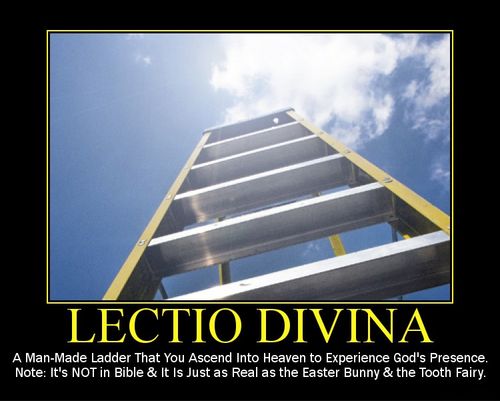
Lectio Divina in South Africa Among Dutch Reformed


Warning, Warning  !!  This false teaching has been rife in South Africa for a couple of years now.   A letter (see below)  Lectio Divina in South Africa Among Dutch Reformed – “Is there really a different way of reading the Word?” was sent to me by a dear friend via the Monthly News Letters from Lighthouse Trails website.  1 John 4:1 Beloved, do not believe every spirit, but test the spirits to see whether they are from God, for many false prophets have gone out into the world.

Hosea 4:6 My people are destroyed for lack of knowledge; because you have rejected knowledge, I reject you from being a priest to me. And since you have forgotten the law of your God, I also will forget your children.

We must be like the Bereans of old in Thessalonica:

Acts 17:11 Now these Jews were more noble than those in Thessalonica; they received the word with all eagerness, examining the Scriptures daily to see if these things were so.

Before reading the letter written by a South African to Lighthouse Trails, please take a couple of minutes to understand:

 What is Lectio Divina ? 

AnswerLectio Divina is Latin for “divine reading,” “spiritual reading,” or “holy reading” and represents a method of prayer and scriptural reading intended to promote communion with God and to provide special spiritual insights. The principles of lectio divina were expressed around the year A.D. 220 and practiced by Catholic monks, especially the monastic rules of Sts. Pachomius, Augustine, Basil, and Benedict. Continue reading

Three Things Which Will Not Be Found In Heaven – Revelation 21:4

Revelation 21:4 He will wipe away every tear from their eyes, and death shall be no more, neither shall there be mourning, nor crying, nor pain anymore, for the former things have passed away.”

Don Fortner

I cannot begin to describe the bliss and glory of our heavenly inheritance. Much that awaits us is yet unknown. And that which is revealed is seen here “through a glass darkly.” But here are three things, with which all who live upon the earth are very familiar, which shall not be found in heaven.

THERE WILL BE NO TEARS IN HEAVEN – “God shall wipe away all tears from their eyes; and there shall be no more death, neither sorrow, nor crying, neither shall there be any more pain: for the former things are passed away” (Rev. 21:4). Here we see much death, experience much sorrow, and feel much pain. And these things cause our eyes to swell and our cheeks to burn. But our God shall soon dry our eyes.In heaven, all that causes us to weep now, shall cease to be. Once we have left this world of sorrow, we shall never weep again! Continue reading

Psalms 35:1-28

Psalms  35:1-28 ESV

Psa 35:1  Of David. Contend, O LORD, with those who contend with me; fight against those who fight against me! (2) Take hold of shield and buckler and rise for my help! (3) Draw the spear and javelin against my pursuers! Say to my soul, “I am your salvation!” (4) Let them be put to shame and dishonor who seek after my life! Let them be turned back and disappointed who devise evil against me! (5) Let them be like chaff before the wind, with the angel of the LORD driving them away! (6) Let their way be dark and slippery, with the angel of the LORD pursuing them! (7) For without cause they hid their net for me; without cause they dug a pit for my life. (8) Let destruction come upon him when he does not know it! And let the net that he hid ensnare him; let him fall into it–to his destruction! (9) Then my soul will rejoice in the LORD, exulting in his salvation. (10) All my bones shall say, “O LORD, who is like you, delivering the poor from him who is too strong for him, the poor and needy from him who robs him?” (11) Malicious witnesses rise up; they ask me of things that I do not know. (12) They repay me evil for good; my soul is bereft. (13) But I, when they were sick– I wore sackcloth; I afflicted myself with fasting; I prayed with head bowed on my chest. (14) I went about as though I grieved for my friend or my brother; as one who laments his mother, I bowed down in mourning. (15) But at my stumbling they rejoiced and gathered; they gathered together against me; wretches whom I did not know tore at me without ceasing; (16) like profane mockers at a feast, they gnash at me with their teeth. (17) How long, O Lord, will you look on? Rescue me from their destruction, my precious life from the lions! (18) I will thank you in the great congregation; in the mighty throng I will praise you. (19) Let not those rejoice over me who are wrongfully my foes, and let not those wink the eye who hate me without cause. (20) For they do not speak peace, but against those who are quiet in the land they devise words of deceit. (21) They open wide their mouths against me; they say, “Aha, Aha! Our eyes have seen it!” (22) You have seen, O LORD; be not silent! O Lord, be not far from me! (23) Awake and rouse yourself for my vindication, for my cause, my God and my Lord! (24) Vindicate me, O LORD, my God, according to your righteousness, and let them not rejoice over me! (25) Let them not say in their hearts, “Aha, our heart’s desire!” Let them not say, “We have swallowed him up.” (26) Let them be put to shame and disappointed altogether who rejoice at my calamity! Let them be clothed with shame and dishonor who magnify themselves against me! (27) Let those who delight in my righteousness shout for joy and be glad and say evermore, “Great is the LORD, who delights in the welfare of his servant!” (28) Then my tongue shall tell of your righteousness and of your praise all the day long. Continue reading

A Present or Future Millennium?

by Kim Riddlebarger

Most American Evangelicals are firmly committed to the idea that an earthly millennial age will begin immediately after our Lord Jesus Christ’s Second Advent. Since premillennialism is so dominant in American church circles, many who encounter historic Protestantism for the first time are quite surprised when they discover that all of the Protestant Reformers and the entire Reformed and Lutheran traditions are amillennial. Amillennialism is that understanding of eschatology which sees the millennium not as a future golden age as does premillennialism (the age of the church triumphant), but instead as the present course of history between the First and Second Advent’s of our Lord (the age of the church militant). And indeed, I am sure that there are many readers who will express shock and disappointment upon learning of my own amillennial convictions. But I am convinced, however, that many readers simply do not understand the basic end-times scenario found in the New Testament. Part of the problem is that dispensational premillennial writers have completely dominated Christian media and publishing. There are literally hundreds of books, churches, and parachurch ministries all devoted to taking premillennialism and the “pretribulation” rapture idea to the masses. And so, I can only lament the fact that my own tradition has done so little to produce popular books introducing and defending amillennialism. It is my guess that many who read this article will have never heard the case for the classical position held by the church regarding the return of Christ and the millennial age.

Another problem encountered when examining this subject is that discussions of it often generate a great deal of heat but not very much light. One local prophecy pundit has quipped that the people in heaven with the lowest IQs will be amillennial. Hal “Late Great” Lindsey goes so far as to label amillennialism as “anti-Semitic,” demonic and heretical.1 It is not uncommon to hear prophecy teachers label amillennial Christians as “liberal” or to accuse them of not taking the Bible literally. The result of such diatribes is that American Christians cannot help but be prejudiced by such unfortunate comments, and many simply reject outright (without due consideration of the other side) the eschatology of the Reformers and classical Protestantism-an eschatology that is amazingly simple, biblical, and Christ centered. And so, if you should be in that camp, instead of simply turning me off at this point, please bear with me, hear my case, and then decide for yourself on the basis of Scripture. Continue reading

Entertainment and Style of Music Do Not Convert People

John MacArthur,

“It’s not the style of our music that gets people converted. It’s not because of the entertainment level that they enjoy that gets them converted. Sooner or later you’ve got to get down to confronting them with the message and my judgment is sooner is better than later. So what are we waiting for? Let’s just get them to hear the message, that’s how they’re going to be saved. Take out the preaching of sin, take out the preaching of hell, take out repentance, take out the cross, and then people will feel comfortable. That’s the new trend. Build an image of love, care, being nice and if everybody is nice, they like us, they might like Jesus. That is tragically not the case. Continue reading

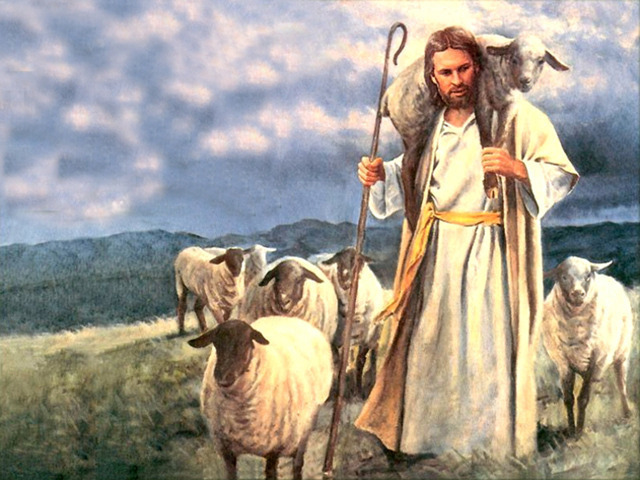
The Shepherd

John 10:11 I am the good shepherd. The good shepherd lays down his life for the sheep.

Luke 15:3-7 So he told them this parable: (4) “What man of you, having a hundred sheep, if he has lost one of them, does not leave the ninety-nine in the open country, and go after the one that is lost, until he finds it? (5) And when he has found it, he lays it on his shoulders, rejoicing. (6) And when he comes home, he calls together his friends and his neighbors, saying to them, ‘Rejoice with me, for I have found my sheep that was lost.’ (7) Just so, I tell you, there will be more joy in heaven over one sinner who repents than over ninety-nine righteous persons who need no repentance.

THEN a shepherd has at last overtaken his poor, silly, wandering sheep, he does not straightway fall to scolding or beating it for having cost him so much toil and trouble. No; but he observes that it is very weary, that it has torn itself among thorns, and cut itself among jagged rocks, and therefore he first tenderly sees to its wounds, and then bears it back to the fold in his own arms. Poor trembling sinner, the gospel has at length laid hold upon you; you cannot longer run into the paths of sin, grace has stopped your mad career, and made you tremble at the guilt of sin. Continue reading