“It’s not the style of our music that gets people converted. It’s not because of the entertainment level that they enjoy that gets them converted. Sooner or later you’ve got to get down to confronting them with the message and my judgment is sooner is better than later. So what are we waiting for? Let’s just get them to hear the message, that’s how they’re going to be saved. Take out the preaching of sin, take out the preaching of hell, take out repentance, take out the cross, and then people will feel comfortable. That’s the new trend. Build an image of love, care, being nice and if everybody is nice, they like us, they might like Jesus. That is tragically not the case. Continue reading
Lord Jesus
Will the Antichrist Be a Muslim Cleric?

By Dr. Paul M. Elliott
An Evangelical author predicts this. Does his theory stand up to Scripture?
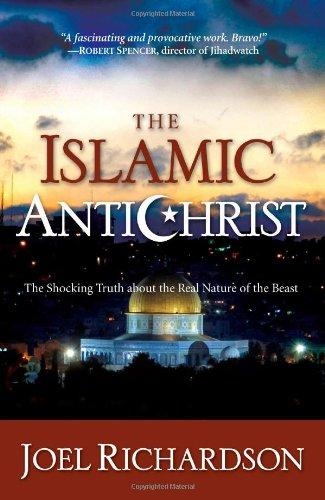
The Islamic Antichrist?

A recently-published book titled The Islamic Antichrist: The Shocking Truth About the Real Nature of the Beast (WorldNetDaily Books) predicts that the Biblical Antichrist will be a Muslim cleric named Imam al-Mahdi, the “Guided One”.
The book has been hailed as “ground-breaking” and “convincing” by such noted anti-Islamic spokemen as Dr. Tom White, Executive Director of Voice of the Martyrs; Robert Spencer, Director of Jihadwatch; and Dr. Ergun Caner, former president of Liberty Theological Seminary at Liberty University. (Caner was ousted in 2010 for making false statements about his upbringing as a Muslim, and is now Provost and Vice President of Academics at Arlington Baptist College in Texas.)
The Islamic Antichrist book is an updated version of Antichrist: Islam’s Awaited Messiah by the same author (Winepress Publishing, 2006). Although his picture appears on the dust jacket, the author says that he uses the pseudonym “Joel Richardson” because of fears of Muslim reprisal on himself and his family.
A Faulty Claim Continue reading
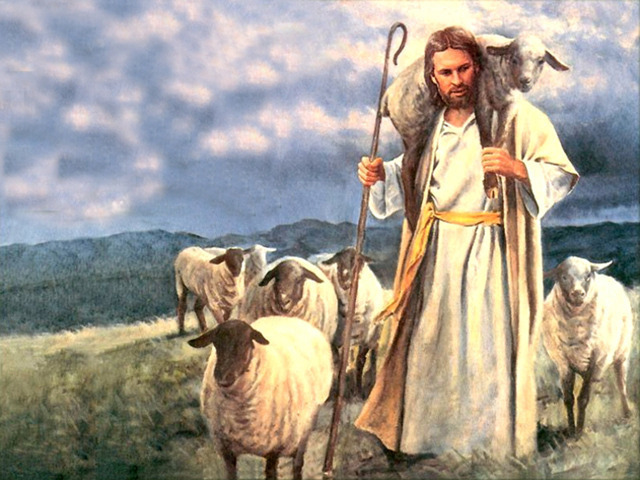
The Shepherd

John 10:11 I am the good shepherd. The good shepherd lays down his life for the sheep.
Luke 15:3-7 So he told them this parable: (4) “What man of you, having a hundred sheep, if he has lost one of them, does not leave the ninety-nine in the open country, and go after the one that is lost, until he finds it? (5) And when he has found it, he lays it on his shoulders, rejoicing. (6) And when he comes home, he calls together his friends and his neighbors, saying to them, ‘Rejoice with me, for I have found my sheep that was lost.’ (7) Just so, I tell you, there will be more joy in heaven over one sinner who repents than over ninety-nine righteous persons who need no repentance.
THEN a shepherd has at last overtaken his poor, silly, wandering sheep, he does not straightway fall to scolding or beating it for having cost him so much toil and trouble. No; but he observes that it is very weary, that it has torn itself among thorns, and cut itself among jagged rocks, and therefore he first tenderly sees to its wounds, and then bears it back to the fold in his own arms. Poor trembling sinner, the gospel has at length laid hold upon you; you cannot longer run into the paths of sin, grace has stopped your mad career, and made you tremble at the guilt of sin. Continue reading
But Spiritual Discernment is Wholly Lost Until we are Regenerated
by John Calvin
The following selection by John Calvin was taken from book 2, chapter 2 parts 18-21 ofThe Institutes of The Christian Religion, translated by by Henry Beveridge, Esq. A must read for all Christians who aspire to better understand the Bible’s teaching on man’s spiritual impotence prior to the regeneration of the Holy Spirit.
18. The limits of our understanding
We must now explain what the power of human reason is, in regard to the kingdom of God, and spiritual discernments which consists chiefly of three things – the knowledge of God, the knowledge of his paternal favour towards us, which constitutes our salvation, and the method of regulating of our conduct in accordance with the Divine Law. With regard to the former two, but more properly the second, men otherwise the most ingenious are blinder than moles. I deny not, indeed, that in the writings of philosophers we meet occasionally with shrewd and apposite remarks on the nature of God, though they invariably savour somewhat of giddy imagination. As observed above, the Lord has bestowed on them some slight perception of his Godhead that they might not plead ignorance as an excuse for their impiety, and has, at times, instigated them to deliver some truths, the confession of which should be their own condemnation. Still, though seeing, they saw not. Their discernment was not such as to direct them to the truth, far less to enable them to attain it, but resembled that of the bewildered traveller, who sees the flash of lightning glance far and wide for a moment, and then vanish into the darkness of the night, before he can advance a single step. So far is such assistance from enabling him to find the right path. Besides, how many monstrous falsehoods intermingle with those minute particles of truth scattered up and down in their writings as if by chance. In short, not one of them even made the least approach to that assurance of the divine favour, without which the mind of man must ever remain a mere chaos of confusion. To the great truths, What God is in himself, and what he is in relation to us, human reason makes not the least approach. (See Book 3 c. 2 sec. 14, 15, 16.) Continue reading
The Beatitudes and Christ
by Arthur Pink
The Beatitudes and Christ The Beatitudes and Christ Our meditations upon the Beatitudes would not be complete unless they turned our thoughts to the person of our blessed Lord. As we have endeavored to show, they describe the character and conduct of a Christian, and as Christian character is nothing more or less than being experimentally conformed to the image of God’s Son we must turn to Him for the perfect pattern. In the Lord Jesus Christ we find the brightest manifestations of the highest exemplifications of the different spiritual graces which are found, dimly reflected, in His followers. Not one or two but all of these perfections were displayed by Him, for Me is not only “lovely,” but “altogether lovely.” May the Holy Spirit who is here to glorify Him take now of the things of Christ and show them unto us.
First, “Blessed are the poor in spirit.” Most blessed is it to see how the Scriptures speak of Him who was rich becoming poor for our sakes, that we through His poverty might be rich. Great indeed was the poverty into which He entered. Born of parents who were poor in this world’s goods, He commenced His earthly life in a manger. During His youth and early manhood He toiled at the carpenter’s bench. After His public ministry had begun He declared that though the foxes had their holes and the birds of the air their nests, the Son of Man had not where to lay His head. If we trace out the Messianic utterances recorded in the Psalms by the Spirit of prophecy, we shall find that again and again He confessed to God His poverty of spirit: “I am poor and sorrowful” (Ps. 69:29); and, “Bow down thine ear, O Jehovah, for I am poor and needy” (Ps. 86:1); and again, “For I am poor and needy, and My heart is wounded within me” (Ps. 109:22). Continue reading
Should One Venerate a Dead Roman Catholic Nun?

Teresa of Calcutta may have followed another Jesus…..we must not exalt human beings like Teresa of Calcutta, and give to her a free pass to heaven because of a work done amongst the poor. She was a sinner who needed true shepherds to guide her to Jesus Christ as the sole and sufficient Saviour of the lost. I am told that John MacArthur had opportunity to present the glorious gospel of Jesus Christ to Teresa of Calcutta, and she rejected it. To accept Christ she would have had to renounce the whole Roman Catholic deception and the pride of her own spiritual works, and this she was unwilling to do.
For us the lessons are at least two: One: we need to ask ourselves whether we who know Christ as Lord and Saviour are as dedicated to his cause, and as sacrificial, as a Teresa of Calcutta who knew not the truth of God in Christ. And two: does not her sad ‘angst’ of soul cause us to see that we still have a work to do in witnessing to our Catholic neighbours? For clearly their bondage is great, and they need the light of Scripture to know God’s forgiveness and to have the assurance that their souls are safe in Christ.
Spiritual Gifts, Revelation and the Local Congregation
There are no new revelations. That is what we were taught in Bible College and our professors were correct. Then we encountered passages such as 1Corinthians 14:26 which taught that members of the assembled church could have a revelation and it caused some of us to question what we were taught. In this paper the conclusion we come to will depend on how we answer the apparent contradiction between our teachers’ claims and how we define the range of meaning of the term “revelation” (apokalupsis). Understanding this range of meaning will help us clear up much of the church’s confusion about spiritual gifts and provide support for our Bible College instructors. We shall begin by examining the claims of two groups: those who believe there are new revelations (such as those involved in the modern day apostles and prophets movement) and those who claim that the “revelatory” gifts ceased when the canon of scripture was completed around 100 A.D.
The first group includes those of the New Apostolic Reformation (NAR) and some other Charismatic and Pentecostal groups who argue that gifts of the Spirit exist today and are God’s means of giving revelation to the church, both individually and corporately. In practice this leads to individuals receiving “words of knowledge, words of wisdom, and prophecies” that contain supernatural information which is beyond Scripture and is not available through ordinary means. Such practices are outside the bounds of Scripture. Continue reading
On hearing God’s voice, the dangers of this way of thinking, and the sufficiency of Scripture
I have recently encountered some new Facebook friends who believe they must ‘hear the voice of God”. But the way they claim to “hear the voice” cannot be Biblical, it is so sad how people think to be a Christian they must have some sort of experience or they must hear voices in their heads. As John MacArthur says : “The only trustworthy source of divine truth, guidance for your own spiritual growth, and instruction for the church is the written Word of God. No emotional urging or mystical experience can trump the concrete, fundamental truth God has given us in Scripture. Does God still speak? Yes, but not in an audible voice. He speaks through the pages of Scripture.”
I found this Biblical explanation below by John MacArthur on hearing God’s voice, the dangers of this way of thinking, and the sufficiency of Scripture . It is my prayer that these friends will read the article that sets out the Biblical truth about this false teaching.
A Quote from a dear sisters website so4j :
Hearing Personal Words From God – is about The Problems with Hearing Personal Words From God, and How People Become False Prophets to Themselves.
Does God give NEW EXTRA BIBLICAL REVELATION to His people TODAY— speaking through MODERN DAY PROPHETS who give NEW WORDS from GOD? Answer: NO. The Canon of Scripture is Closed (Heb 1:1-2). In this Article Bob DeWaay talks about People who claim that they are Hearing Personal Words From God, when in reality they are actually becoming False Prophets to Themselves. Bob shows the reader how these Personal Words & Visions are NOT reliable— but God’s Word is 1000% Reliable. We need to be careful to NOT be deceived by Satan, and to NOT undermine God’s Word for our Personal Experiences & Special Revelations that we THINK are from God. (Heb 1:1-2) (End Quote)
This is worth a listen after reading the article below Does God Still Give Revelation? John MacArthur – Parts 1-6
On hearing God’s voice, the dangers of this way of thinking, and the sufficiency of Scripture
I’m going to guess that you either think you’ve heard God’s voice, or you know someone who says that they have heard God speak to them. This post, then, is for you and hopefully will help you filter through these ideas and/or experiences. I’m going to quote John MacArthur in a letter that we received a few days ago from Grace to You. Unless otherwise noted, all underlined emphases are John MacArthur’s, though I added the section headings. Continue reading
Rain and Grace: A Comparison.
Sermon Notes From Charles Spurgeon
These Notes from Spurgeon, famed for his expository preaching in England at Park St.
and Metropolitan Tabernacle Pulpit, are well worth studying, adapting, and making
your own, for any sound preacher of the Gospel. He is deservedly known
to this day as “the Prince of Preachers,” and is arguably the greatest
preacher who has lived since New Testament days!
Who hath divided a watercourse for the overflowing of waters, or a way for the lightning of thunder; To cause it to rain on the earth, where no man is; on the wilderness, wherein there is no man; To satisfy the desolate and waste ground; and to cause the bud of the tender herb to spring forth? Job 38:25-27
God challengeth man to compare with his Maker even in the one matter of the rain. Can he create it? Can he send a shower upon the desert, to water the lone herbs which else would perish in the burning heat? No, he would not even think of doing such a thing. That generous act cometh of the Lord alone.
We shall work out a parallel between grace and rain. Continue reading
Be Careful What You Read
By Ken Silva pastor-teacher on Jun 15, 2012
“Take heed what you hear” (Mark 4:24): the word “hear” obviously includes what is read, for that which is written or printed is addressed to the ears of our intellect. Few people today realize the urgent need for “taking heed” unto what they read. Just as the natural food which is eaten either helps or hinders the body—so the mental food we receive either benefits or injures the mind, and that, in turn, affects the heart. Just as it is harmful to listen to the rubbish and poison which is being served from the great majority of present-day pulpits—so it is exceedingly injurious to the soul to read most of what is now being published. “Take heed what you hear” and read! But let us seek to be more specific.
The only thing which is really worth calling “religion” is the life of God in the soul-commenced, carried on, and consummated solely by the Holy Spirit. Hence, whatever does not bear the impress of the Spirit’s unction, should be rejected by the Christian: for not only can unctionless messages do us no good—but what proceeds not from the Spirit—is of the flesh. Here, then, is the test which God’s children ought to apply unto all they hear, and here is the balance in which they should weigh all that they read. True, there are varying degrees of the Spirit’s unction. As it is in the natural so it is in the spiritual—there will be a varying amount of wetness from the faintest moisture of dew—as compared to the copious shower. As there had to be “salt” in every sacrifice (Lev. 2:13), so every discourse or article proceeding from the Spirit’s aid, is “seasoned with salt” (Colossians 4:6). But O how very much today is devoid of spiritual savor and flavor! Continue reading
Concerned To Discern
By Ken Silva pastor-teacher on Apr 17, 2012
Does anybody care?
A wonderful and horrible thing is committed in the land; The prophets prophesy falsely, and the priests bear rule by their means; and my people love to have it so: and what will ye do in the end thereof?Jeremiah 5:30-31, KJV
As could be agreed upon by most believers, Christians have the right, even the duty, to evaluate and hold accountable to Holy Scripture those who profess the evangelical faith but who, for reason of their manifest beliefs and behaviors, appear to be departing from the faith.[1]
Jude told his readers to “contend earnestly for the faith which was once for all delivered to the saints” (Jude 3). To shirk this responsibility means that believers are being disobedient to the faith once for all delivered. To all Christians, the Spirit gives His anointing which places upon them the responsibility to discern the “spirit of truth” from the “spirit of error” (1 John 4:6; 2:20-21, 27). To the congregation at Rome Paul wrote:
Now I beseech you, brethren, mark them which cause divisions and offences contrary to the doctrine which ye have learned; and avoid them. For they that are such serve not our Lord Jesus Christ, but their own belly; and by good words and fair speeches deceive the hearts of the simple. Romans 16:17-18 (Compare Philippians 3:17-19.) Continue reading