A Present or Future Millennium?

by Kim Riddlebarger

Most American Evangelicals are firmly committed to the idea that an earthly millennial age will begin immediately after our Lord Jesus Christ’s Second Advent. Since premillennialism is so dominant in American church circles, many who encounter historic Protestantism for the first time are quite surprised when they discover that all of the Protestant Reformers and the entire Reformed and Lutheran traditions are amillennial. Amillennialism is that understanding of eschatology which sees the millennium not as a future golden age as does premillennialism (the age of the church triumphant), but instead as the present course of history between the First and Second Advent’s of our Lord (the age of the church militant). And indeed, I am sure that there are many readers who will express shock and disappointment upon learning of my own amillennial convictions. But I am convinced, however, that many readers simply do not understand the basic end-times scenario found in the New Testament. Part of the problem is that dispensational premillennial writers have completely dominated Christian media and publishing. There are literally hundreds of books, churches, and parachurch ministries all devoted to taking premillennialism and the “pretribulation” rapture idea to the masses. And so, I can only lament the fact that my own tradition has done so little to produce popular books introducing and defending amillennialism. It is my guess that many who read this article will have never heard the case for the classical position held by the church regarding the return of Christ and the millennial age.

Another problem encountered when examining this subject is that discussions of it often generate a great deal of heat but not very much light. One local prophecy pundit has quipped that the people in heaven with the lowest IQs will be amillennial. Hal “Late Great” Lindsey goes so far as to label amillennialism as “anti-Semitic,” demonic and heretical.1 It is not uncommon to hear prophecy teachers label amillennial Christians as “liberal” or to accuse them of not taking the Bible literally. The result of such diatribes is that American Christians cannot help but be prejudiced by such unfortunate comments, and many simply reject outright (without due consideration of the other side) the eschatology of the Reformers and classical Protestantism-an eschatology that is amazingly simple, biblical, and Christ centered. And so, if you should be in that camp, instead of simply turning me off at this point, please bear with me, hear my case, and then decide for yourself on the basis of Scripture. Continue reading

BRIAN MCLAREN CROSSED THE ROAD…

Matthew 7:13 “Enter by the narrow gate. For the gate is wide and the way is easy that leads to destruction, and those who enter by it are many.

By Amy Spreeman

Post-modern liberalism in the Body of Christ is what gives the Emergent Church theology its wings. It helps you toss along the waves of uncertainty; question what God said is Truth.  A few weeks ago we reported the many ways in which the Church is emerging into a New kind of Spirituality, one that brings together people of all faiths.

Yesterday on 9-11, a brand new book was released by Brian McLaren: Why did Jesus, Moses, the Buddha, and Mohammed cross the road?  Is it a bad joke? Here’s Brian McLaren’s punchline:

My answer to the question Why did Jesus, Moses, the Buddha, and Mohammed cross the road is simply, this: To get to “the other.”

In other words, everything we know about Jesus, Moses, the Buddha, and Mohammad, tells us that—if they were here today—they would be trying to lead us into an encounter with the other where, instead of killing one another, and hating one another, we would discover one another.

As all God’s children… Continue reading

Does God So Love the World?

John 3:16 “For God so loved the world, that he gave his only Son, that whoever believes in him should not perish but have eternal life.

John MacArthur – Grace to You

Love is the best known but least understood of all God’s attributes. Almost everyone who believes in God these days sees Him as a God of love. I have even met agnostics who are quite certain that if God exists, He must be benevolent, compassionate, and loving.

All those things are infinitely true about God, of course, but not in the way most people think. Because of the influence of modern liberal theology, many suppose that God’s love and goodness ultimately nullify His righteousness, justice, and holy wrath. They envision God as a benign heavenly grandfather-tolerant, affable, lenient, permissive, devoid of any real displeasure over sin, who without consideration of His holiness will benignly pass over sin and accept people as they are.

Liberal thinking about God’s love also permeates much of evangelicalism today. We have lost the reality of God’s wrath. We have disregarded His hatred for sin. The God most evangelicals now describe is all-loving and not at all angry. We have forgotten that “It is a terrifying thing to fall into the hands of the living God” (Hebrews 10:31)We do not believe in that kind of God anymore. Continue reading

Destined to Reign ……. BUT WHERE ?

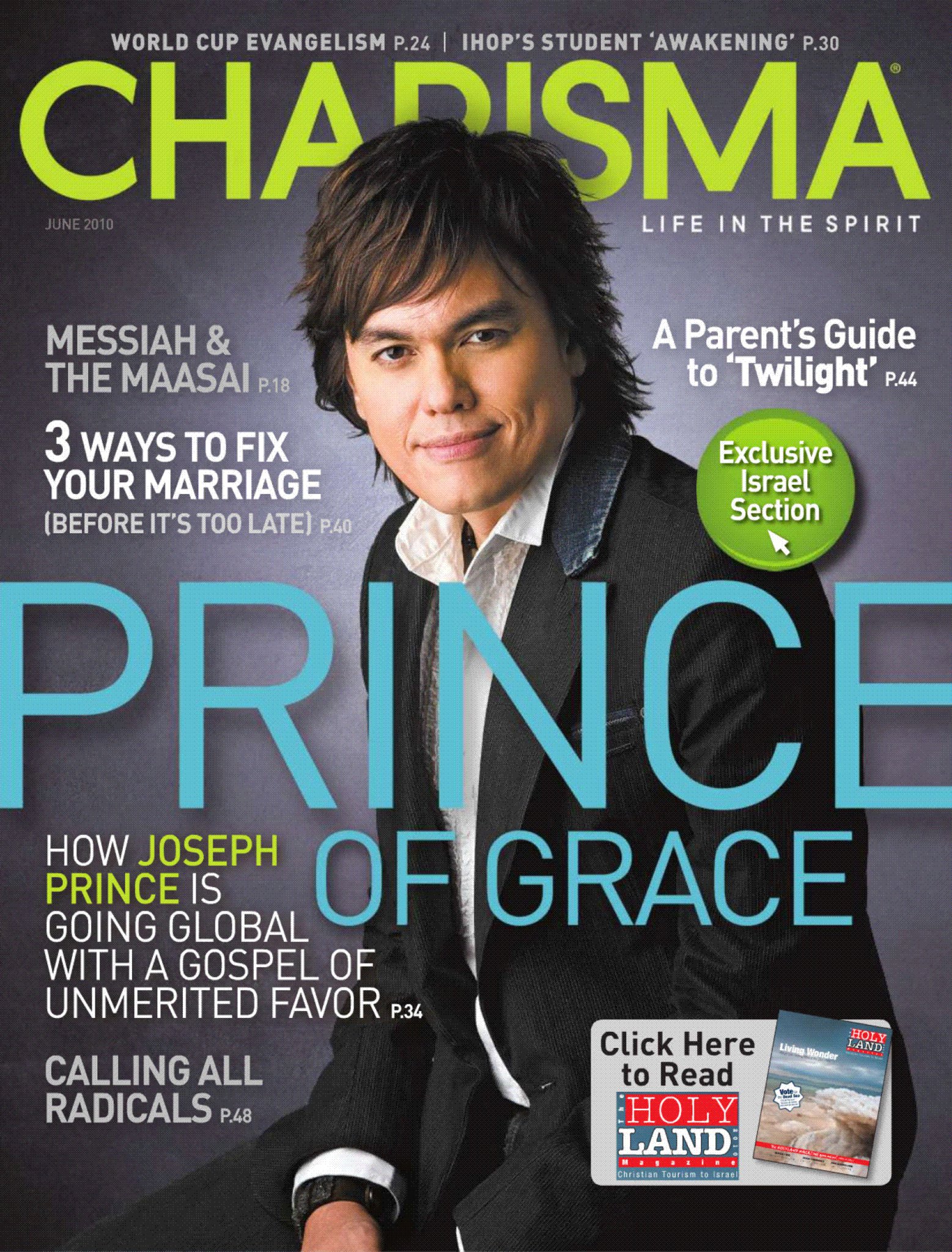
Beware !! of Joseph Prince (Televangelists ) Teachings !!! He also teaches Antinomianism (see below for more details)

Galatians 6: 7 “Do not be deceived: God is not mocked, for whatever one sows, that will he also reap. For the one who sows to his own flesh will from the flesh reap corruption, but the one who sows to the Spirit will from the Spirit reap eternal life.”

You may recognize his picture or have seen him on television. Joseph Prince is a “ MegaStar” televangelist of today.  He delivers his messages with “fire” and with “confidence.”  For the most part, he really captures a persons attention.  He appears to really know the Word of God like no others. He is very appealing.  His message is also very appealing. “Effortless Success and Grace” is the message that he preaches and boldly declares. It has been reported that his birth name was changed to Joseph Prince from Xenonamandar Jegahusiee Singh. Continue reading

New Apostolic Nuttiness.

Listen, read or watch the complete sermon below. Continue reading

POLL: Which three Books in the Bible are the most important to you? (Please choose 3)

Grant Swart

In a more light-hearted poll, we create a hypothetical situation which could leave some of us with a difficult choice. Although the scenario is totally fictional and most unlikely, it is nevertheless something to think about, and have a little fun with while watching how our fellow readers regard the various books of the Christian Bible.

For those who might have forgotten the numbers, there are a total of 66 books in the canon of the Christian Bible, 39 in the Old Testament and 27 in the New Testament. There are 1189 chapters in those 66 books containing 31,173 verses and approximately 773,692 words. The Roman Catholic and Eastern Orthodox versions of the Bible also contain a collection of uninspired books written during the “silent centuries” (400BC – 27AD). Christians reject the Apocrypha as having not been inspired by God and view all these books as secular uninspired history written by men without the aid of God. But, that is not the subject of this poll, as we covered the subject of the Apocrypha in another poll last year.

Our fantasy situation is this. You will be compelled by the ruling authorities to go to a foreign country for an extended period of time to pick pink striped bananas, count goats and to disprove reports which say that Elvis is selling second-hand pizzas in that country. There you will find yourself among a population consisting of mostly unbelievers and people who follow false religions. So, you will have to do some evangelizing and Bibles will be scarce. Continue reading

The Dangers of the Hebrew Roots Movement /The Sacred Name movement

The Hebrew Roots movement (HRM) is also known as  The Sacred Name movement.

I have noticed that the influence from this movement has become quite common on the social media networks like Facebook and blogs. It concerns me that not many people are aware of this heresy.  Again this is just another stream of false teachings that we need to keep our eyes and ears open for, it leads people into error and a false legalistic type religion. I will be combining two good article sources that I found, between the 2 the explanation becomes clear of what the dangers are.  This movement has also taken root in South Africa, like in the rest of the world.

 1 John 4 Beloved, do not believe every spirit, but test the spirits to see whether they are from God, for  many  false prophets  have gone out into the world. 
And  Jesus said : And many false prophets will arise and lead many astray.

From the articles I found :

The Sacred Name movement consists of those persons, groups, and assemblies who use the Hebrew names for God (i.e. Yahweh, Yahvah) and for Jesus (i.e. Yahshua) in the devotion and worship. They have characterized themselves as “the True Worshippers” eschewing the name ‘Christian’ as being of pagan origin. Continue reading

Mystica Scriptura

By on Feb 20, 2012

MYSTICA SCRIPTURA [(mis’-tik-uh) (skriptər’ uh)]

[Mystica:1275–1325; Middle English mystic; Latin mysticus; Greek mystikós, equivalent to mýst (ēs) an initiate into the mysteries + -ikos -ic; akin to myeîn to initiate, teach] [Scriptura: 1250–1300; Middle English and Latin scrīptūra writing. See script, -ure]

  1. The teaching that in Scripture all things are not plain, nor sufficient, nor alike clear unto all, but that God’s Word needs to be enhanced by extra-scriptural rituals, practices and ceremonies (i.e., meditative techniques, art, dance, drama, chanting, music, etc.) that induce and alter religious feelings in observers and participants. In an ecstatic state induced by these mechanical means, worshippers may experience altered states of consciousness that they believe will enable them to penetrate the spiritual mystery which surrounds humanity’s existence. Continue reading

Calminianism, Armalvinism, or somewhere in the middle?

Thank you Amy and Mike for permission to place this interesting discussion and it is edifying indeed !!!

Faith, Podcast | February 14, 2012 by

Today we are talking about something a lot of us don’t discuss much: Calvinism and Arminianism. These are two very different schools of thought in Christian theology, and at times those who are firmly planted in one camp are at odds with those who are staunchly firm in the other. There seems to be Scripture supporting both. Continue reading

A Disturbing form of Gnosticism Detected

I have detected a very disturbing trend the past couple of days on some Social media networks, Facebook and blogs.  The latest a trend being promoted in the form of an ambiguous question “Should we pray for False teachers” or “Are we to pray for  grievous wolves” . I just feel the need to share what I have learned from Scriptures  for whom are we to pray, as it seems this was also a problem prevalent in the church of Ephesus if we come to the understanding of the Apostle Paul’s writings in the 1 Timothy. It seems there were division caused by some Judiazers as they claimed that salvation was solely for law-keeping Jews or Gentile proselytes who kept the Mosaic ceremonies. ( Titus 3:10  As for a person who stirs up division, after warning him once and then twice, have nothing more to do with him, ) And a second a form of intellectual religious elitism, later called Gnosticism, was being taught at Ephesus .  Now the teachings subject on the Social media  group was on the Doctrines  of Election sadly it lead to the assumption we are not to pray for false teachers. Sadly it seems here in the group was also is a form of intellectual religious elitism  that is promoted by the group owner.

The Bible says nothing is new under the sun :

What has been is what will be, and what has been done is what will be done, and there is nothing new under the sun. Is there a thing of which it is said, “See, this is new”? It has been already in the ages before us.
(Ecclesiastes 1:9-10)

Less than 24 hours later an article appeared on my social media feeds from a blog with the heading Are We To Pray For Grievous Wolves?  Please read this article with prayer and discernment !

Continue reading

The War Against Reason

Excerpt from Reckless Faith: When the Church Loses Its Will to Discern, © 1994 by John MacArthur.

True discernment has suffered a horrible setback in the past few decades because reason itself has been under attack within the church. As Francis Schaeffer warned nearly thirty years ago in The God Who Is There, the church is following the irrationality of secular philosophy. Consequently, reckless faith has overrun the evangelical community. Many are discarding doctrine in favor of personal experience. Others say they are willing to disregard crucial biblical distinctives in order to achieve external unity among all professing Christians. True Christianity marked by intelligent, biblical faith seems to be declining even among the most conservative evangelicals.

Continue reading

Charismatic Chaos – John MacArthur

Charismatic Chaos Part 1

Continue reading

A Survey of Heresies

I have worked through all these sermons/teachings and have found them very informative and detailed. I am sharing here for you the reader and my hope is you gain better Biblical understanding about false teachings and their origins.

By Phil Johnson

It’s important for Christians to have a grasp of heresies that the church has battled over the centuries, because they often return with new clothing, and the unprepared Christian is likely to fall into these old pits. Phil does an excellent job of looking at some of the major heresies that are revisiting the church today: Socinianism, Arianism, Pelagianism, Gnosticism, and Judaizing. This is an excellent 6 part series that will shore up some weak points in the church today.

Continue reading

There’s Only 2 Religions

The Way to Heaven

Grace to You – John MacArthur

July 09, 1995

As we look together to the Word of God in this very special session together in the gospel of Matthew, our attention falls on two very important verses that are the high point of the great Sermon on the Mount. The Sermon on the Mount is recorded in chapter 5, 6 and 7 and the high point comes in chapter 7 verses 13 and 14. And these are the words with which our Lord brings that sermon to its climax. “Enter by the narrow gate, for the gate is wide and the way is broad that leads to destruction and many are those who enter by it, for the gate is small and the way is narrow that leads to life and few are those who find it.”

Continue reading

Altar Calls: Why you should refuse to “walk the aisle” (Part 1 of 3)

Grant Swart

In all likelihood, Charles Grandison Finney (1792-1875) can be attributed with being the “father” of the altar call. Years before our Lord effectually called me to repentance and salvation, I was once also duped into responding to an altar call which promised elaborate, but false, assurances of salvation. Wonderfully though, the Lord placed severe doubts in my mind at the time, regarding the possible validity of the ritual. What I regarded, back then as being my reliance on simple common sense, led me to distrust the embarrassing proceedings of the altar call I had responded to.

Needless to say, not much changed in my life as a result, in the days, weeks and months subsequent to that day. Great was and is the Grace of our Lord and true Saviour. I also now know that it was not only common sense which led me to doubt the honesty and biblical integrity of the altar call. I never responded to a single one again, praise be to the Lord. Continue reading