Coming in the Clouds

Article removed by Admin

Why I Am a Calvinist, Part 5 – 8 of 8

by Phil Johnson – Grace to You

Why I Am a Calvinist, Part 5

. . . and why every Christian is a Calvinist of sorts.

Part V: Why this issue is really a lot simpler than most people think

At the end of the previous post, I described how even in my Arminian days, I affirmed an awful lot of truth about the sovereignty of God: I would have affirmed with no reservation whatsoever that God is God; that He does all His good pleasure; that no one can make Him do otherwise; that He is in control and in charge no matter how much noise evildoers try to make; and not only is He in charge, He is working all things out for my good and His glory. As a matter of fact, my confidence in the promise of Romans 8:28 was what motivated my prayer life.

That’s Calvinism. If you believe those things, you have affirmed the heart of Calvinism, even if you call yourself an Arminian. Those are the basic truths of Calvinism, and if you already believe those things, you are functioning with Calvinist presuppositions.

In fact, the truths of Calvinism so much permeate the heart of the gospel message, that even if you think you are a committed and consistent proponent of Arminianism, if you truly affirm the gospel you have already conceded the principle points of Calvinism anyway.

Continue reading

Why I Am a Calvinist, Part 1-4 of 8

by Phil Johnson – Grace to You

Why I Am a Calvinist, Part 1

. . and why every Christian is a Calvinist of sorts.  


Part I: Is Arminianism damnable heresy?

I love the doctrines of grace and don’t shy away from the label “Calvinist.” I believe in the sovereignty of God. I’m convinced Scripture teaches that God is completely sovereign not only in salvation (effectually calling and granting faith to those whom He chooses); but also in every detail of the outworking of Providence. “Whom He predestined, these He also called; whom He called, these He also justified; and whom He justified, these He also glorified” (Romans 8:30). And He makes “all things work together for good to those who love God, [i.e.,] to those who are the called according to His purpose” (Romans 8:28). Quite simply, He “works all things according to the counsel of His will” (Ephesians 1:11).

That’s what people commonly mean when they speak of “Calvinism.” When I accept that label, I am not pledging allegiance to the man John Calvin. I am not affirming everything he taught, and I’m not condoning everything he did. I’m convinced Calvin was a godly man and one of the finest biblical expositors and theological minds ever, but he wasn’t always right. As a matter of fact, my own convictions are baptistic, so I am by no means one of Calvin’s devoted followers. In other words, when I accept the label “Calvinist,” it’s only for convenience’s sake. I’m not saying “I am of Calvin” in the Corinthian sense.

Continue reading

Let us not only think of ourselves

J.C. Ryle

Expository Thoughts on the Gospels: Luke volume 1,

[Carlisle, PA: Banner of Truth, 1986], 257. {Luke 8:16-21}

Let us not only think of ourselves. Let us also think of others. There are millions in the world who have no spiritual light at all. They are without God, without Christ, and without hope. (Eph. 2:12) Can we do nothing for them? There are thousands around us who are unconverted and dead in sins, seeing nothing and knowing nothing right. Can we do nothing for them?

Continue reading

Faith in the Storm

From a sermon by Charles Haddon Spurgeon entitled “Wrecked But Not Reckless,”

delivered June 9, 1872.

There are many young believers who get into such a squall, and do not know what to make of it. They say, “Why, had I been a child of God I could not have drifted into this frightful tempest.” How sayest thou so? Did not David go through it? He said, “All thy waves and thy billows have gone over me.” You must be very little acquainted with the history of the people of God if you think that they are strangers to these conflicts.

Continue reading

Mohamedanism, or to the fierce doctrines of Budha……

  C. H. Spurgeon

Delivered on Sabbath Morning, September 16, 1855,
At New Park Street Chapel, Southwark.

Storming the Battlements

“Go ye up upon her walls, and destroy; but make not a full end: take away her battlements; for they are not the Lord’s.”—Jeremiah 5:10.

E HAVE BEEN talking very freely during this last week of “glorious victories,” of “brilliant successes,” of “sieges,” and of “stormings.” We little know what the dread reality is of which we boast. Could our eyes once behold the storming of a city, the sacking of a town, the pillage of the soldiery, the barbarous deeds of fury, when the blood is up and long delay has maddened their souls; could we see the fields saturated with blood, and soaked with gore; could we spend one hour amongst the corpses and the dying; or if we could only let the din of battle, and the noise of the guns reach our ears, we should not so much rejoice, if we had anything of fellow feeling for others as well as for ourselves. The death of an enemy is to me a cause of regret as well as the death of a friend. Are not all my brethren? and doth not Jesus tell me so? Are we not all made of one flesh? and hath not God “made of one blood all nations that dwell upon the face of the earth?” Let us, then, when we hear of slaughtered enemies, and of thousands that have fallen, cease to rejoice in their death.

It would betray a spirit utterly inconsistent with the Christian religion, more akin to Mohamedanism, or to the fierce doctrines of Budha, but not in the least to be brought into compatibility with the truths of the gospel of the glorious God. And yet with all that, far be it from me to check any gladness which this nation may experience, now that it hopes that the incubus of war may at last be removed.

Continue reading

The Solitariness of God

The Solitariness of God

A. W. Pink

PERHAPS THE TITLE of the chapter is not sufficiently explicit to indicate its theme. This is partly because so few are accustomed to meditate upon the personal perfections of God. Comparatively few who occasionally read the Bible are aware of the awe-inspiring and worship-provoking grandeur of the divine character. That God is great in wisdom, wondrous in power, yet full of mercy is assumed by many as common knowledge. But to entertain anything approaching an adequate conception of His being, nature, and attributes, as revealed in the Scripture, is something which very few people in these degenerate times have done. God is solitary in His excellency.

“Who is like unto Thee, O LORD, among the gods? who is like Thee, glorious in holiness, fearful in praises, doing wonders?” (Ex 15:11).

Continue reading

Endurance: Look to The Future

John MacArthur – Strength for Today (Book)


“For momentary, light affliction is producing for us an eternal weight of glory far beyond all comparison.”
2 Corinthians 4:17

It is far easier to endure trials when we value the future over the present.

Afew years ago the popular Back to the Future movies dealt rather whimsically with the possibility of time travel, which always involved entering the future. The recurring theme was that with all the complications of tampering with the future, it was better to live in the present. Viewers could infer that, ultimately, it is not worth it to dwell a lot on the future. That is just the opposite of the apostle Paul’s attitude about the future. He dealt with the profound certainties of what awaits all believers in the life to come. For Paul, the value of the future was another important reason he could endure life’s sufferings and trials. The temporal pain for him and us is inconsequential compared to what awaits us in Heaven (Rom. 8:18).

Continue reading

There Is No Wisdom in Sin

A W Tozer –  Man – the dwelling place of God

There Is No Wisdom in Sin


THE WORLD HAS DIVIDED MEN into two classes, the stupid good people and the clever wicked ones.

This false classification runs through much of the literature of the last centuries from the classics to the comic strip, from Shakespeare’s Polomus, who furnished his son with a set of good but dull moral platitudes, to Capp’s Li’l Abner, who would never knowingly do a wrong act but who would rather fall on his head than on his feet because there is more feeling in his feet than in his head.

In the Holy Scriptures things are quite the opposite. There righteousness is always associated with wisdom and evil with folly. Whatever other factors may be present in an act of wrongdoing, folly is one that is never absent. To do a wrong act a man must for the moment think wrong; he must exercise bad judgment.

Continue reading

Not all questions deserve answers and not all questions are deserved

by Grant Swart

Titus 3:9 But avoid foolish questions, and genealogies, and contentions, and strivings about the law; for they are unprofitable and vain.

When the life of a person is effectually saved by the Grace of God, that salvation which is freely received by faith, it is inevitable that the person will perform differently in his life and good works will necessarily follow. The faithful servant knows that those good works are certainly not in order to earn or maintain salvation, but rather are a natural result of the work of the Holy Spirit in the life of the believer. Those who believe in God, must take care to consider their good works and also take the opportunities that come their way in the run of day to day living, to do those good works. Worthy and righteous good works will be because of the love in the heart of the saved believer. In this regard let us also consider the difference between a deserved question and a deserved answer, when even our best deeds are filthy. (Isaiah 64:6).

Continue reading

Rejoicing in the Lord

By Arthur W Pink

“Rejoice in the Lord always: and again I say, Rejoice” (Phil. 4:4). How many there are today who make an entirely wrong use of this Divine exhortation. Let any servant of God faithfully trace out the inward experiences of a Christian, let him describe the painful discoveries of “the plague of his own heart” (1 Kings 8:38), and his daily conflict with his corruptions and the corresponding effect this produces in the dampening of his spirits. Let him point out how well-suited to his case is the humiliating lament of Romans 7:24, and the light-hearted and empty-headed religionists of the day will promptly (we do not say “quote,” but) hurl at his head these words—“rejoice in the Lord always.” Those who thus misuse our text suppose that its happy strains condemn all gloominess in a Christian, and that it goes to show that one who is groaning is living far below his privileges. Continue reading

Differences between Semi-Pelagianism and Arminian Beliefs

by John Hendryx

[Semi-Pelagianism]
While not denying the necessity of Grace for salvation, Semi-Pelagianism maintains that the first steps towards the Christian life are ordinarily taken by the human will and that Grace supervened only later.

[Arminianism]
In contrast to semi-pelagianism, Arminianism teaches that the first steps of grace are taken by God. This teaching derives from the Remonstrance of 1610, a codification of the teachings of Jacob Arminius (1559-1609). Here are the 3rd and 4th articles of five to show how close it actually approaches traditional Calvinism, but still leaves man with a small island of righteousness, as it affirms that, unregenerate man can think spiritual thoughts, perceive the beauty and excellency of Christ, create affections for Him and thus turn in faith to Him, apart from the quickening of the Holy Spirit. They affirm that God’s grace is always resistible, therefore, when one believes, it is not grace which makes one to differ from another person, but naturally produced faith:

Continue reading

Rapture prediction: the effect on Christian Faith

Grant Swart

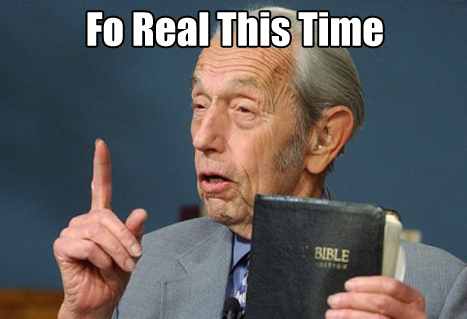
What follows here is another perspective on the possible effects, of giving heed to individuals like Harold Camping, could have on the perception of unbelievers regarding the Christian faith.

In South Africa, an advocate of Camping’s thinking, a certain Johannes Coetzee, received much radio and media coverage, in the days prior to 21 May 2011. In a society wherein a large majority of people are suffering from the devastating effects of the economic low and the falling away from true Faith, due to the ecumenical, secular and pagan beliefs of the majority of local society and government, the added result of Johannes Coetzee’s false predictions, has yet to be determined.

Taken from the article, James Boyett effectively states:

“What Harold Camping does, he gives people on the outside … it gives them ammunition to say ‘This man is a nut job; he’s a Christian. Christians are nut jobs. If you’re Christian, why should I listen to what you’re saying”

“My advice would be anytime you put too much faith in a fellow human, you’re going to be let down.”

“What Harold Camping said and what Harold Camping has taught is not the essence of Christianity.” Continue reading

Forbidden Lawsuits

John MacArthur – Grace to You

1 Corinthians 6:1-8


First Corinthians chapter 6, we’ll look at least the first eight verses of the chapter and get a running start on it. I’ve entitled the message simply “Forbidden Lawsuits.” You know, the Bible is a very practical book, and some of you maybe came this morning visiting us expecting to hear messages about God and Christ and messages in regard to the death of Jesus Christ or who He is or something like that, or maybe topical things; but what we’re doing this morning is just arriving at chapter 6 in 1 Corinthians and taking it as the Spirit of God has brought it to us. And the message this morning deals with lawsuits. Now, maybe you didn’t think the Bible got into practical things like suing other people; but it does; and it has a lot to say about it.

Continue reading

Harold Camping & May 21 Judgment Day – Update!

By Ken Silva pastor-teacher on May 20, 2011

But understand this, that in the last days there will come times of difficulty.

For people will be lovers of self, lovers of money, proud, arrogant, abusive, disobedient to their parents, ungrateful, unholy, heartless, unappeasable, slanderous, without self-control, brutal, not loving good, treacherous, reckless, swollen with conceit, lovers of pleasure rather than lovers of God, having the appearance of godliness, but denying its power.

Avoid such people. For among them are those who creep into households and capture weak women, burdened with sins and led astray by various passions, always learning and never able to arrive at a knowledge of the truth. (2 Timothy 3:1-7)

Continue reading