Wise as Serpents—Harmless as Doves

by Thomas Watson

“Be wise as serpents—and harmless as doves.” Matthew 10:16

The Apostle says, “All Scripture is given by inspiration,” 2 Timothy 3:16. God’s Word is compared to a lamp for its enlightening quality, Psalm 119:105, and to refined silver for its enriching quality, Psalm 12:6. Among other parts of Sacred Writ, this text is not the least: “Be wise as serpents—and harmless as doves.” This is the speech of our blessed Savior. His lips were a tree of life which fed many. His works were miracles. His words were oracles—and deserve to be engraved upon our hearts as with the point of a diamond. This is a golden sentence, “Be wise as serpents—and harmless as doves.” Our Lord Jesus, in this chapter:

first, gives His Apostles their commission;

second, He foretells their danger;

third, He gives them several instructions.

I. Christ gives His Apostles their COMMISSION. Before they went abroad to preach, Christ ordained them, verse 5, “These twelve, Jesus sent forth.” Those who exercise in the ministerial function must have a lawful call. Hebrews 5:4, “No one takes this honor upon himself; he must be called by God.” Christ gave not only the Apostles and Prophets a call to their office (who wereextraordinary ministers)—but even pastors and teachers, (who are ordinary ministers) Ephesians 4:11.

QUESTION. But if one has gifts, is this not sufficient to the ministerial office? Continue reading

Three Things Which Will Not Be Found In Heaven – Revelation 21:4

Revelation 21:4 He will wipe away every tear from their eyes, and death shall be no more, neither shall there be mourning, nor crying, nor pain anymore, for the former things have passed away.”

Don Fortner

I cannot begin to describe the bliss and glory of our heavenly inheritance. Much that awaits us is yet unknown. And that which is revealed is seen here “through a glass darkly.” But here are three things, with which all who live upon the earth are very familiar, which shall not be found in heaven.

THERE WILL BE NO TEARS IN HEAVEN – “God shall wipe away all tears from their eyes; and there shall be no more death, neither sorrow, nor crying, neither shall there be any more pain: for the former things are passed away” (Rev. 21:4). Here we see much death, experience much sorrow, and feel much pain. And these things cause our eyes to swell and our cheeks to burn. But our God shall soon dry our eyes.In heaven, all that causes us to weep now, shall cease to be. Once we have left this world of sorrow, we shall never weep again! Continue reading

False Doctrine Is Worse Than Division

J.C. Ryle  ~

When Peter came to Antioch, I opposed him to his face, because he was clearly in the wrong.  Before certain men  came from James, he used to eat with the Gentiles.  But when  they arrived, he began to draw back and separate himself  from the Gentiles because he was afraid of those who belonged to the circumcision group.

The other Jews joined him in his hypocrisy, so that by their   hypocrisy even Barnabas was led astray.  When I saw that they were not acting in line with the truth of the gospel, I  said to Peter in front of them all, “You are a Jew, yet you live like a Gentile and not like a Jew.  How is it, then,  that you force Gentiles to follow Jewish customs?”

We who are Jews by birth and not “Gentile sinners” know that a man is not justified by observing the law, but by faith in Jesus Christ.  So we, too, have put our faith in Christ Jesus  that we may be justified by faith in Christ and not by observing the law, because by observing the law no one will be justified.  Galatians 2:11-16

The second is,  “That to keep the truth of Christ in His Church is even more important than to keep peace.”  Continue reading

Psalms 35:1-28

Psalms  35:1-28 ESV

Psa 35:1  Of David. Contend, O LORD, with those who contend with me; fight against those who fight against me! (2) Take hold of shield and buckler and rise for my help! (3) Draw the spear and javelin against my pursuers! Say to my soul, “I am your salvation!” (4) Let them be put to shame and dishonor who seek after my life! Let them be turned back and disappointed who devise evil against me! (5) Let them be like chaff before the wind, with the angel of the LORD driving them away! (6) Let their way be dark and slippery, with the angel of the LORD pursuing them! (7) For without cause they hid their net for me; without cause they dug a pit for my life. (8) Let destruction come upon him when he does not know it! And let the net that he hid ensnare him; let him fall into it–to his destruction! (9) Then my soul will rejoice in the LORD, exulting in his salvation. (10) All my bones shall say, “O LORD, who is like you, delivering the poor from him who is too strong for him, the poor and needy from him who robs him?” (11) Malicious witnesses rise up; they ask me of things that I do not know. (12) They repay me evil for good; my soul is bereft. (13) But I, when they were sick– I wore sackcloth; I afflicted myself with fasting; I prayed with head bowed on my chest. (14) I went about as though I grieved for my friend or my brother; as one who laments his mother, I bowed down in mourning. (15) But at my stumbling they rejoiced and gathered; they gathered together against me; wretches whom I did not know tore at me without ceasing; (16) like profane mockers at a feast, they gnash at me with their teeth. (17) How long, O Lord, will you look on? Rescue me from their destruction, my precious life from the lions! (18) I will thank you in the great congregation; in the mighty throng I will praise you. (19) Let not those rejoice over me who are wrongfully my foes, and let not those wink the eye who hate me without cause. (20) For they do not speak peace, but against those who are quiet in the land they devise words of deceit. (21) They open wide their mouths against me; they say, “Aha, Aha! Our eyes have seen it!” (22) You have seen, O LORD; be not silent! O Lord, be not far from me! (23) Awake and rouse yourself for my vindication, for my cause, my God and my Lord! (24) Vindicate me, O LORD, my God, according to your righteousness, and let them not rejoice over me! (25) Let them not say in their hearts, “Aha, our heart’s desire!” Let them not say, “We have swallowed him up.” (26) Let them be put to shame and disappointed altogether who rejoice at my calamity! Let them be clothed with shame and dishonor who magnify themselves against me! (27) Let those who delight in my righteousness shout for joy and be glad and say evermore, “Great is the LORD, who delights in the welfare of his servant!” (28) Then my tongue shall tell of your righteousness and of your praise all the day long. Continue reading

The Sovereignty Of God In Salvation

John 10:28 I give them eternal life, and they will never perish, and no one will snatch them out of my hand.

A.W. PINK’S

THE
SOVEREIGNTY
OF GOD

CHAPTER FOUR

THE SOVEREIGNTY OF GOD IN SALVATION


“O the depths of the riches both of the wisdom and knowledge of God! how unsearchable are His judgments, and His ways past finding out” (Rom. 11:33).

“Salvation is of the LORD” (Jonah 2:9); but the Lord does not save all. Why not? He does save some; then if He saves some, why not others? Is it because they are too sinful and depraved? No; for the Apostle wrote, “This is a faithful saying, and worthy of all acceptation, that Christ Jesus came into the world to save sinners; of whom I am chief” (1 Tim. 1:15). Therefore, if God saved the “chief” of sinners, none are excluded because of their depravity. Why then does not God save all? Is it because some are too stony-hearted to be won? No; because it is written, that God will “take the stony heart out of their flesh, and will give them a heart of flesh” (Ezek. 11:19). Then is it because some are so stubborn, so intractable, so defiant that God is unable to woo them to Himself? Before we answer this question let us ask another; let us appeal to the experience of the Christian reader. Continue reading

The Important Leadership of Mothers

By  

on Sep 19, 2012 

My son, do not forget my teaching,
but let your heart keep my commandments,
for length of days and years of life
and peace they will add to you.Let not steadfast love and faithfulness forsake you;
bind them around your neck;
write them on the tablet of your heart.
So you will find favor and good success
in the sight of God and man. (Proverbs 3:1-4) Continue reading

The Shepherd

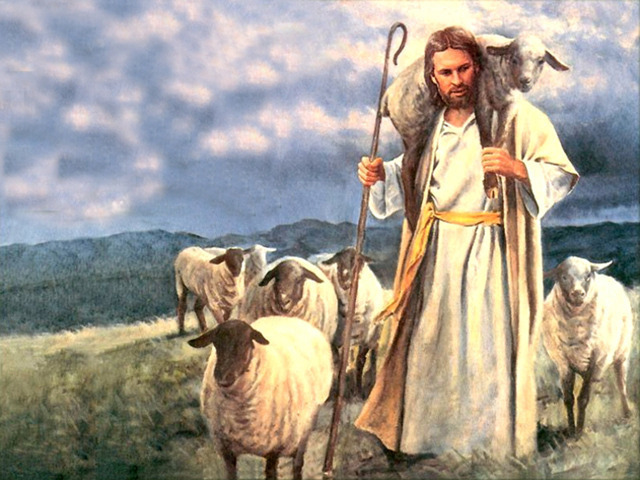
John 10:11 I am the good shepherd. The good shepherd lays down his life for the sheep.

Luke 15:3-7 So he told them this parable: (4) “What man of you, having a hundred sheep, if he has lost one of them, does not leave the ninety-nine in the open country, and go after the one that is lost, until he finds it? (5) And when he has found it, he lays it on his shoulders, rejoicing. (6) And when he comes home, he calls together his friends and his neighbors, saying to them, ‘Rejoice with me, for I have found my sheep that was lost.’ (7) Just so, I tell you, there will be more joy in heaven over one sinner who repents than over ninety-nine righteous persons who need no repentance.

THEN a shepherd has at last overtaken his poor, silly, wandering sheep, he does not straightway fall to scolding or beating it for having cost him so much toil and trouble. No; but he observes that it is very weary, that it has torn itself among thorns, and cut itself among jagged rocks, and therefore he first tenderly sees to its wounds, and then bears it back to the fold in his own arms. Poor trembling sinner, the gospel has at length laid hold upon you; you cannot longer run into the paths of sin, grace has stopped your mad career, and made you tremble at the guilt of sin. Continue reading

Remembering Biblical Principles For Christian Women in the Digital World

Young Women and Discretion

by Walter E. Isenhour

“The aged women likewise, that they be in behaviour as becometh holiness . . .  that they may teach the young women to be sober . . . to be discreet, chaste . . .  that the word of God be not blasphemed” —Titus 2:3-5.

In the fifth verse of the second chapter of Titus the aged women are to teach young women “to be discreet.” What does it mean to be discreet? It means to be prudent, judicious, cautious; wise in conduct and management, especially as to matters of propriety and self-control.

A young woman who measures up to these qualities in mind, heart, soul, spirit, and life certainly rises above the degrading principles of sin and wickedness. Her life is one of nobility, beauty, usefulness, and sublimity. She sets examples before her husband, children, and neighbors that areworthy of emulation. They know her life is hid with Christ in God. She possesses the Spirit of our Lord, and this enables her to discern between the evil and the good, and to avoid evil, error, and anything and all things that would mislead her. She likewise shields her husband and children from evils and errors, sins and wickedness, that they are environed with. At least she warns and cautions them against such, and shows them the higher, better, holier, and more beautiful and worthwhile things in life.

The discreet woman is possessed with the spirit and ability to adopt “means to an end,” and of course this means that which brings her and the family to a good end. She avoids the means that would injure her life, character, soul, and influence, and that would likewise injure her family and those about her. She must realize that what she takes into her life will have its effect, through the years—and will bring her to a good end, only as the means are good. She knows that the good will work out right, while the bad will work out wrong. She realizes that the good is a means to a good end, but the bad is a means to a bad end. Therefore she takes into her very soul the good and rejects the bad. She is discreet. Those who know her realize that she is a woman of great and commendable discretion. Continue reading

But Spiritual Discernment is Wholly Lost Until we are Regenerated

by John Calvin

The following selection by John Calvin was taken from book 2, chapter 2 parts 18-21 ofThe Institutes of The Christian Religion, translated by by Henry Beveridge, Esq. A must read for all Christians who aspire to better understand the Bible’s teaching on man’s spiritual impotence prior to the regeneration of the Holy Spirit.

18. The limits of our understanding

We must now explain what the power of human reason is, in regard to the kingdom of God, and spiritual discernments which consists chiefly of three things – the knowledge of God, the knowledge of his paternal favour towards us, which constitutes our salvation, and the method of regulating of our conduct in accordance with the Divine Law. With regard to the former two, but more properly the second, men otherwise the most ingenious are blinder than moles. I deny not, indeed, that in the writings of philosophers we meet occasionally with shrewd and apposite remarks on the nature of God, though they invariably savour somewhat of giddy imagination. As observed above, the Lord has bestowed on them some slight perception of his Godhead that they might not plead ignorance as an excuse for their impiety, and has, at times, instigated them to deliver some truths, the confession of which should be their own condemnation. Still, though seeing, they saw not. Their discernment was not such as to direct them to the truth, far less to enable them to attain it, but resembled that of the bewildered traveller, who sees the flash of lightning glance far and wide for a moment, and then vanish into the darkness of the night, before he can advance a single step. So far is such assistance from enabling him to find the right path. Besides, how many monstrous falsehoods intermingle with those minute particles of truth scattered up and down in their writings as if by chance. In short, not one of them even made the least approach to that assurance of the divine favour, without which the mind of man must ever remain a mere chaos of confusion. To the great truths, What God is in himself, and what he is in relation to us, human reason makes not the least approach. (See Book 3 c. 2 sec. 14, 15, 16.) Continue reading

Does God So Love the World?

John MacArthur – Grace to You

Love is the best known but least understood of all God’s attributes. Almost everyone who believes in God these days sees Him as a God of love. I have even met agnostics who are quite certain that if God exists, He must be benevolent, compassionate, and loving.

All those things are infinitely true about God, of course, but not in the way most people think. Because of the influence of modern liberal theology, many suppose that God’s love and goodness ultimately nullify His righteousness, justice, and holy wrath. They envision God as a benign heavenly grandfather-tolerant, affable, lenient, permissive, devoid of any real displeasure over sin, who without consideration of His holiness will benignly pass over sin and accept people as they are. Continue reading

Traditions of Men

Bible Q&A with John MacArthur from Grace to You 

See to it that no one takes you captive through philosophy and empty deception, according to the tradition of men, according to the elementary principles of the world, rather than according to Christ.  (Colossians 2: 2:8a)

Paul is concerned that those who have been transferred from Satan’s domain to Christ’s kingdom not become enslaved again. He voiced a similar concern in Galatians 5:1: “It was for freedom that Christ set us free; therefore keep standing firm and do not be subject again to a yoke of slavery.” He calls the Colossians to constant watchfulness because danger is near, as the present tense imperative form of blepo (see to it) indicates. The church constantly faces the danger of false teachers. Jesus says in Matthew 7:15, “Beware of the false prophets, who come to you in sheep’s clothing, but inwardly are ravenous wolves.” In Matthew 16:6 he warns, “Watch out and beware of the leaven of the Pharisees and Sadducees.”

The apostles also warned the church against false teachers. Paul cautioned the Ephesian elders that “after my departure savage wolves will come in among you, not sparing the flock; and from among your own selves men will arise, speaking perverse things, to draw away the disciples after them. Therefore be on the alert” (Acts 20:29–31). To the Philippians he wrote, “Beware of the dogs, beware of the evil workers, beware of the false circumcision” (Phil. 3:2). Peter also warns of the danger of false teachers. He writes in 2 Peter 3:1, “You therefore, beloved, knowing this beforehand, be on your guard lest, being carried away by the error of unprincipled men, you fall from your own steadfastness.” Continue reading

Does God So Love the World?

John 3:16 “For God so loved the world, that he gave his only Son, that whoever believes in him should not perish but have eternal life.

John MacArthur – Grace to You

Love is the best known but least understood of all God’s attributes. Almost everyone who believes in God these days sees Him as a God of love. I have even met agnostics who are quite certain that if God exists, He must be benevolent, compassionate, and loving.

All those things are infinitely true about God, of course, but not in the way most people think. Because of the influence of modern liberal theology, many suppose that God’s love and goodness ultimately nullify His righteousness, justice, and holy wrath. They envision God as a benign heavenly grandfather-tolerant, affable, lenient, permissive, devoid of any real displeasure over sin, who without consideration of His holiness will benignly pass over sin and accept people as they are.

Liberal thinking about God’s love also permeates much of evangelicalism today. We have lost the reality of God’s wrath. We have disregarded His hatred for sin. The God most evangelicals now describe is all-loving and not at all angry. We have forgotten that “It is a terrifying thing to fall into the hands of the living God” (Hebrews 10:31)We do not believe in that kind of God anymore. Continue reading

Rain and Grace: A Comparison.

Job 38:28 “Has the rain a father, or who has begotten the drops of dew?

Sermon Notes From Charles Spurgeon 

These Notes from Spurgeon, famed for his expository preaching in England at Park St.
and Metropolitan Tabernacle Pulpit, are well worth studying, adapting, and making
your own, for any sound preacher of the Gospel. He is deservedly known
to this day as “the Prince of Preachers,” and is arguably the greatest
preacher who has lived since New Testament days!

Who hath divided a watercourse for the overflowing of waters, or a way for the lightning of thunder; To cause it to rain on the earth, where no man is; on the wilderness, wherein there is no man; To satisfy the desolate and waste ground; and to cause the bud of the tender herb to spring forth? Job 38:25-27

God challengeth man to compare with his Maker even in the one matter of the rain. Can he create it? Can he send a shower upon the desert, to water the lone herbs which else would perish in the burning heat? No, he would not even think of doing such a thing. That generous act cometh of the Lord alone.

We shall work out a parallel between grace and rain. Continue reading

Of Dogs and Swine

John MacArthur

_Do not give what is holy to dogs, and do not throw your pearls before swine, or they will trample them under their feet, and turn and tear you to pieces._ – Matthew 7:6

It is clear from this verse that Jesus doesn’t exclude every kind of judgment—here He commands a specific type. But to obey His command, you need to know who the dogs and swine represent.

In biblical times dogs were largely half-wild mongrels that acted as scavengers. They were dirty, greedy, snarling, and often vicious and diseased. No responsible Jew would ever throw to a dog a piece of holy meat that had been consecrated as a sacrifice in the temple. Since no man was allowed to eat this meat, how much less should it have been thrown to wild, filthy dogs.

Swine were considered by the Jews to be the epitome of uncleanness. Like the scavenging dogs, those swine were greedy, vicious, and filthy. Continue reading

Can Believers Understand the Bible on Their Own?

Bible Q&A with John MacArthur from Grace to You

But know this first of all, that no prophecy of Scripture is a matter of one’s own interpretation, for no prophecy was ever made by an act of human will, but men moved by the Holy Spirit spoke from God. (1:20–21)

False prophets spoke of their own things, from their own ideas, but no true message from God ever arose from a human interpretation. Interpretation (epiluseōs) is an unfortunate translation because in English it indicates how one understands Scripture, whereas the Greek noun is a genitive, indicating source. Thus Peter is not referring to the explanation of the Scripture, but to its origin. The next statement in verse 21, for no prophecy was ever made by an act of human will, but (alla, “just the opposite,” “quite the contrary”) men moved by the Holy Spirit spoke from God, further Continue reading