“A Just God and a Saviour”

182914_10151649219609865_270462064_n

Nevertheless he saved them for his name’s sake, that he might make his mighty power to be known.
(Psalms 106:8 KJV)

“A Just God and a Saviour”

Isaiah 45:21

The Lord our God, the one true and living God of heaven and earth, is a God who freely and abundantly forgives sin through the blood of his Son, the Lord Jesus Christ. This is what God himself says, “I, even I, am he that blotteth out thy transgressions for mine own sake, and will not remember thy sins.


The People Forgiven

Who are the people to whom God will be merciful? They are not good, righteous, and morally upright men and women. So long as a man thinks that he is good and righteous, he will never obtain mercy from God. The characters to whom God says he will be merciful are sinners. The grace and lovingkindness of Jehovah is reserved for sinners. Until you see that your supposed righteousness is an abomination to God, you will never obtain the righteousness of God in Christ (Romans 10:1-4). Every promise of the gospel is made to sinners. — “The Son of man came not to call the righteous, but sinners to repentance (Matthew 11:28-30; Isaiah 1:4-6, 18; 55:6-7). The grace and mercy of God is for Continue reading

Discovering Christ in All the Scriptures – FREE EBOOK DOWNLOAD BY Don Fortner

fortner-christ-in-all-scriptures

FREE EBOOK DOWNLOAD BY Don Fortner – Discovering Christ in All the Scriptures

Summary

This is a Bible Survey type of book, with 67 chapters, an introduction and one on each book of the Bible. The main focus of this work is to see Christ in each book of Scripture. Pastor Fortner  does a good work in this book.

Chapter 1
GENESIS
The Book of Beginnings (Exert)

I want to take you through the entire Volume of Holy Scripture, book by book, show you the message of each book and its
relation to the whole Word of God. That will be the easy part. Here’s the tough part—I plan to cover one entire book in each
of the succeeding chapters. We will begin, of course, with Genesis, the book of beginnings.

What I hope to do in these studies is to give you a zoomlens view of Holy Scripture. I trust the Lord will use them to help you see clearly that the message of this Book, from beginning to end is Jesus Christ and him crucified, and that you will be able to grasp more fully the whole truth of God, the whole of Divine Revelation.

We read in Genesis 1:1-3—”In the beginning God created the heaven and the earth. And the earth was without form, and void; and darkness was upon the face of the deep. And the Spirit of God moved upon the face of the waters. And God
said, Let there be light: and there was light.” Continue reading

“Backbiters”

timthumb (1)

“Backbiters”

Romans 1:28-32

            I cannot imagine any crime against another person which is more cowardly, despicable, and inexcusable than slander and gossip – backbiting. While such behavior is common and expected among the reprobate, there is no place for it in the kingdom of God.

Many who look down their noses with scorn upon fornicators, adulterers, and whoremongers, are guilty of this hideous offense. They think nothing of slandering another, attempting to murder his character, indeed, they seize every opportunity to do so. If Romans 1:28-32 means anything, it means that such people do not know God. Their character is the character of the reprobate. Backbiting men and women are proud, envious, little rebels, people who cannot be trusted in any area of life.

They are the pawns of Satan, used to disrupt the peace of God’s church and kingdom. They always pretend to have a just cause. They always pretend that they have been offended, slighted, overlooked, or abused by the one slandered. Backbiters are always whiners. Continue reading

Reprobation Asserted

John 10

But ye believe not, because ye are not of my sheep, as I said unto you.
(John 10:26 KJV)

Listent to sermon

There was a division therefore again among the Jews for these sayings. And many of them said, He hath a devil, and is mad; why hear ye him? Others said, These are not the words of him that hath a devil. Can a devil open the eyes of the blind? And it was at Jerusalem the feast of the dedication, and it was winter. And Jesus walked in the temple in Solomon’s porch. Then came the Jews round about him, and said unto him, How long dost thou make us to doubt? If thou be the Christ, tell us plainly. Jesus answered them, I told you, and ye believed not: the works that I do in my Father’s name, they bear witness of me. But ye believe not, because ye are not of my sheep, as I said unto you. My sheep hear my voice, and I know them, and they follow me: And I give unto them eternal life; and they shall never perish, neither shall any man pluck them out of my hand. My Father, which gave them me, is greater than all; and no man is able to pluck them out of my Father’s hand.
(John 10:19-29 KJV) Continue reading

Discerning the Time

approaching-rain-storm-utah-images

Don Fortner

“And he said also to the people, When ye see a cloud rise out of the west, straightway ye say, There cometh a shower; and so it is. And when [ye see] the south wind blow, ye say, There will be heat; and it cometh to pass. [Ye] hypocrites, ye can discern the face of the sky and of the earth; but how is it that ye do not discern this time? Yea, and why even of yourselves judge ye not what is right? When thou goest with thine adversary to the magistrate, [as thou art] in the way, give diligence that thou mayest be delivered from him; lest he hale thee to the judge, and the judge deliver thee to the officer, and the officer cast thee into prison. I tell thee, thou shalt not depart thence, till thou hast paid the very last mite.” (Luke 12:54-59)

In these verses our Lord Jesus spoke specifically to the common people, the people who heard his doctrine and saw his miracles, those men and women who claimed to believe God, who claimed to be the people of God. Yet, he denounces them in exactly the same way as he had denounced the scribes, the Sadducees and the Pharisees, as hypocrites. Their teachers and preachers were blind men, but willfully blind as well. Both the religious leaders and the people who followed them, our Lord here denounces and rebukes as hypocrites. Continue reading

Believers – love and are beloved ~ Heirs, hope, holiness and heretics

579596_495127557207472_2017711680_n

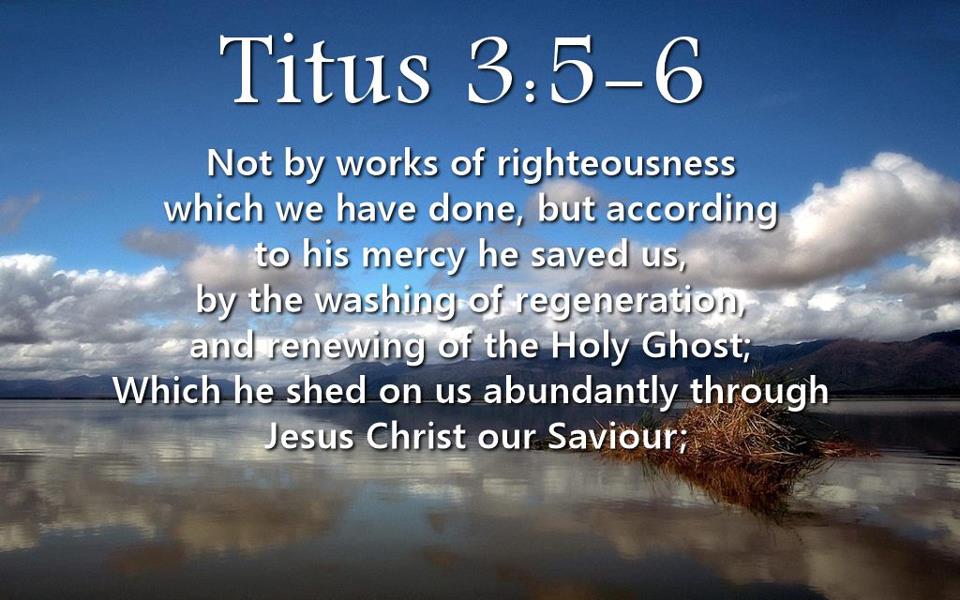
Put them in mind to be subject to principalities and powers, to obey magistrates, to be ready to every good work, To speak evil of no man, to be no brawlers, but gentle, shewing all meekness unto all men. For we ourselves also were sometimes foolish, disobedient, deceived, serving divers lusts and pleasures, living in malice and envy, hateful, and hating one another. But after that the kindness and love of God our Saviour toward man appeared, Not by works of righteousness which we have done, but according to his mercy he saved us, by the washing of regeneration, and renewing of the Holy Ghost; Which he shed on us abundantly through Jesus Christ our Saviour; That being justified by his grace, we should be made heirs according to the hope of eternal life. This is a faithful saying, and these things I will that thou affirm constantly, that they which have believed in God might be careful to maintain good works. These things are good and profitable unto men. But avoid foolish questions, and genealogies, and contentions, and strivings about the law; for they are unprofitable and vain. A man that is an heretick after the first and second admonition reject; Knowing that he that is such is subverted, and sinneth, being condemned of himself. When I shall send Artemas unto thee, or Tychicus, be diligent to come unto me to Nicopolis: for I have determined there to winter. Bring Zenas the lawyer and Apollos on their journey diligently, that nothing be wanting unto them. And let ours also learn to maintain good works for necessary uses, that they be not unfruitful. All that are with me salute thee. Greet them that love us in the faith. Grace be with you all. Amen. It was written to Titus, ordained the first bishop of the church of the Cretians, from Nicopolis of Macedonia. 
(Titus 3:1-15 KJV)

Believers – love and are beloved

Tit_3:1-6
Tit_3:1. From this and other passages, it is evident that the apostle thought it most important for believers to be law-abiding, peaceful people, submitting to those in authority. We are all by nature desirous of power and prone to have our own way. It takes much grace to be an obedient servant, a submissive wife or child, a peaceful citizen, especially if those in authority are opposed to Christ (Rom_13:1-3; 1Pe_2:13-18).

‘Be prepared and willing to do any upright and honorable work.’ Let our lives be characterized by goodness and gentleness to all (Rom_13:7-8). The grace of Christ is not limited to religious affiliations, but controls the whole of our lives.

Tit_3:2. The good minister of Christ will remind believers to ‘speak evil of no man.’ This is the method of maintaining peace and friendship with all men! A man’s name, reputation and character are tender topics and ought to be handled carefully!Contempt for others is usually followed by insult. A thought of contempt usually gives birth to words of unkindness. Continue reading

Eschatology by Ethos: Why the “Optimism” vs. “Pessimism” Paradigm Doesn’t Work

Pessimism-or-optimism-small

Why the “Optimism” vs. “Pessimism” Paradigm Doesn’t Work

Kim Riddlebarger

Anyone familiar with the in-house feud between Reformed postmillenarians and Reformed amillenarians knows that the debate between these two positions is often framed in terms of “optimistic” postmillenarians vs. “pessimistic” amillenarians. Despite the widespread use and apparent utility of these labels, I remain unconvinced that one can formulate a proper and biblical eschatology merely by identifying a position’s distinctive ethos and then choosing the most “optimistic” of the various options.

To avoid being labeled an “eschatological pessimist”—a negative label that postmillenarians have successfully pinned on dispensationalists—a number of Reformed amillenarians self-consciously identify themselves as “optimistic” amillenarians. In making this identification, the optimistic amillenarian attempts to co-opt the attractive rhetoric of cultural progress and transformation used by postmillenarians, while at the same time avoiding the serious exegetical problem associated with postmillennialism—a rather embarrassing shortage of biblical passages in the New Testament that teach such a view.

While I am “optimistic” about the kingdom of God and the progress it will make during the interadvental age (and would likely qualify to be an “optimistic” amillenarian), I’m not so sure an unqualified affirmation of “optimism” is the best way for Reformed amillenarians to respond to those who determine the soundness of one’s eschatological position using the optimism/pessimism paradigm. Here’s why.

No Christian who truly believes that the resurrection of Jesus Christ inaugurates the new creation and guarantees the final victory over Satan and his kingdom at the end of the age wants to be identified as a “pessimist.” No doubt, the New Testament is crystal clear about who wins in the end. God will save his elect, usher in the age to come, consummate his kingdom, raise the dead, judge the world, and make all things new. These truths are certainly reason enough to be optimistic about the eventual outcome of the present course of world history, especially when one considers what Jesus Christ did to secure our redemption from sin’s power and consequence. Through his death and resurrection, Jesus Christ removes the curse and defeats our greatest enemy, which is death. No small thing and a very good reason to be optimistic. Continue reading

He That Rolleth A Stone, It Will Return Upon Him….

he that roleth

″Whoso diggeth a pit shall fall therein: and he that rolleth a stone, it will return upon him. A lying tongue hateth those that are afflicted by it; and a flattering mouth worketh ruin. ″
(Proverbs 26:27-28 KJV)

Proverbs 26:27
Whoso diggeth a pit shall fall therein,…. That devises mischief against others, it shall come upon himself. The allusion is to the digging of pits for catching wild beasts, which are slightly covered with earth; and which sometimes the pursuers, through inadvertency, fall into themselves; the passage seems to be taken from Psa_7:15;

and he that rolleth a stone, it will return upon him; that rolls a stone up hill, if he does not take care, it will return back, and fall with great force upon himself; so the mischief which a wicked man labours hard at, as men do in digging a pit, or rolling a stone, in time rolls back upon themselves; the measure they mete out to others is measured to them. Jarchi makes mention of an “hagadah”, or exposition, which illustrates this passage, by the case of Abimelech; who slew threescore and ten persons on one stone, and was himself killed with a piece of a millstone cast upon him, Jdg_9:18; this may put in mind of the fable of Sisyphus (o), feigned in hell to roll a great stone to the top of a mountain, which presently falling down on his head, made his labour fruitless. Continue reading

Be Not Unequally Yoked Together

Be not unequally

2 Corinthians 6:11-18 KJV (11) O ye Corinthians, our mouth is open unto you, our heart is enlarged. (12) Ye are not straitened in us, but ye are straitened in your own bowels. (13) Now for a recompence in the same, (I speak as unto my children,) be ye also enlarged. (14) Be ye not unequally yoked together with unbelievers: for what fellowship hath righteousness with unrighteousness? and what communion hath light with darkness? (15) And what concord hath Christ with Belial? or what part hath he that believeth with an infidel? (16) And what agreement hath the temple of God with idols? for ye are the temple of the living God; as God hath said, I will dwell in them, and walk in them; and I will be their God, and they shall be my people. (17) Wherefore come out from among them, and be ye separate, saith the Lord, and touch not the unclean thing; and I will receive you, (18) And will be a Father unto you, and ye shall be my sons and daughters, saith the Lord Almighty.

Be not unequally yoked together Continue reading

The True Shepherd and the False

the-lord-is-my-shepherd-mike-ivey

Don Fortner

“Verily, verily, I say unto you, He that entereth not by the door into the sheepfold, but climbeth up some other way, the same is a thief and a robber. But he that entereth in by the door is the shepherd of the sheep. To him the porter openeth; and the sheep hear his voice: and he calleth his own sheep by name, and leadeth them out. And when he putteth forth his own sheep, he goeth before them, and the sheep follow him: for they know his voice. And a stranger will they not follow, but will flee from him: for they know not the voice of strangers. This parable spake Jesus unto them: but they understood not what things they were which he spake unto them.”

(John 10:1-6)

The Lord God made a promise to his church in Jeremiah 3:15. It is a promise made to those people to whom the God of heaven declares, “I am married unto you…I will bring you to Zion.” This is God’s promise to his people for all time. — “I will give you pastors according to mine heart, which shall feed you with knowledge and understanding.”

Those pastors who are the ascension gifts of Christ to his church, who are pastors after God’s own heart, feed the sheep with knowledge, gospel knowledge, Bible knowledge, the knowledge of God, of Christ, of grace, and knowledge of man in his fallen state and in his redeemed state. They constantly proclaim the Word of the Lord. They constantly call eternity bound sinners to Christ, and urge God’s people to “walk in the old paths, where is the good way” that you may “find rest for your souls.” They feed God’s people with understanding, too, understanding you, understanding the things of God, and understanding the times.

When the Lord God gives his church pastors after his own heart, who feed his sheep with knowledge and understanding, his sheep shall “fear no more, are no longer dismayed, neither shall they be lacking” (Jeremiah 23:4). Blessed are those people, blessed is that church to whom God gives such a pastor! Continue reading

THE GOSPEL ACCORDING TO ISAIAH

Isaiah 53

“OUR CONFESSION OF FAITH”

Isaiah 53

 The Works of Henry Mahan, Volume 1 containing The Gospel According To Isaiah, Chapter 20

Someone asked an old minister of the gospel, “Is your creed in print?” He replied, “Yes, you will find it all in Isaiah, Chapter 53.” Here is the gospel of God’s grace in one chapter.

(Vs. 1) “Our report” is our message of the love, mercy, and grace of God in Christ Jesus. It is the testimony of Cod concerning Jesus Christ (Rom. 1:1-4). There has never lived a prophet who did not mourn the fact that men would not believe the good news of grace.

“The arm of the Lord” is Christ Jesus, the wisdom and POWER of God; for the gospel of Christ is the power of Cod unto salvation (Rom. 1:16). Natural men do not see, hear, nor understand how God can be just and justifier, righteous and merciful to sinners through the obedience and death of Christ, the substitute (I Cor. 2:8-14). He must be revealed to the heart by the Holy Spirit.

(Vs. 2) “A tender plant”signifies His lowly entrance into the world. He came not full grown in the pomp and glory of men but as a tiny, frail, helpless infant, born of a woman (Gal. 4:4-5).

“A root out of a dry ground” reveals the condition of David’s house and the nation of Israel at this time. There was nothing left of the glory of David’s kingdom, only dry ground, its king an unlikely son of a carpenter (John 6:42).

“No form … no comeliness … no beauty.” In sending our Redeemer into the world, the Lord God rejected and refused all fleshly, human attraction. Anything that would attract the eye of the flesh or support of the natural mind was refused. “My kingdom is not of this world” (John 1:10-11). Continue reading

Suffer Persecution

941912_640891752592273_122437478_n

The holy scriptures

Yea, and all that will live godly in Christ Jesus shall suffer persecution. But evil men and seducers shall wax worse and worse, deceiving, and being deceived. But continue thou in the things which thou hast learned and hast been assured of, knowing of whom thou hast learned them; And that from a child thou hast known the holy scriptures, which are able to make thee wise unto salvation through faith which is in Christ Jesus. All scripture is given by inspiration of God, and is profitable for doctrine, for reproof, for correction, for instruction in righteousness: That the man of God may be perfect, throughly furnished unto all good works.
(2 Timothy 3:12-17 KJV)

2Ti_3:12. In the preceding verse Paul speaks of the suffering, afflictions, and persecutions he had endured for preaching the gospel of Jesus Christ; and he adds, ‘All that will live godly in Christ Jesus shall suffer persecution.’ There are no exceptions.

Satan, the world, and especially unsaved religionists hate the gospel of free grace and justification by faith alone. Going about to establish a righteousness of their own, they are opposed to the imputed righteousness of Christ and count as their enemies all who preach and believe it. Those who wish to be exempt from persecution must necessarily denounce Christ (Joh_15:18-21). All believers shall not be martyrs; but it is absolutely unavoidable that as soon as a true knowledge of grace and a zeal for the person and work of Christ is manifested by a believer, it kindles the rage of Satan and ungodly men. By persecution, slander, murmuring, or some other method, trial will come! Continue reading

Needful Exhortations and Warnings

one-more-joint

By Don Fortner  (Selected Commentary on selected books, Chapter 16) 

Needful Exhortations and Warnings

Therefore all things whatsoever ye would that men should do to you, do ye even so to them: for this is the law and the prophets.”

           (Mat_7:1-29)

In this chapter, our Lord Jesus concludes his Sermon on the Mount. Throughout this sermon (Matthew 5-7), our Savior draws a clear, unmistakable distinction between true and false religion, between outward ceremonialism and inward godliness, between religious hypocrisy and true spirituality. In chapter 5 he showed us the character of his people and the necessity of holiness. In chapter 6 he showed us the character of true worship and the necessity of faith. Here in chapter 7 he brings his sermon home to all who heard him (and to all who read his words today) by making general, but pointed, exhortations and warnings, that we all need to be reminded of continually. May God the Holy Spirit, who has preserved these exhortations and warnings for us upon the pages of Holy Scripture, graciously apply them to our hearts.

Kindness

This chapter opens with a gracious exhortation to kindness (Mat_7:1-5).

“Judge not, that ye be not judged. For with what judgment ye judge, ye shall be judged: and with what measure ye mete, it shall be measured to you again. And why beholdest thou the mote that is in thy brother’s eye, but considerest not the beam that is in thine own eye? Or how wilt thou say to thy brother, Let me pull out the mote out of thine eye; and, behold, a beam is in thine own eye? Thou hypocrite, first cast out the beam out of thine own eye; and then shalt thou see clearly to cast out the mote out of thy brother’s eye.”

I do not know of any text in all the Bible that has been more twisted, abused, and misapplied by men than Mat_7:1. Those who despise absolute values, absolute standards of right and wrong, absolute doctrinal truths and dogmatism, even if they cannot quote any other text in the Bible, recite these words to condemn as divisive bigots all who press upon them the doctrinal and spiritual demands of Holy Scripture. With sweet sounding piety and complete seriousness they will look you right in the eye and say, “Judge not, that ye be not judged.” Continue reading

The Holy Spirit and the Hearing of Faith

945589_10151498341359865_810922571_n

Don Fortner 

This only would I learn of you, Received ye the Spirit by the works of the law, or by the hearing of faith?”                                                                                                                   (Galatians 3:2)

This only would I learn of you.” ― Here Paul strikes at the heart of the Galatians’ great error, and demonstrates that the gift of the Holy Spirit, that is to say grace, salvation, eternal life, and all the blessings of the covenant of grace of which the gift of the Spirit is the seal and assurance (Gal. 3:13-14; Eph. 1:13-14), come to chosen, redeemed sinners only by the hearing of faith, not by the works of the law.

Received ye the Spirit by the works of the law, or by the hearing of faith?” ― John Gill asserts, “This question supposes they had received the Spirit; that is, the Spirit of God, as a spirit of wisdom and knowledge in the revelation of Christ; as a spirit of regeneration and sanctification; as a spirit of faith and adoption; and as the earnest, seal, and pledge of their future glory.”

True Believers Continue reading

The Antichrist

Man of sin anti christs

By Kim Riddlebarger

Perhaps no subject broached by contemporary Bible prophecy teachers engenders more speculation and less sound Biblical exegesis than does the subject of Antichrist. This is certainly due to the mysterious nature of the subject itself, as well as to the fact that no other aspect of Bible prophecy lends itself so nicely to speculation regarding the identification of one specific individual who will become the very personification of evil and the archenemy of Jesus Christ and his gospel.

“Pin the tail” on the Antichrist is not merely an evangelical fascination. Indeed, such speculation has gone on almost from the beginning of Christianity. Irenaeus (130-200) argued that Antichrist would be a Jewish born, satanically inspired, usurper of God’s true glory, who would appear in the Jerusalem temple in connection with an end-times great apostasy. (1) The Protestant Reformers, of course, universally identified the papacy with the Antichrist, the Apology of the Augsburg Confession (1540) stating that “the papacy will also be a part of the kingdom of Antichrist if it maintains that human rites justify (XV.18).” The Westminster Confession (1647) contends that the Pope is “that antichrist, that man of sin, and son of perdition, that exalteth himself in the church against Christ, and all that is called God (XXV.6).” Rome, not to be outdone, has returned the favor, contending that antichristic Protestant “heresies have swept down from the North, where Calvin, Wycliffe, Luther and legions of Protestants are ravaging the flock of Christ.” (2)

But there is no doubt that much of contemporary speculation has taken the concept of identifying the Antichrist to new extremes. One of my favorite possessions is a booklet passed on to me by my grandmother, entitled The Time of Jacob’s Trouble (1939), wherein the author attempts to demonstrate that the revived Germany under Hitler in the pre-World War II years is the supposed last-days ten-nation confederacy predicted in Revelation 13. Of course, the author very deftly demonstrates how Mussolini is the false prophet and how Italian imperialism in Ethiopia is proof that Rome is the great harlot of Revelation 18 and compatriot of the German beast. I can still remember the fear instilled in me as a child, when I heard, one preacher declare that Antichrist was then living somewhere in the Middle East, probably still a child playing stickball in some crowded dusty street, awaiting the day when he would be possessed by the devil and allowed to wreck havoc on the world after the rapture. Continue reading