False Doctrine Is Worse Than Division

J.C. Ryle  ~

When Peter came to Antioch, I opposed him to his face, because he was clearly in the wrong.  Before certain men  came from James, he used to eat with the Gentiles.  But when  they arrived, he began to draw back and separate himself  from the Gentiles because he was afraid of those who belonged to the circumcision group.

The other Jews joined him in his hypocrisy, so that by their   hypocrisy even Barnabas was led astray.  When I saw that they were not acting in line with the truth of the gospel, I  said to Peter in front of them all, “You are a Jew, yet you live like a Gentile and not like a Jew.  How is it, then,  that you force Gentiles to follow Jewish customs?”

We who are Jews by birth and not “Gentile sinners” know that a man is not justified by observing the law, but by faith in Jesus Christ.  So we, too, have put our faith in Christ Jesus  that we may be justified by faith in Christ and not by observing the law, because by observing the law no one will be justified.  Galatians 2:11-16

The second is,  “That to keep the truth of Christ in His Church is even more important than to keep peace.”  Continue reading
Psalms 35:1-28

Psalms  35:1-28 ESV

Psa 35:1  Of David. Contend, O LORD, with those who contend with me; fight against those who fight against me! (2) Take hold of shield and buckler and rise for my help! (3) Draw the spear and javelin against my pursuers! Say to my soul, “I am your salvation!” (4) Let them be put to shame and dishonor who seek after my life! Let them be turned back and disappointed who devise evil against me! (5) Let them be like chaff before the wind, with the angel of the LORD driving them away! (6) Let their way be dark and slippery, with the angel of the LORD pursuing them! (7) For without cause they hid their net for me; without cause they dug a pit for my life. (8) Let destruction come upon him when he does not know it! And let the net that he hid ensnare him; let him fall into it–to his destruction! (9) Then my soul will rejoice in the LORD, exulting in his salvation. (10) All my bones shall say, “O LORD, who is like you, delivering the poor from him who is too strong for him, the poor and needy from him who robs him?” (11) Malicious witnesses rise up; they ask me of things that I do not know. (12) They repay me evil for good; my soul is bereft. (13) But I, when they were sick– I wore sackcloth; I afflicted myself with fasting; I prayed with head bowed on my chest. (14) I went about as though I grieved for my friend or my brother; as one who laments his mother, I bowed down in mourning. (15) But at my stumbling they rejoiced and gathered; they gathered together against me; wretches whom I did not know tore at me without ceasing; (16) like profane mockers at a feast, they gnash at me with their teeth. (17) How long, O Lord, will you look on? Rescue me from their destruction, my precious life from the lions! (18) I will thank you in the great congregation; in the mighty throng I will praise you. (19) Let not those rejoice over me who are wrongfully my foes, and let not those wink the eye who hate me without cause. (20) For they do not speak peace, but against those who are quiet in the land they devise words of deceit. (21) They open wide their mouths against me; they say, “Aha, Aha! Our eyes have seen it!” (22) You have seen, O LORD; be not silent! O Lord, be not far from me! (23) Awake and rouse yourself for my vindication, for my cause, my God and my Lord! (24) Vindicate me, O LORD, my God, according to your righteousness, and let them not rejoice over me! (25) Let them not say in their hearts, “Aha, our heart’s desire!” Let them not say, “We have swallowed him up.” (26) Let them be put to shame and disappointed altogether who rejoice at my calamity! Let them be clothed with shame and dishonor who magnify themselves against me! (27) Let those who delight in my righteousness shout for joy and be glad and say evermore, “Great is the LORD, who delights in the welfare of his servant!” (28) Then my tongue shall tell of your righteousness and of your praise all the day long. Continue reading

The Sovereignty Of God In Salvation

John 10:28 I give them eternal life, and they will never perish, and no one will snatch them out of my hand.

A.W. PINK’S

THE
SOVEREIGNTY
OF GOD

CHAPTER FOUR

THE SOVEREIGNTY OF GOD IN SALVATION


“O the depths of the riches both of the wisdom and knowledge of God! how unsearchable are His judgments, and His ways past finding out” (Rom. 11:33).

“Salvation is of the LORD” (Jonah 2:9); but the Lord does not save all. Why not? He does save some; then if He saves some, why not others? Is it because they are too sinful and depraved? No; for the Apostle wrote, “This is a faithful saying, and worthy of all acceptation, that Christ Jesus came into the world to save sinners; of whom I am chief” (1 Tim. 1:15). Therefore, if God saved the “chief” of sinners, none are excluded because of their depravity. Why then does not God save all? Is it because some are too stony-hearted to be won? No; because it is written, that God will “take the stony heart out of their flesh, and will give them a heart of flesh” (Ezek. 11:19). Then is it because some are so stubborn, so intractable, so defiant that God is unable to woo them to Himself? Before we answer this question let us ask another; let us appeal to the experience of the Christian reader. Continue reading

His Number is 666

“His Number is 666”
By Kim Riddlebarger ~ Sermons on the Book of Revelation # 20
Texts: Revelation 13:11-18; Daniel 8:15-26

There is no subject–with the possible exception of the unpardonable sin–which has caused as much consternation for the people of God as has the so-called “mark of the beast.” John pointedly warns his hearers against taking such a mark on the back of the hand or the forehead. He also tells us that anyone who takes such a mark swears allegiance to the beast. This has given Christians throughout the ages a healthy suspicion of any government which persecutes the church or hinders the preaching of the gospel. It has lead to a number of questions in our own day about advancing technology and increasing government control over many areas of our personal lives. Such a warning from an apostle creates a climate in which sensational predictions and warnings about political events and technology are the norm. So we must do our best to bring clarity to this most difficult and controversial of subjects.

In past sermons, we have been working our way through Revelation 12-14 in which John introduces his reader to seven of the main characters in the great drama of redemption. Like the seal judgments of Revelation 6-8:1 and the trumpet judgments of Revelation 8-11, the vision recorded in Revelation 12-14 describes the entire period of time between the first advent and the second coming of Christ from a distinct theological perspective (or “camera” angle as we have been calling it). In this section of Revelation, John gives us a vivid description of the struggle between the people of God and our great adversary, Satan, who has been cast down from heaven to earth where he now seeks to wage war upon the church of Jesus Christ through the agency of his henchmen, the beast and the false prophet. Continue reading

A Present or Future Millennium?

by Kim Riddlebarger

Most American Evangelicals are firmly committed to the idea that an earthly millennial age will begin immediately after our Lord Jesus Christ’s Second Advent. Since premillennialism is so dominant in American church circles, many who encounter historic Protestantism for the first time are quite surprised when they discover that all of the Protestant Reformers and the entire Reformed and Lutheran traditions are amillennial. Amillennialism is that understanding of eschatology which sees the millennium not as a future golden age as does premillennialism (the age of the church triumphant), but instead as the present course of history between the First and Second Advent’s of our Lord (the age of the church militant). And indeed, I am sure that there are many readers who will express shock and disappointment upon learning of my own amillennial convictions. But I am convinced, however, that many readers simply do not understand the basic end-times scenario found in the New Testament. Part of the problem is that dispensational premillennial writers have completely dominated Christian media and publishing. There are literally hundreds of books, churches, and parachurch ministries all devoted to taking premillennialism and the “pretribulation” rapture idea to the masses. And so, I can only lament the fact that my own tradition has done so little to produce popular books introducing and defending amillennialism. It is my guess that many who read this article will have never heard the case for the classical position held by the church regarding the return of Christ and the millennial age.

Another problem encountered when examining this subject is that discussions of it often generate a great deal of heat but not very much light. One local prophecy pundit has quipped that the people in heaven with the lowest IQs will be amillennial. Hal “Late Great” Lindsey goes so far as to label amillennialism as “anti-Semitic,” demonic and heretical.1 It is not uncommon to hear prophecy teachers label amillennial Christians as “liberal” or to accuse them of not taking the Bible literally. The result of such diatribes is that American Christians cannot help but be prejudiced by such unfortunate comments, and many simply reject outright (without due consideration of the other side) the eschatology of the Reformers and classical Protestantism-an eschatology that is amazingly simple, biblical, and Christ centered. And so, if you should be in that camp, instead of simply turning me off at this point, please bear with me, hear my case, and then decide for yourself on the basis of Scripture. Continue reading

Entertainment and Style of Music Do Not Convert People

John MacArthur,

“It’s not the style of our music that gets people converted. It’s not because of the entertainment level that they enjoy that gets them converted. Sooner or later you’ve got to get down to confronting them with the message and my judgment is sooner is better than later. So what are we waiting for? Let’s just get them to hear the message, that’s how they’re going to be saved. Take out the preaching of sin, take out the preaching of hell, take out repentance, take out the cross, and then people will feel comfortable. That’s the new trend. Build an image of love, care, being nice and if everybody is nice, they like us, they might like Jesus. That is tragically not the case. Continue reading

The Important Leadership of Mothers

By  

on Sep 19, 2012 

My son, do not forget my teaching,
but let your heart keep my commandments,
for length of days and years of life
and peace they will add to you.Let not steadfast love and faithfulness forsake you;
bind them around your neck;
write them on the tablet of your heart.
So you will find favor and good success
in the sight of God and man. (Proverbs 3:1-4) Continue reading

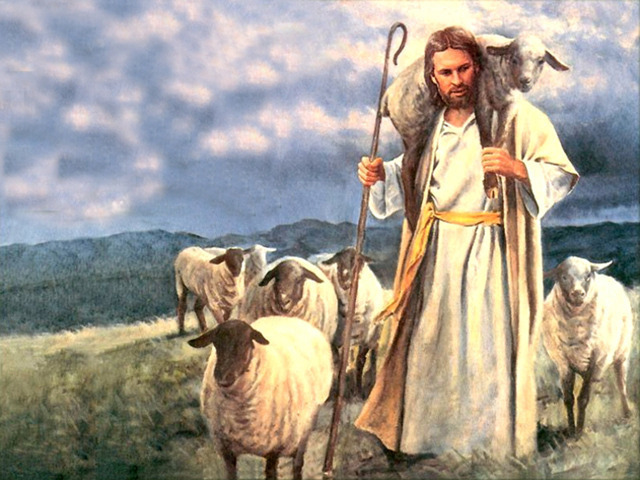
The Shepherd

John 10:11 I am the good shepherd. The good shepherd lays down his life for the sheep.

Luke 15:3-7 So he told them this parable: (4) “What man of you, having a hundred sheep, if he has lost one of them, does not leave the ninety-nine in the open country, and go after the one that is lost, until he finds it? (5) And when he has found it, he lays it on his shoulders, rejoicing. (6) And when he comes home, he calls together his friends and his neighbors, saying to them, ‘Rejoice with me, for I have found my sheep that was lost.’ (7) Just so, I tell you, there will be more joy in heaven over one sinner who repents than over ninety-nine righteous persons who need no repentance.

THEN a shepherd has at last overtaken his poor, silly, wandering sheep, he does not straightway fall to scolding or beating it for having cost him so much toil and trouble. No; but he observes that it is very weary, that it has torn itself among thorns, and cut itself among jagged rocks, and therefore he first tenderly sees to its wounds, and then bears it back to the fold in his own arms. Poor trembling sinner, the gospel has at length laid hold upon you; you cannot longer run into the paths of sin, grace has stopped your mad career, and made you tremble at the guilt of sin. Continue reading

How to Discern : What of the Watchmen? (Part 6/6)

Ephesians 6:10-18 ~  

 Finally, be strong in the Lord and in the strength of his might. (11) Put on the whole armor of God, that you may be able to stand against the schemes of the devil. (12) For we do not wrestle against flesh and blood, but against the rulers, against the authorities, against the cosmic powers over this present darkness, against the spiritual forces of evil in the heavenly places. (13) Therefore take up the whole armor of God, that you may be able to withstand in the evil day, and having done all, to stand firm. (14) Stand therefore, having fastened on the belt of truth, and having put on the breastplate of righteousness, (15) and, as shoes for your feet, having put on the readiness given by the gospel of peace. (16) In all circumstances take up the shield of faith, with which you can extinguish all the flaming darts of the evil one; (17) and take the helmet of salvation, and the sword of the Spirit, which is the word of God, (18) praying at all times in the Spirit, with all prayer and supplication. To that end keep alert with all perseverance, making supplication for all the saints, (ESV)

By Pastor Anton Bosch 

What of the Watchmen?  (Part  6/6)

Each believer has responsibility for himself to be on the lookout for error and deception (Revelation 3:11). The Lord has also set the elders in the local church with the duty to watch for wolves who would seek to attack the flock (Acts 20:28-30).

In these last days error is multiplying and spreading faster than the average believer or shepherd can track. Every day brings some new heresy, and modern electronic media and world travel has resulted in new heresies spreading across the globe within hours of being hatched. Often these teachings are so cleverly disguised that it literally takes a specialist to recognize them and to formulate a defense against them.

As a result the Lord has raised up a special group of people who have been uniquely gifted and prepared to act as watchmen to the churches. When Nehemiah rebuilt the walls of Jerusalem, the attacks were so incessant that in addition to every man carrying his sword whilst building (Nehemiah 4:17-18), a select group was tasked with looking out for the enemy (Nehemiah 4:9, 16). As a shepherd in a local church, it would be impossible for me to fulfill my duties and keep track of the many new errors that arise almost daily. I am therefore very grateful for those who have dedicated themselves to the work of monitoring, researching, warning and formulating answers to the many winds of false doctrine of our time. Continue reading

How to Discern : Who’s Who? (Part 5/6)

Acts 17:11 Now these Jews were more noble than those in Thessalonica; they received the word with all eagerness, examining the Scriptures daily to see if these things were so.

By Pastor Anton Bosch 

Who’s Who?  (Part  5/6)

It is important that we check every word we hear or read against the plumbline of the Bible. In addition, we need to check the source of the information as well. We must check two things: The message and the man.

Many times we will hear messages that sound spot-on, and may even be doctrinally correct, but the speaker is a deceiver. Remember, the Devil will present truth in order to get you on his hook. No Mormon or Jehovah’s Witness will knock on your door and begin the conversation by saying that they have come to present another Gospel and another Jesus. They all begin by affirming that they believe exactly what you believe. The problem is that by the time they get around to the lie it is often too late. Our only defense is not to listen to a single word from someone we have not checked out thoroughly first. Mormons and JWs are easy to recognize by their outward appearance. But how do we recognize someone who appears to be an evangelical, Bible believing preacher? Here are a few hints:

First, who is he and where does he come from? In other words who does he relate to and who has influenced his thinking? This can easily be established from his bio, personal history or curriculum vitae. Where did he train? Where does he fellowship? Who is he in relationship with? Who does he quote? Who quotes him? If he has a website, look at the other sites he provides links to. These questions will often reveal a lot about the messenger. Obviously, he may have had bad connections in the past and may have repented. If he has repented from former evil associations, has he publicly repudiated those links and doctrines and broken fellowship with them? If he has, his past should not be held against him; but, at the same time, some of those influences may continue to taint his thinking and one should be on the alert for signs thereof. “Evil company corrupts good habits” (1Corinthians 15:33) and a man can be known by the friends he keeps. Continue reading

How to Discern : Check, Check and Check Again (Part4/6)

By Pastor Anton Bosch 

Check, Check and Check Again (Part4/6)

This is a principle that holds true in most areas in life. Carpenters speak about measuring twice and cutting once. We teach our children that when they cross the street they must look left, look right and look left again. And when it comes to our faith we must be even more careful and check everything we hear.

1Thessalonians 5:21 says: “Test all things; hold fast what is good.” In other words, not everything is good and can be trusted, so everything must be tested first. The noble-minded Bereans even subjected Paul’s teaching to scrutiny and they were commended for doing so (Acts 17:11).

We live in dangerous times and the world is filled with deceivers, false prophets, wolves in sheep’s clothing and heretics. Those who preach the Truth are a small minority while the false apostles wield massive budgets with which they dominate every form of media. No matter whether you listen to “Christian” radio, watch “Christian” television look at “Christian” websites or enter a “Christian” bookstore, the odds are stacked against the possibility that you will be exposed to truth. Yet every day thousands are deceived into believing anything that is sold under the banner of “Christian.” Continue reading

How to Discern : Orthodoxy ( Part 3/6)

By Pastor Anton Bosch 

Orthodoxy ( Part 3/6)

The Roman church has for a long time believed that only the “clergy” may interpret the Bible. In fact, until recently, they did not even allow translations of the Bible into the common language of the people because they did not believe that ordinary people were equipped to read the Bible, let alone interpret it.

Since the Reformation, the Bible has been made available to ordinary people and now anyone in the free world is able to read, study and own Bibles. But the pendulum has swung to the other extreme so that today every Tom, Dick and Harry feels he has the right to interpret the Bible as he feels fit. This is an equal but opposite error to that of the Roman clerical system.

It is therefore important that we understand that while each of us has the privilege of reading the Bible for ourselves, no individual has the right to interpret the Scriptures as he wishes. We can all understand the Bible, and the Spirit will lead us into all Truth, but it is not up to us to formulate our own “new” doctrine. There is a body of truth that is not open for reinterpretation. We refer to this as “orthodox” teaching. “Orthodox” means “conforming to established and traditional doctrine”. (Not to be confused with Eastern Orthodox churches.) Continue reading

How to Discern : Understanding the Bible (Part 2/6)

By Pastor Anton Bosch 

Understanding the Bible

Many people will agree that the Bible is the authoritative Word of God. The problem however is often how it is interpreted. How can we be sure that our understanding is the right one?

In discerning truth from error, we must begin by understanding Truth for ourselves. Many people try to discover the Truth by analyzing and dissecting error. You simply cannot do that. It is like someone trying to drive a car by looking only in the rearview mirror while trying to move forward. You cannot see where you are going by looking where others have gone wrong. So before we try to judge error or someone else’s doctrine, we need to be sure about what we believe. I agree, that many are prompted by the rise of some error to study truth. But, if you want to learn the truth on some matter, you will only learn it by studying the Bible, not by studying the mistakes of others. So what must I do to understand?

First I must ask God for wisdom. “If any of you lacks wisdom, let him ask of God, who gives to all liberally and without reproach, and it will be given to him” (James 1:5). The same Spirit Who inspired the men to write the Bible (2Timothy 3:16, 2Peter 1:21), is available to help us understand what is written. The Bible is not an academic book which can be studied in an intellectual way only. Yes, the Bible is logically sound and intellectually deep, but it is primarily a spiritual book in which God speaks to His people. And His Spirit will lead, guide and counsel us so we may come “into all truth” (John 16:13). Studying the Bible is both an academic and spiritual exercise. Read it in a “spiritual” way without applying sound reasoning and you will not discover the Truth. But study it as academic literature without the Spirit’s help and you will most certainly end in error. Pray David’s prayer every time you approach the Word: “Open thou mine eyes, that I may behold wondrous things out of thy law” (Psalm 119:18). Continue reading

How to Discern : How to Smell a Rat (Part 1 /6)

By Pastor Anton Bosch 

 How to Smell a Rat (Part 1 /6)

A toddler will eat anything. It does not matter if it is nutritious or poison, it has no ability to discern between food and poison.

As Christians mature in the faith they should learn to discern between spiritual poison and spiritual food. “But solid food belongs to those who are of full age, that is, those who by reason of use have their senses exercised to discern both good and evil” (Hebrews 5:14). The problem is that the vast majority of modern-day “Christians” are either not born again or have been kept in a perpetual state of babyhood and thus are unable to discern the difference between truth and error. Because of this, and because we have a new generation of church-goers who do not know the Bible, false teachers have multiplied and millions believe anything these preachers say.

Discriminating between truth and error is really not that difficult as long as we abide by a few basic principles. The first of these is that truth is absolute. I use the term “absolute” as the opposite of “relative”. For most people – Christian and non-Christian – truth is relative. We hear: Continue reading

Remembering Biblical Principles For Christian Women in the Digital World

Young Women and Discretion

by Walter E. Isenhour

“The aged women likewise, that they be in behaviour as becometh holiness . . .  that they may teach the young women to be sober . . . to be discreet, chaste . . .  that the word of God be not blasphemed” —Titus 2:3-5.

In the fifth verse of the second chapter of Titus the aged women are to teach young women “to be discreet.” What does it mean to be discreet? It means to be prudent, judicious, cautious; wise in conduct and management, especially as to matters of propriety and self-control.

A young woman who measures up to these qualities in mind, heart, soul, spirit, and life certainly rises above the degrading principles of sin and wickedness. Her life is one of nobility, beauty, usefulness, and sublimity. She sets examples before her husband, children, and neighbors that areworthy of emulation. They know her life is hid with Christ in God. She possesses the Spirit of our Lord, and this enables her to discern between the evil and the good, and to avoid evil, error, and anything and all things that would mislead her. She likewise shields her husband and children from evils and errors, sins and wickedness, that they are environed with. At least she warns and cautions them against such, and shows them the higher, better, holier, and more beautiful and worthwhile things in life.

The discreet woman is possessed with the spirit and ability to adopt “means to an end,” and of course this means that which brings her and the family to a good end. She avoids the means that would injure her life, character, soul, and influence, and that would likewise injure her family and those about her. She must realize that what she takes into her life will have its effect, through the years—and will bring her to a good end, only as the means are good. She knows that the good will work out right, while the bad will work out wrong. She realizes that the good is a means to a good end, but the bad is a means to a bad end. Therefore she takes into her very soul the good and rejects the bad. She is discreet. Those who know her realize that she is a woman of great and commendable discretion. Continue reading