The Dangers of the Hebrew Roots Movement /The Sacred Name movement

The Hebrew Roots movement (HRM) is also known as  The Sacred Name movement.

I have noticed that the influence from this movement has become quite common on the social media networks like Facebook and blogs. It concerns me that not many people are aware of this heresy.  Again this is just another stream of false teachings that we need to keep our eyes and ears open for, it leads people into error and a false legalistic type religion. I will be combining two good article sources that I found, between the 2 the explanation becomes clear of what the dangers are.  This movement has also taken root in South Africa, like in the rest of the world.

 1 John 4 Beloved, do not believe every spirit, but test the spirits to see whether they are from God, for  many  false prophets  have gone out into the world. 
And  Jesus said : And many false prophets will arise and lead many astray.

From the articles I found :

The Sacred Name movement consists of those persons, groups, and assemblies who use the Hebrew names for God (i.e. Yahweh, Yahvah) and for Jesus (i.e. Yahshua) in the devotion and worship. They have characterized themselves as “the True Worshippers” eschewing the name ‘Christian’ as being of pagan origin. Continue reading

“Jesus Will Never Cast Away His Believing People” — J.C. Ryle


Let all the world know that the Lord Jesus will not cast away His believing people because of shortcomings and infirmities. The husband does not put way his wife because he finds failings in her. The mother does not forsake her infant because it is weak, feeble, and ignorant. And the Lord Christ does not cast off poor sinners who have committed their souls into His hands because He sees in them blemishes and imperfections. Oh, no! it is His glory to pass over the faults of His people, and heal their backslidings,—to make much of their weak graces, and to pardon their many faults. Verily, the 11th of Hebrews is a wonderful chapter. It is marvelous to observe how the Holy Ghost speaks of the worthies whose names are recorded in that chapter. The faith of the Lord’s people is there brought forward, and had in remembrance. But the faults of many a one, which might easily have been brought up also, are left alone, and not mentioned at all. Continue reading

Calminianism, Armalvinism, or somewhere in the middle?

Thank you Amy and Mike for permission to place this interesting discussion and it is edifying indeed !!!

Faith, Podcast | February 14, 2012 by

Today we are talking about something a lot of us don’t discuss much: Calvinism and Arminianism. These are two very different schools of thought in Christian theology, and at times those who are firmly planted in one camp are at odds with those who are staunchly firm in the other. There seems to be Scripture supporting both. Continue reading

Eastern Meditation Sneaks into the Church

Prof. Johan Malan, University of Limpopo, South Africa

There is a widespread resurgence of Eastern meditation among nominal Christians in the West. In many churches and other Christian circles, prayer is increasingly replaced by meditation, which is also described as contemplation, centring prayers, or quiet prayers. Meditation is often accompanied by Yoga relaxation exercises and relaxed breathing in order to promote a mental shift from the rational left brain to the intuitive right brain.

The basic objective with meditation – whether it be Hindu-based Transcendental Meditation (TM), Buddhist, Islamic or ‘Christian’ meditation – is to acquire a situation of complete rest in your body, soul and spirit, thereby eliminating stress and facilitating contact with deeper, more creative levels of your consciousness. Rational thinking is intentionally suppressed and switched off while you transcend to mystical spheres to make contact with your deeper self. According to Naomi Humphrey (Meditation – the inner way) meditation helps to deliver you from spiritual and mental bondage, and also from fear, by enabling you to transcend to a new perception of reality. The result is a holistic way of life in which spirit and matter become integrated.

The inner journey Continue reading

Repentance : Legal vs True

by James C. Heard

Repentance is an old-fashioned word, not much used by the modernists and liberals of our day. True repentance and true belief are inseparable. True repentance and true faith are the products of a quick­ened heart – a work of regeneration by the Holy Spirit. Spiritual life must precede spiritual acts.

Legal repentance is that regret and reluctance that arises in a person after having done something that they should not have done. This repentance arises from a fear of punishment denounced against sin, but it is not accompanied with the hatred of sin and self. This person may be sorry for that which has been com­mitted, but will not be grieved that they have offended a HOLY GOD. Legal repentance fears Hell and dreads punishment, for criminals are always sorry that they face punishment (however, sorrow itself is not true repentance).

Continue reading

The Thrill of the Bungee Jump

This is an absolutely excellent post done  From Ray Comforts blog

It hit a real nerve with me  !!! I do hope it does for our dear readers here too – God bless.

Comfort Food
Read the Bible in a year: Genesis 25-26, Psalm 31, Matthew 16

I watched a video clip of a bungee jumper recently, whose cord looped around his neck. He was more than likely already dead when his friends were calling for him to take the noose off his neck and to lift his knees. This came hard on the heels of a shallow-thinking woman who jumped off a bridge in South Africa. Continue reading

Who Were the Magi?

Bible Q & A With John MacArthur

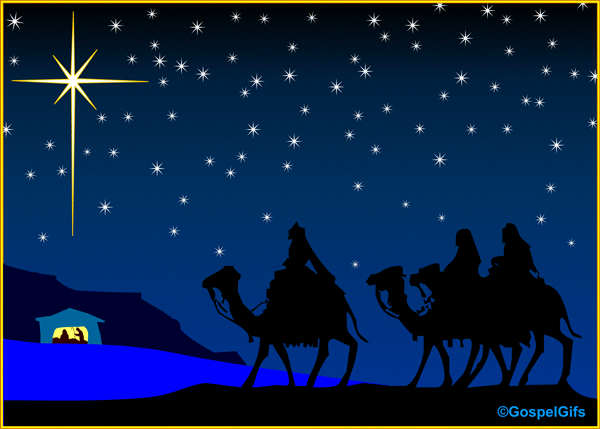
Few biblical stories are as well known, yet so clouded by myth and tradition, as that of the magi, or wise men, mentioned by Matthew. During the Middle Ages legend developed that they were kings, that they were three in number, and that their names were Casper, Balthazar, and Melchior. Because they were thought to represent the three sons of Noah, one of them is often pictured as an Ethiopian. A twelfth-century bishop of Cologne even claimed to have found their skulls.

The only legitimate facts we know about these particular magi are the few given by Matthew in the first twelve verses of chapter 2. We are not told their number, their names, their means of transportation to Palestine, or the specific country or countries from which they came. The fact that they came from the east would have been assumed by most people in New Testament times, because the magi were primarily known as the priestly-political class of the Parthians-who lived to the east of Palestine.

Continue reading

The Certainty of Judgment

John MacArthur – Grace to You

“If the word spoken through angels proved unalterable, and every transgression and disobedience received a just recompense, how shall we escape if we neglect so great a salvation?” (Heb. 2:2-3).

Today the majority believes that God is a God of love and grace, but not of justice. One brief look at Hebrews 2:2-3 ought to convince anyone otherwise. The writer’s point is this: Since the Old Testament makes it clear that transgression and disobedience met with severe and just punishment, how much more so will equal or greater punishment be rendered under the New Testament, which was revealed by the Lord Jesus Christ Himself?

Continue reading

The Truth of the Nativity

John MacArthur – Grace to You

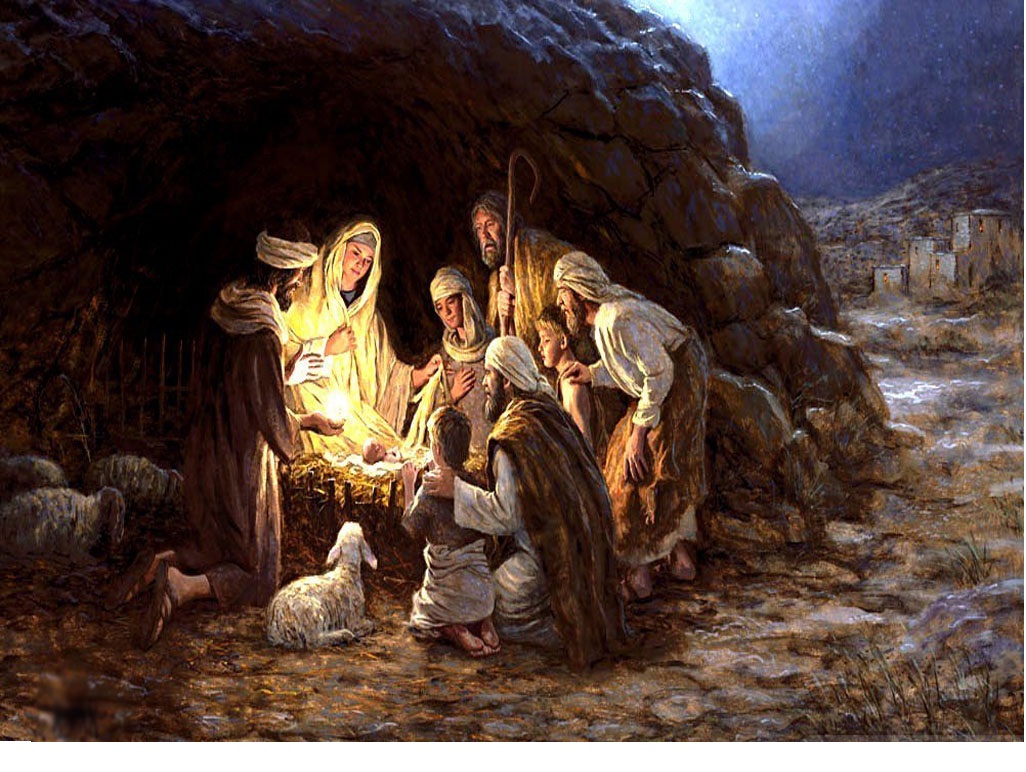
The story of the first Christmas is so beloved that singers and storytellers across the centuries have embellished and elaborated and mythologized the story in celebration. However, most people now don’t know which details are biblical and which are fabricated. People usually imagine the manger scene with snow, singing angels, many worshipers, and a little drummer boy. None of that is found in the biblical account.

Christmas has become the product of an odd mixture of pagan ideas, superstition, fanciful legends, and plain ignorance. Add to that the commercialization of Christmas by marketers and the politicization of Christmas in the culture wars, and you’re left with one big mess. Let’s try to sort it out. The place to begin is in God’s Word, the Bible. Here we find not only the source of the original account of Christmas, but also God’s commentary on it.

Continue reading

Charismatic Chaos – John MacArthur

Charismatic Chaos Part 1

Continue reading

Apostles’ Creed

This creed arose out of the early Western church and should be thought of as a summary of the Apostles’ teaching rather than directly attributable to them.  Originally it was essentially a baptismal confession and had several variations.  The form in use today dates from the eighth century.

Continue reading

Avoiding Empty Philosophies – Tearing Down Strongholds

Bible Q & A With John MacArthur

2 Corinthians 10

For the weapons of our warfare are not of the flesh, but divinely powerful for the destruction of fortresses. We are destroying speculations and every lofty thing raised up against the knowledge of God, and we are taking every thought captive to the obedience of Christ, (2 Corinthians 10:4–5)

To successfully fight the spiritual war requires weapons from the heavenly arsenal. Only those divinely powerful weapons are suited for the destruction of the enemies’ fortresses. That term would convey to the New Testament reader the thought of a formidable stronghold. Corinth, like most major cities in Greece, had an acropolis. Located on a mountain near the city, the acropolis was a fortified place into which the inhabitants could retreat when attacked. Ochuroma (fortresses) was also used in extrabiblical Greek to refer to a prison. People under siege in a fortress were imprisoned there by the attacking forces. The word was also used to refer to a tomb.

Continue reading

Here’s a side to the Christmas story that isn’t often told

From – Truth for Today  ~  A Daily Touch of God’s Grace , by John MacArthur

~ 25 December ~ Devotional ~

Why was Jesus Born?

For even the Son of Man did not come to be served, but to serve , and to give His life a ransom for many. Mark 10:45

Here’s a side to the Christmas story that isn’t often told: Those soft little hands, fashioned by the Holy Spirit in Mary’s womb, were made so that nails might be driven through them. Those baby feet, pink and unable to walk, would one day walk up a dusty hill to be nailed to a cross. That sweet infant’s head with sparkling eyes and eager mouth was formed so that someday men might force a crown of thorns onto it. That tender body, warm and soft, wrapped in swaddling clothes, would one day be ripped open by a spear.

Jesus was born to die.

Don’t think I’m trying to put a damper on your Christmas spirit. Far from it – for Jesus’ death , though devised and carried out by men with evil intentions, was in no sense a tragedy. In fact , it represents the greatest victory over evil anyone has ever accomplished.

~John MacArthur~

This Devotional book available here

Christmas is coming! Quite so—but what is “Christmas?”

Xmas

by A. W. Pink

“Thus says the Lord—Do not learn the way of the heathen…for the CUSTOMS of the people are vain.” Jeremiah 10:1-3

Christmas is coming! Quite so—but what is “Christmas?” Does not the very term itself denote it’s source— “Christ-mass.” Thus it is of Roman origin, brought over from paganism. But, says someone, Christmas is the time when we commemorate the Savior’s birth. It is? And WHO authorized such commemoration? Certainly God did not. The Redeemer bade His disciples “remember” Him in His death, but there is not a word in scripture, from Genesis to Revelation, which tells us to celebrate His birth. Moreover, who knows when, in what month, He was born? The Bible is silent thereon. It is without reason that the only “birthday” commemorations mentioned in God’s Word are Pharaoh’s (Gen. 40:20) and Herod’s (Matt. 14:6)? Is this recorded “for our learning?” If so, have we prayerfully taken it to heart?

Continue reading

ON THE HEART OF THE GOSPEL


2Co 5:21  For our sake he made him to be sin who knew no sin, so that in him we might become the righteousness of God.

Mathew Henry CC –

2Co 5:16-21
The renewed man acts upon new principles, by new rules, with new ends, and in new company. The believer is created anew; his heart is not merely set right, but a new heart is given him. He is the workmanship of God, created in Christ Jesus unto good works. Though the same as a man, he is changed in his character and conduct. These words must and do mean more than an outward reformation. The man who formerly saw no beauty in the Saviour that he should desire him, now loves him above all things. The heart of the unregenerate is filled with enmity against God, and God is justly offended with him. Yet there may be reconciliation. Our offended God has reconciled us to himself by Jesus Christ. By the inspiration of God, the Scriptures were written, which are the word of reconciliation; showing that peace has been made by the cross, and how we may be interested therein. Though God cannot lose by the quarrel, nor gain by the peace, yet he beseeches sinners to lay aside their enmity, and accept the salvation he offers. Christ knew no sin. He was made Sin; not a sinner, but Sin, a Sin-offering, a Sacrifice for sin. The end and design of all this was, that we might be made the righteousness of God in him, might be justified freely by the grace of God through the redemption which is in Christ Jesus. Can any lose, labour, or suffer too much for Him, who gave his beloved Son to be the Sacrifice for their sins, that they might be made the righteousness of God in him?