The Gospel Invitation To Sinners

1174791_350685155065468_1102998312_n

Sermon # 94

Title: Come To Jesus

Text: Revelation 22:17

Subject: The Gospel Invitation To Sinners

Date: Sunday Evening – December 11, 1988

Revelation 22:17 KJV And the Spirit and the bride say, Come. And let him that heareth say, Come. And let him that is athirst come. And whosoever will, let him take the water of life freely.

Introduction:

It is my blessed privilege and honor to preach the unsearchable riches of Christ to lost men and women, urging them to come to Christ and be saved. It is my happy employment to find arguments from the Word of God to persuade fallen, depraved sinners to be reconciled to God by faith in Jesus Christ. Tonight, I want to try, one more time, to persuade you who are lost to Come to Jesus. Come to Jesus Christ and live. How can I persuade you to come?

1. First, hear this: God has planned, purposed, and predestinated the salvation of a great multitude of sinners. God will save some men and women. That is certain (Rom. 8:29-30). He saves them by grace alone, without condition or qualification. If God has purposed to save some, perhaps I am one, perhaps you are one. It may be that he has kept you alive these many years so that he may be gracious to you tonight.

2. Second, the Lord Jesus Christ has fully met and satisfied every requirement of God for the salvation of his elect. There is nothing for you to do, nothing for me to do. Jesus Christ has done it all. All who are saved are saved upon the basis of and by the merits of Christ’s obedience to God as the sinner’s Substitute (Rom. 5:19).

– He has finished the work of righteousness (John 17:4).

– He has finished the work of redemption (John 19:30).

3. Third, God the Holy Spirit will effectually regenerate and call every elect sinner to life and faith in Christ (Psa. 65:4; John 6:63). Christ will save his sheep. Not one God’s elect will perish. The Son of God shall see of the travail of his soul and be satisfied. Christ’s blood was not shed in vain. God’s purpose will not be overturned. The grace of God cannot be frustrated.

4. Fourth, every sinner who comes to Christ in faith is saved.  Continue reading

Self-righteousness

image

“And he spake this parable unto certain which trusted in themselves that they were righteous, and despised others: Two men went up into the temple to pray; the one a Pharisee, and the other a publican. The Pharisee stood and prayed thus with himself, God, I thank thee, that I am not as other men [are], extortioners, unjust, adulterers, or even as this publican. I fast twice in the week, I give tithes of all that I possess. And the publican, standing afar off, would not lift up so much as [his] eyes unto heaven, but smote upon his breast, saying, God be merciful to me a sinner. I tell you, this man went down to his house justified [rather] than the other: for every one that exalteth himself shall be abased; and he that humbleth himself shall be exalted.” (Luke 18:9-14)

Self-righteousness is the subject of the parable before us. I cannot imagine a subject more disgustingly repugnant, or more commonly and universally indulged. Luke gives us an inspired introduction to the parable in verse 9. —“And he spake this parable unto certain which trusted in themselves that they were righteous, and despised others.” That which our Lord here denounces is self-righteousness. The purpose of our Lord in this parable is to show the folly and danger of self-righteousness. Continue reading

Equipped For Trouble

comeback-1

Listen here :

Anyone who knows anything about public speaking knows that the most important parts of any public speech are the first thing and the last thing spoken. There are good reasons for this. If the speaker doesn’t get your attention when he begins, he’s not likely to get it at all. And people tend to remember the first thing a speaker says and the last thing he says.

The same thing applies to preaching. I had very few really good professors while I was in college. In Bible colleges and seminaries as in most colleges and universities, those who cannot do the work are hired to teach the courses. — But I did have a few very good professors. One of them was my Homiletics/Pastoral Theology professor (Dr. Billy Martin). He constantly stressed the need for careful study and preparation. He taught us that in sermon preparation preachers should always give as much attention to the sermon’s introduction and conclusion as to the main points of a message.

If you read sermons, especially those men wrote out for their own use and never intended to have them published, the good ones, those from which people really benefit, almost always have three parts:

1.    The Introduction

2.    The Main Body: (Doctrinal Points and Exposition)

3.    The Conclusion, or Application.

In the 16th chapter of John’s Gospel we have the conclusion of our blessed Savior’s last sermon just before he suffered and died as our Substitute at Calvary. Continue reading

Sanctification is Not the Work of Man

1148998_645526455472477_1576465619_n

Made unto us Sanctification

1 Corinthians 1:30

            The Lord God demands that we walk before him and be perfect (Genesis 17:1; Leviticus 22:21). He cannot and will not accept less than perfection. And what he demands he performs. What he requires he gives. Christ is made of God unto us perfection in three ways. First, perfection requires perfect obedience; and Christ obeyed the law of God for us. Second, perfection requires atonement, or satisfaction; and our Lord Jesus Christ fully satisfied all the demands of God’s law by his sin-atoning death as our Substitute, redeeming us from the curse of the law.Third, perfection requires a perfect nature; and Christ formed in us in regeneration (sanctification) is that perfect nature. Thus, by righteousness, satisfaction and sanctification, God makes his elect “meet to be partakers of the inheritance of the saints in light” (Colossians 1:12).

God’s Work

When the Spirit of God declares that Christ is made of God unto us “sanctification,” he is telling us that our sanctification is, like our righteousness and redemption, altogether the work of God. It does not, in any way or to any degree, depend upon us. It is not a progressive work that begins with God planting a “principle” of holiness in us in the new birth, which grows by our disciplined determination to be holy, until we are ripe for heaven. No! Christ is our Sanctification. Sanctification is accomplished by God the Holy Spirit forming Christ in us, causing us to be made partakers of the divine nature (Colossians 1:27; 2 Peter 1:4). Continue reading

Grow in Grace and Knowledge

sf_ntBooks_2Peter01


The apostle Peter wrote his first epistle to God’s saints who were suffering the horrible trial of persecution under the Roman Emperor, Nero. His second epistle was written shortly afterward, just before his death (2Pe_1:14), and is addressed to the same suffering saints. Their circumstances had not changed.

The first epistle dealt with the hard, hard trial of persecution, of suffering for Christ’s sake. In that epistle Peter urges us to persevere in the faith, assuring us of God’s great grace in Christ and urging us to follow the example our Savior set before us (1Pe_2:21-24).

In 2nd Peter the inspired apostle deals with a trial even more difficult to endure, and urges us to remain steadfast in faith in the face of the ever-increasing onslaught of false religion. In these three chapters Peter urges us to remain steadfast and persevere in the faith, assuring us again of God’s great grace to us in Christ, and urging us to “grow in grace, and in the knowledge of our Lord and Savior Jesus Christ” (2Pe_3:18). In 1st Peter we are taught to rejoice in hope in the face of great trials. Here, in 2nd Peter, we are taught to remain faithful to the truth in the midst of great falsehood.

Precious Things

In these two epistles the apostle Peter reminds us of the many blessings of grace our God has given us in Christ. In fact, he tells us that the Lord God has, according to his divine power, “given unto us all things that pertain unto life and godliness, through the knowledge of him that hath called us to glory and virtue” (2Pe_1:3). Among these many gifts of grace, Peter names six that he calls “precious.

  1. He tells us that the trial of our faith is more precious than gold that perishes, because the trials of our faith in this world will make heaven more glorious than it could otherwise have been (1Pe_1:7). Continue reading

Two Great Errors Of False Teachers

Well

But chiefly them that walk after the flesh in the lust of uncleanness, and despise government. Presumptuous are they, selfwilled, they are not afraid to speak evil of dignities. Whereas angels, which are greater in power and might, bring not railing accusation against them before the Lord. But these, as natural brute beasts, made to be taken and destroyed, speak evil of the things that they understand not; and shall utterly perish in their own corruption; And shall receive the reward of unrighteousness, as they that count it pleasure to riot in the day time. Spots they are and blemishes, sporting themselves with their own deceivings while they feast with you; Having eyes full of adultery, and that cannot cease from sin; beguiling unstable souls: an heart they have exercised with covetous practices; cursed children: Which have forsaken the right way, and are gone astray, following the way of Balaam the son of Bosor, who loved the wages of unrighteousness; But was rebuked for his iniquity: the dumb ass speaking with man’s voice forbad the madness of the prophet. These are wells without water, clouds that are carried with a tempest; to whom the mist of darkness is reserved for ever. For when they speak great swelling words of vanity, they allure through the lusts of the flesh, through much wantonness, those that were clean escaped from them who live in error. While they promise them liberty, they themselves are the servants of corruption: for of whom a man is overcome, of the same is he brought in bondage. For if after they have escaped the pollutions of the world through the knowledge of the Lord and Saviour Jesus Christ, they are again entangled therein, and overcome, the latter end is worse with them than the beginning. For it had been better for them not to have known the way of righteousness, than, after they have known it, to turn from the holy commandment delivered unto them. But it is happened unto them according to the true proverb, The dog is turned to his own vomit again; and the sow that was washed to her wallowing in the mire.
(2 Peter 2:10-22 KJV)

Two great errors of false teachers 
2Pe_2:10-22

There were and are false preachers and teachers in the Christian church, just as there were false teachers among the Jews. We are warned to mark them and beware of them (Mat_7:15-16; 2Ti_4:3-4).

2Pe_2:10. These false teachers and preachers (besides denying the true gospel of redemption through Christ alone—2Pe_2:1) are guilty of two great errors. Continue reading

Hirelings and the Shepherd

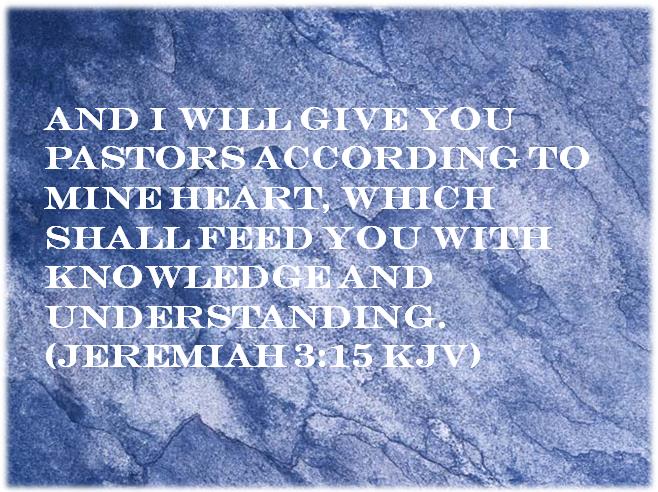
Jer 3 v 15

Don Fortner 

“This parable spake Jesus unto them: but they understood not what things they were which he spake unto them. Then said Jesus unto them again, Verily, verily, I say unto you, I am the door of the sheep. All that ever came before me are thieves and robbers: but the sheep did not hear them. I am the door: by me if any man enter in, he shall be saved, and shall go in and out, and find pasture. The thief cometh not, but for to steal, and to kill, and to destroy: I am come that they might have life, and that they might have it more abundantly. I am the good shepherd: the good shepherd giveth his life for the sheep. But he that is an hireling, and not the shepherd, whose own the sheep are not, seeth the wolf coming, and leaveth the sheep, and fleeth: and the wolf catcheth them, and scattereth the sheep. The hireling fleeth, because he is an hireling, and careth not for the sheep. I am the good shepherd, and know my sheep, and am known of mine. As the Father knoweth me, even so know I the Father: and I lay down my life for the sheep. And other sheep I have, which are not of this fold: them also I must bring, and they shall hear my voice; and there shall be one fold, and one shepherd. Therefore doth my Father love me, because I lay down my life, that I might take it again. No man taketh it from me, but I lay it down of myself. I have power to lay it down, and I have power to take it again. This commandment have I received of my Father. There was a division therefore again among the Jews for these sayings. And many of them said, He hath a devil, and is mad; why hear ye him? Others said, These are not the words of him that hath a devil. Can a devil open the eyes of the blind?” (John 10:6-21)

George Whitefield once declared, “As God can send a nation or people no greater blessing than to give them faithful, sincere, and upright ministers, so the greatest curse that God can possibly send upon a people in this world, is to give them over to blind, unregenerate, carnal, lukewarm, and unskilled guides. And yet, in all ages, we find that there have been many wolves in sheep’s clothing, many that daubed with untempered mortar, that prophesied smoother things than God did allow.”

Wolves in sheep’s clothing were prevalent in the days of Isaiah, Jeremiah, and Ezekiel. Continue reading

“A Just God and a Saviour”

182914_10151649219609865_270462064_n

Nevertheless he saved them for his name’s sake, that he might make his mighty power to be known.
(Psalms 106:8 KJV)

“A Just God and a Saviour”

Isaiah 45:21

The Lord our God, the one true and living God of heaven and earth, is a God who freely and abundantly forgives sin through the blood of his Son, the Lord Jesus Christ. This is what God himself says, “I, even I, am he that blotteth out thy transgressions for mine own sake, and will not remember thy sins.


The People Forgiven

Who are the people to whom God will be merciful? They are not good, righteous, and morally upright men and women. So long as a man thinks that he is good and righteous, he will never obtain mercy from God. The characters to whom God says he will be merciful are sinners. The grace and lovingkindness of Jehovah is reserved for sinners. Until you see that your supposed righteousness is an abomination to God, you will never obtain the righteousness of God in Christ (Romans 10:1-4). Every promise of the gospel is made to sinners. — “The Son of man came not to call the righteous, but sinners to repentance (Matthew 11:28-30; Isaiah 1:4-6, 18; 55:6-7). The grace and mercy of God is for Continue reading

Discovering Christ in All the Scriptures – FREE EBOOK DOWNLOAD BY Don Fortner

fortner-christ-in-all-scriptures

FREE EBOOK DOWNLOAD BY Don Fortner – Discovering Christ in All the Scriptures

Summary

This is a Bible Survey type of book, with 67 chapters, an introduction and one on each book of the Bible. The main focus of this work is to see Christ in each book of Scripture. Pastor Fortner  does a good work in this book.

Chapter 1
GENESIS
The Book of Beginnings (Exert)

I want to take you through the entire Volume of Holy Scripture, book by book, show you the message of each book and its
relation to the whole Word of God. That will be the easy part. Here’s the tough part—I plan to cover one entire book in each
of the succeeding chapters. We will begin, of course, with Genesis, the book of beginnings.

What I hope to do in these studies is to give you a zoomlens view of Holy Scripture. I trust the Lord will use them to help you see clearly that the message of this Book, from beginning to end is Jesus Christ and him crucified, and that you will be able to grasp more fully the whole truth of God, the whole of Divine Revelation.

We read in Genesis 1:1-3—”In the beginning God created the heaven and the earth. And the earth was without form, and void; and darkness was upon the face of the deep. And the Spirit of God moved upon the face of the waters. And God
said, Let there be light: and there was light.” Continue reading

“Backbiters”

timthumb (1)

“Backbiters”

Romans 1:28-32

            I cannot imagine any crime against another person which is more cowardly, despicable, and inexcusable than slander and gossip – backbiting. While such behavior is common and expected among the reprobate, there is no place for it in the kingdom of God.

Many who look down their noses with scorn upon fornicators, adulterers, and whoremongers, are guilty of this hideous offense. They think nothing of slandering another, attempting to murder his character, indeed, they seize every opportunity to do so. If Romans 1:28-32 means anything, it means that such people do not know God. Their character is the character of the reprobate. Backbiting men and women are proud, envious, little rebels, people who cannot be trusted in any area of life.

They are the pawns of Satan, used to disrupt the peace of God’s church and kingdom. They always pretend to have a just cause. They always pretend that they have been offended, slighted, overlooked, or abused by the one slandered. Backbiters are always whiners. Continue reading

Reprobation Asserted

John 10

But ye believe not, because ye are not of my sheep, as I said unto you.
(John 10:26 KJV)

Listent to sermon

There was a division therefore again among the Jews for these sayings. And many of them said, He hath a devil, and is mad; why hear ye him? Others said, These are not the words of him that hath a devil. Can a devil open the eyes of the blind? And it was at Jerusalem the feast of the dedication, and it was winter. And Jesus walked in the temple in Solomon’s porch. Then came the Jews round about him, and said unto him, How long dost thou make us to doubt? If thou be the Christ, tell us plainly. Jesus answered them, I told you, and ye believed not: the works that I do in my Father’s name, they bear witness of me. But ye believe not, because ye are not of my sheep, as I said unto you. My sheep hear my voice, and I know them, and they follow me: And I give unto them eternal life; and they shall never perish, neither shall any man pluck them out of my hand. My Father, which gave them me, is greater than all; and no man is able to pluck them out of my Father’s hand.
(John 10:19-29 KJV) Continue reading

BABYLON’S WOES

alas-babylon-babylon-will-perish

And he cried mightily with a strong voice, saying, Babylon the great is fallen, is fallen, and is become the habitation of devils, and the hold of every foul spirit, and a cage of every unclean and hateful bird.
(Revelation 18:2 KJV)

Don Fortner

Habakkuk 2:4-20

Listen to the sermon :

The title of my message is BABYLON’S WOES. In the 2nd chapter of Habakkuk the Prophet of God denounces four great woes upon Babylon. These are woes that were pronounced upon the ancient city of Babylon. Yet, a careful reading of the chapter makes it obvious that the mere destruction of that ancient city is not all that the passage asserts. By the Spirit of God, Habakkuk here speaks prophetically of Mystical Babylon, the great whore of the earth by which the truth of God is prostituted and immortal souls are damned.

Proposition: Babylon represents all false religion; and all false religion is under the curse of God.

FOUR WOES

Here are four woes denounced upon Babylon, four woes that fell from the very mouth of God, woes which shall be executed upon that wicked city.

1.     Woe to Babylon, woe to all false religion, woe to all free-will, works religion, God’s wrath shall destroy you because you spoil the nations of the world (vv. 6-8).

(Habakkuk 2:6-8) “Shall not all these take up a parable against him, and a taunting proverb against him, and say, Woe to him that increaseth [that which is] not his! how long? and to him that ladeth himself with thick clay! 7 Shall they not rise up suddenly that shall bite thee, and awake that shall vex thee, and thou shalt be for booties unto them? 8 Because thou hast spoiled many nations, all the remnant of the people shall spoil thee; because of men’s blood, and [for] the violence of the land, of the city, and of all that dwell therein.”

2.    Woe to Babylon, woe to all false religion, woe to all free-will, works religion, God’s wrath shall destroy you because you make men swell with pride (vv. 4-5, 9-11). Continue reading

Believers – love and are beloved ~ Heirs, hope, holiness and heretics

579596_495127557207472_2017711680_n

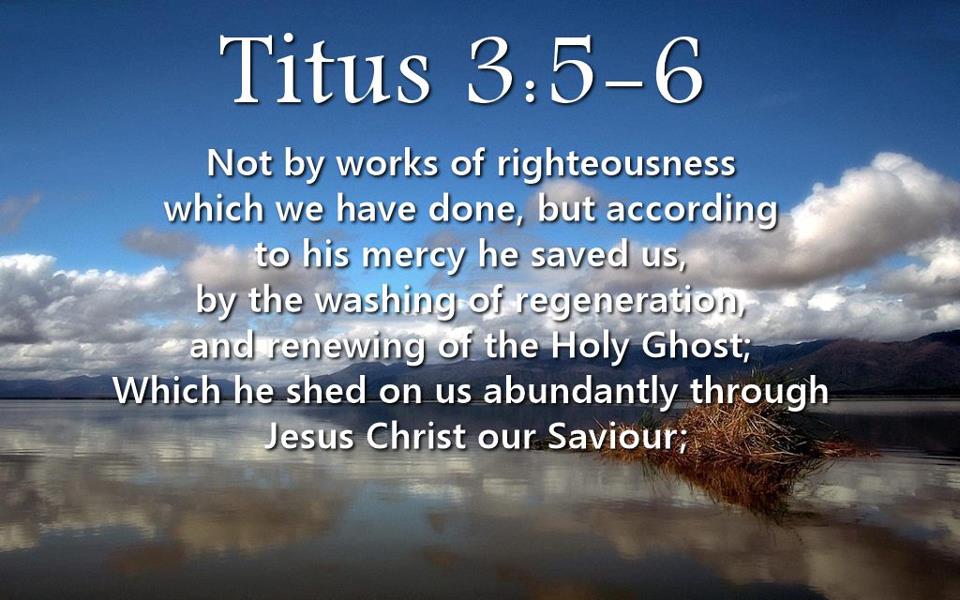
Put them in mind to be subject to principalities and powers, to obey magistrates, to be ready to every good work, To speak evil of no man, to be no brawlers, but gentle, shewing all meekness unto all men. For we ourselves also were sometimes foolish, disobedient, deceived, serving divers lusts and pleasures, living in malice and envy, hateful, and hating one another. But after that the kindness and love of God our Saviour toward man appeared, Not by works of righteousness which we have done, but according to his mercy he saved us, by the washing of regeneration, and renewing of the Holy Ghost; Which he shed on us abundantly through Jesus Christ our Saviour; That being justified by his grace, we should be made heirs according to the hope of eternal life. This is a faithful saying, and these things I will that thou affirm constantly, that they which have believed in God might be careful to maintain good works. These things are good and profitable unto men. But avoid foolish questions, and genealogies, and contentions, and strivings about the law; for they are unprofitable and vain. A man that is an heretick after the first and second admonition reject; Knowing that he that is such is subverted, and sinneth, being condemned of himself. When I shall send Artemas unto thee, or Tychicus, be diligent to come unto me to Nicopolis: for I have determined there to winter. Bring Zenas the lawyer and Apollos on their journey diligently, that nothing be wanting unto them. And let ours also learn to maintain good works for necessary uses, that they be not unfruitful. All that are with me salute thee. Greet them that love us in the faith. Grace be with you all. Amen. It was written to Titus, ordained the first bishop of the church of the Cretians, from Nicopolis of Macedonia. 
(Titus 3:1-15 KJV)

Believers – love and are beloved

Tit_3:1-6
Tit_3:1. From this and other passages, it is evident that the apostle thought it most important for believers to be law-abiding, peaceful people, submitting to those in authority. We are all by nature desirous of power and prone to have our own way. It takes much grace to be an obedient servant, a submissive wife or child, a peaceful citizen, especially if those in authority are opposed to Christ (Rom_13:1-3; 1Pe_2:13-18).

‘Be prepared and willing to do any upright and honorable work.’ Let our lives be characterized by goodness and gentleness to all (Rom_13:7-8). The grace of Christ is not limited to religious affiliations, but controls the whole of our lives.

Tit_3:2. The good minister of Christ will remind believers to ‘speak evil of no man.’ This is the method of maintaining peace and friendship with all men! A man’s name, reputation and character are tender topics and ought to be handled carefully!Contempt for others is usually followed by insult. A thought of contempt usually gives birth to words of unkindness. Continue reading

He That Rolleth A Stone, It Will Return Upon Him….

he that roleth

″Whoso diggeth a pit shall fall therein: and he that rolleth a stone, it will return upon him. A lying tongue hateth those that are afflicted by it; and a flattering mouth worketh ruin. ″
(Proverbs 26:27-28 KJV)

Proverbs 26:27
Whoso diggeth a pit shall fall therein,…. That devises mischief against others, it shall come upon himself. The allusion is to the digging of pits for catching wild beasts, which are slightly covered with earth; and which sometimes the pursuers, through inadvertency, fall into themselves; the passage seems to be taken from Psa_7:15;

and he that rolleth a stone, it will return upon him; that rolls a stone up hill, if he does not take care, it will return back, and fall with great force upon himself; so the mischief which a wicked man labours hard at, as men do in digging a pit, or rolling a stone, in time rolls back upon themselves; the measure they mete out to others is measured to them. Jarchi makes mention of an “hagadah”, or exposition, which illustrates this passage, by the case of Abimelech; who slew threescore and ten persons on one stone, and was himself killed with a piece of a millstone cast upon him, Jdg_9:18; this may put in mind of the fable of Sisyphus (o), feigned in hell to roll a great stone to the top of a mountain, which presently falling down on his head, made his labour fruitless. Continue reading

Be Not Unequally Yoked Together

Be not unequally

2 Corinthians 6:11-18 KJV (11) O ye Corinthians, our mouth is open unto you, our heart is enlarged. (12) Ye are not straitened in us, but ye are straitened in your own bowels. (13) Now for a recompence in the same, (I speak as unto my children,) be ye also enlarged. (14) Be ye not unequally yoked together with unbelievers: for what fellowship hath righteousness with unrighteousness? and what communion hath light with darkness? (15) And what concord hath Christ with Belial? or what part hath he that believeth with an infidel? (16) And what agreement hath the temple of God with idols? for ye are the temple of the living God; as God hath said, I will dwell in them, and walk in them; and I will be their God, and they shall be my people. (17) Wherefore come out from among them, and be ye separate, saith the Lord, and touch not the unclean thing; and I will receive you, (18) And will be a Father unto you, and ye shall be my sons and daughters, saith the Lord Almighty.

Be not unequally yoked together Continue reading