Does God So Love the World?

John 3:16 “For God so loved the world, that he gave his only Son, that whoever believes in him should not perish but have eternal life.

John MacArthur – Grace to You

Love is the best known but least understood of all God’s attributes. Almost everyone who believes in God these days sees Him as a God of love. I have even met agnostics who are quite certain that if God exists, He must be benevolent, compassionate, and loving.

All those things are infinitely true about God, of course, but not in the way most people think. Because of the influence of modern liberal theology, many suppose that God’s love and goodness ultimately nullify His righteousness, justice, and holy wrath. They envision God as a benign heavenly grandfather-tolerant, affable, lenient, permissive, devoid of any real displeasure over sin, who without consideration of His holiness will benignly pass over sin and accept people as they are.

Liberal thinking about God’s love also permeates much of evangelicalism today. We have lost the reality of God’s wrath. We have disregarded His hatred for sin. The God most evangelicals now describe is all-loving and not at all angry. We have forgotten that “It is a terrifying thing to fall into the hands of the living God” (Hebrews 10:31)We do not believe in that kind of God anymore. Continue reading

Bad Company Corrupts Good Character


John MacArthur – Grace to You

Do not be deceived: “Bad company corrupts good morals.” Become sober–minded as you ought, and stop sinning; for some have no knowledge of God. I speak this to your shame. (1 Corinthians15:33–34)

Paul warned the Corinthians that they should not be deceived about the danger of bad companyHomilia(company) basically means an association of people, but also can have the connotation of a lecture or sermon. It seems possible, therefore, that the Corinthians were both listening to some wrong teaching and associating with some evil people. Whether the teaching was in formal messages or not, it was bad and corrupting.

People who think wrongly invariably behave wrongly. Wrong behavior comes from wrong thinking, from wrong beliefs and wrong standards. It is impossible to associate regularly with wicked people without being contaminated both by their ideas and by their habits. The context implies that the bad company was teaching the heretical theology that there is no resurrection of the dead, and that bad theology had corrupted good morals. Continue reading

The War of Truth

Charles Spurgeon Sermon

Exodus 17:9 (King James Version)

9And Moses said unto Joshua, Choose us out men, and go out, fight with Amalek: to morrow I will stand on the top of the hill with the rod of God in mine hand. Continue reading

Christ’s Resurrection and Our Newness of Life

C. H. SPURGEON

Delivered on Lord’s-day Morning, March 29th, 1891,
At the Metropolitan Tabernacle, Newington

(No. 2197)

“Therefore we are buried with him by baptism into death: that like as Christ was raised up from the dead by the glory of the Father, even so we also should walk in newness of life.”—Romans 6:4.

I HAVE AFORETIME preached upon the whole verse,* so that this morning I shall take the liberty to dwell chiefly upon the latter part of it—”Like as Christ was raised up from the dead by the glory of the Father, even so we also should walk in newness of life.”

The idea that the grace of God should lead us to licentiousness is utterly loathsome to every Christian man. We cannot endure it. The notion that the doctrines of grace give license to sin, comes from the devil, and we scout it with a detestation more deep than words can express. “How shall we, that are dead to sin, live any longer therein?”

On our first entrance upon a Christian profession, we are met by the ordinance of baptism, which teaches the necessity of purification. Baptism is, in its very form, a washing, and its teaching requires cleansing of the most thorough kind. It is a burial, in which the man is viewed as dead with Christ to sin, and is regarded as rising again as a new man. Baptism sets forth, as in a picture, the union of the believer with the Lord Jesus in his baptism of suffering, and in his death, burial, and resurrection. By submitting to that sacred ordinance, we declare that we believe ourselves to be dead with him, because of his endurance of the death penalty, and dead to the world and to the dominion of sin by his Spirit; at the same time, we also profess our faith in our Lord’s resurrection, and that we ourselves are raised up in union with him, and have come forth through faith into newness of life. It is a very impressive and vivid symbol, but it is without meaning unless we rise to purity of life.

Continue reading

English Bible History , William Tyndale

William Tyndale was the Captain of the Army of Reformers, and was their spiritual leader. Tyndale holds the distinction of being the first man to ever print the New Testament in the English language. Tyndale was a true scholar and a genius, so fluent in eight languages that it was said one would think any one of them to be his native tongue. He is frequently referred to as the “Architect of the English Language”, (even more so than William Shakespeare) as so many of the phrases Tyndale coined are still in our language today.

William Tyndale (1494-1536) Biblical translator and martyr; born most probably at North Nibley (15 miles south-west of Gloucester), England, in 1494; died at Vilvoorden (6 miles north-east of Brussels), Belgium, Oct. 6, 1536. Tyndale was descended from an ancient Northumbrian family, went to school at Oxford, and afterward to Magdalen Hall and Cambridge.

Continue reading

If You Love Jesus Christ, You Defend His Doctrine Regardless

Updated 28/03/2012

Also a Transcript done for our  reader who requested so, this was my first attempt to do a transcript and I hope it meets the readers approval.

If You Love Jesus Christ, You Defend His Doctrine Regardless

So if you want to get an idea of how sincere and genuine your love for Jesus Christ really is, then set aside for the moment the Christian cd’s and the walks in nature and the “what would Jesus do” bracelets, the fish symbols on your car and just ask yourself how much do I love the Scriptures , which bears Christ’s image upon them. Surely you can see that your answer testifies that either in favour a strong love for Christ or a heart that runs cold towards Christ. It either speaks of hypocrisy and merely the outward empty shallow of hypocritical religion, or it speaks of the fact that you have a true and genuine spiritually alive relationship with God.

Continue reading

Enemies at Peace

Charles  Haddon  Spurgeon

(19 June 1834 – 31 January 1892)

When a man’s ways please the Lord, he maketh even his enemies to be at peace with him. (Proverbs 16:7)


I must see that my ways please the Lord. Even then I shall have enemies; and, perhaps, all the more certainly because I endeavor to do that which is right. But what a promise this is! The Lord will make the wrath of man to praise Him and abate it so that it shall not distress me.
He can constrain an enemy to desist from harming me, even though he has a mind to do so. This He did with Laban, who pursued Jacob but did not dare to touch him. Or He can subdue the wrath of the enemy and make him friendly, as He did with Esau, who met Jacob in a brotherly manner, though Jacob had dreaded that he would smite him and his family with the sword. The Lord can also convert a furious adversary into a brother in Christ and a fellow worker, as He did with Saul of Tarsus. Oh, that He would do this in every case where a persecuting spirit appears!

Happy is the man whose enemies are made to be to him what the lions were to Daniel in the den, quiet and companionable! When I meet death, who is called the last enemy, I pray that I may be at peace. Only let my great care be to please the Lord in all things. Oh, for faith and holiness; for these are a pleasure unto the Most High!

___________________________________________________

HL – http://www.sermonindex.net/modules/articles/index.php?view=article&aid=1257

Maturity in Essentials and Non-Essentials

By Pastor John Samson

“In essentials, unity; in non-essentials, liberty; and in all things, charity.” – Augustine

Doctrine divides! It divides truth from error. It divides the true teacher from the false teacher; the spirit of truth from the spirit of error; and the true Christ from the Anti-Christ.

In the Church, Christians hold differing views about important, yet non-essential matters. Let me explain. There are doctrines in the Bible that while very important, are not essential to salvation. For instance, whether or not someone believes in the baptism of infants or whether or not God still heals today, I think are important issues; yet, what someone believes about these is not essential to someone being included or excluded from the kingdom of God. Someone is not a “false teacher” who takes a different position on these issues. The same is true for doctrines such as whether someone is “pre-trib,” “mid-trib,” or “post-trib” in their belief about the end times, or for those who take different positions on the millennnium – “a”, “pre” or “post.” Sincere, godly, dedicated believers believe different things about these issues, but it does not mean that one person is saved and another damned because they have a different view.

Continue reading

Thundering Truth !!

“The old truth that Calvin preached, that Augustine preached, that Paul preached, is the truth that I must preach today, or else be false to my conscience and my God. I cannot shape the truth; I know of no such……thing as paring off the rough edges of a doctrine. John Knox’s gospel is my gospel. That which thundered through Scotland must thunder through England again.” ~Charles H. Spurgeon

Continue reading

The Certainty of Judgment

John MacArthur – Grace to You

“If the word spoken through angels proved unalterable, and every transgression and disobedience received a just recompense, how shall we escape if we neglect so great a salvation?” (Heb. 2:2-3).

Today the majority believes that God is a God of love and grace, but not of justice. One brief look at Hebrews 2:2-3 ought to convince anyone otherwise. The writer’s point is this: Since the Old Testament makes it clear that transgression and disobedience met with severe and just punishment, how much more so will equal or greater punishment be rendered under the New Testament, which was revealed by the Lord Jesus Christ Himself?

Continue reading

What the Bible Says about The DOCTRINES OF GRACE

Taken by Avalon - Vernelle Imaging

Romans 9:20-24

(20) But who are you, O man, to answer back to God? Will what is molded say to its molder, “Why have you made me like this?”  (21)  Has the potter no right over the clay, to make out of the same lump one vessel for honorable use and another for dishonorable use?  (22)  What if God, desiring to show his wrath and to make known his power, has endured with much patience vessels of wrath prepared for destruction,  (23)  in order to make known the riches of his glory for vessels of mercy, which he has prepared beforehand for glory–  (24)  even us whom he has called, not from the Jews only but also from the Gentiles?

Nathan Pitchford

“Ever since the Serpent first tempted Eve in the garden by casting doubt on God’s word and his character as he had revealed himself to her, mankind has always been engaged in the idolatrous pursuit of fashioning a god after his own imagination…There is no cure for this, but to cast off all our prior ideas of who we think God should be, or what we think he should mean when he speaks of his love, his grace, his justice, and his salvation, and to go to His Word for all our answers.” (from the Introduction)

DOCTRINES OF GRACE – CATEGORIZED SCRIPTURE LIST

God has recently given us the opportunity to discuss some theological issues with other Christians who believe differently than we do on a number of points, most notably the doctrines of grace. In such a circumstance, given the overwhelming supply of scriptural evidence that comes to bear on the topic, it seemed to me that the best approach would be a simple categorized scripture list: the fact that the entire paper would be scriptures, with the exception of a few brief explanatory notes, would underscore the truth that this is God’s own word and teaching; and the fact that it would be categorized would facilitate the ready comparison of scripture with scripture so as to lead one to a full-orbed understanding of the biblical teaching. Although I found a few good scripture lists of that nature available online, none of them was laid out in quite the progression that I was looking for, and so I developed my own. I’m posting it

Continue reading

Free Will—A Slave


Delivered on Sabbath Morning, December 2, 1855, by the
REV. C. H. Spurgeon

At New Park Street Chapel, Southwark.

“And ye will not come to me, that ye might have life.”—John 5:40.

This is one of the great guns of the Arminians, mounted upon the top of their walls, and often discharged with terrible noise against the poor Christians called Calvinists. I intend to spike the gun this morning, or, rather, to turn it on the enemy, for it was never theirs; it was never cast at their foundry at all, but was intended to teach the very opposite doctrine to that which they assert. Usually, when the text is taken, the divisions are: First, that man has a will. Secondly, that he is entirely free. Thirdly, that men must make themselves willing to come to Christ, otherwise they will not be saved. Now, we shall have no such divisions; but we will endeavour to take a more calm look at the text; and not, because there happen to be the words “will,” or “will not” in it, run away with the conclusion that it teaches the doctrine of free-will. It has already been proved beyond all controversy that free-will is nonsense. Freedom cannot belong to will any more than ponderability can belong to electricity. They are altogether different things. Free agency we may believe in, but free-will is simply ridiculous. The will is well known by all to be directed by the understanding, to be moved by motives, to be guided by other parts of the soul, and to be a secondary thing. Philosophy and religion both discard at once the very thought of free-will; and I will go as far as Martin Luther, in that strong assertion of his, where he says, “If any man doth ascribe aught of salvation, even the very least, to the free-will of man, he knoweth nothing of grace, and he hath not learnt Jesus Christ aright.” It may seem a harsh sentiment; but he who in his soul believes that man does of his own free-will turn to God, cannot have been taught of God, for that is one of the first principles taught us when God begins with us, that we have neither will nor power, but that he gives both; that he is “Alpha and Omega” in the salvation of men.

Continue reading

HOW THE APOSTLES DIED?

DO YOU KNOW HOW THE APOSTLES DIED?

WOW~~NO ONE EVER Said it would be easy!

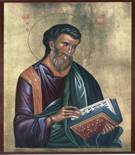
Matthew

Suffered martyrdom in Ethiopia, killed by a sword wound

Mark

Died in Alexandria, Egypt, after being dragged by horses through the streets until he was dead.

Continue reading

Judging Others: The Verse Pagans Love to Quote

Re-posting an old but important post.

Grace to You – John MacArthur

It should be noted that this passage has erroneously been used to suggest that believers should never evaluate or criticize anyone for anything. Our day hates absolutes, especially theological and moral absolutes, and such simplistic interpretation provides a convenient escape from confrontation. Members of modern society, including many professing Christians, tend to resist dogmatism and strong convictions about right and wrong. Many people prefer to speak of all-inclusive love, compromise, ecumenism, and unity. To the modern religious person those are the only “doctrines” worth defending, and they are the doctrines to which every conflicting doctrine must be sacrificed. Continue reading

The True Pattern of Love

~ J.C. Ryle

The love of the Bible will show itself in the general spirit and demeanor of a believer. It will make them kind, unselfish, good-natured, good-tempered, and considerate of others. It will make them gentle, friendly, and courteous in all the daily relations of private life, thoughtful for others comfort, tender for others feelings, and more anxious to give pleasure than to receive. True love never envies others when they prosper, nor rejoices in the calamities of others when they are in trouble. At all times it will believe, hope, and try to put to good use the actions of others. And even at the worst, it will be full of pity, mercy, and compassion. Would we like to know where the true pattern of love like this can be found? We have only to look at the life of our Lord Jesus Christ, as described in the Gospels, and we will see it perfectly exemplified.


Practical Religion, “Charity”, [Carlisle, PA: Banner of Truth, 1998], 171, 172.