The History of Dispensationalism

“My brother, I am a constant reader of my Bible, and I soon found that what I was taught to believe did not always agree with what my Bible said. I came to see that I must either part company with John Darby, or my precious Bible, and I chose to cling to my Bible and part from Mr. Darby.” George Müeller (1805–1898)

I am quite convinced that all the promises to Israél are found, are finding and will find their perfect fulfilment in the Church. It is true that in time past, in my expositions, I gave a definite place to Israél in the purposes of God. I have now come to the conviction, as I have just said, that it is, the new and spiritual Israél that is intended. G. Campbell Morgan (1863-1945)

Dispensationalism is a device of the enemy, designed to rob the children of no small part of that bread which their heavenly Father has provided for their souls; a device wherein the wily serpent appears as an angel of light, feigning to “make the Bible a new book” by simplifying much in it which perplexes the spiritually unlearned. It is sad to see how widely successful the devil has been by means of this subtle innovation. A. W. Pink(1886-1952)

It is mortifying to remember that I not only held and taught these novelties myself, but that I even enjoyed a complacent sense of superiority because thereof, and regarded with feelings of pity and contempt those who had not received the “new light” and were unacquainted with this up-to-date method of “rightly dividing the word of truth.” For I fully believed what an advertising circular says in presenting “Twelve Reasons why you should use THE SCOFIELD REFERENCE BIBLE,” namely, that: “First, the Scofield Bible outlines the Scriptures from the standpoint of DISPENSATIONAL TRUTH, and there can be no adequate understanding or rightly dividing of the Word of God except from the standpoint of dispensational truth.”

What a slur is this upon the spiritual understanding of the ten thousands of men, “mighty in the Scriptures,” whom God gave as teachers to His people during all the Christian centuries before “dispensational truth” (or dispensational error), was discovered! And what an affront to the thousands of men of God of our own day, workmen that need not to be ashamed, who have never accepted the newly invented system! Yet I was among those who eagerly embraced it (upon human authority solely, for there is none other) and who earnestly pressed it upon my fellow Christians. I am deeply thankful, however, that the time came (it was just ten years ago) when the inconsistencies and self contradictions of the system itself, and above all, the impossibility of reconciling its main positions with the plain statements of the Word of God, became so glaringly evident that I could not do otherwise than renounce it. Philip Mauro (1859-1952) Continue reading

The Sovereignty Of God In Salvation

John 10:28 I give them eternal life, and they will never perish, and no one will snatch them out of my hand.

A.W. PINK’S

THE
SOVEREIGNTY
OF GOD

CHAPTER FOUR

THE SOVEREIGNTY OF GOD IN SALVATION


“O the depths of the riches both of the wisdom and knowledge of God! how unsearchable are His judgments, and His ways past finding out” (Rom. 11:33).

“Salvation is of the LORD” (Jonah 2:9); but the Lord does not save all. Why not? He does save some; then if He saves some, why not others? Is it because they are too sinful and depraved? No; for the Apostle wrote, “This is a faithful saying, and worthy of all acceptation, that Christ Jesus came into the world to save sinners; of whom I am chief” (1 Tim. 1:15). Therefore, if God saved the “chief” of sinners, none are excluded because of their depravity. Why then does not God save all? Is it because some are too stony-hearted to be won? No; because it is written, that God will “take the stony heart out of their flesh, and will give them a heart of flesh” (Ezek. 11:19). Then is it because some are so stubborn, so intractable, so defiant that God is unable to woo them to Himself? Before we answer this question let us ask another; let us appeal to the experience of the Christian reader. Continue reading

His Number is 666

“His Number is 666”
By Kim Riddlebarger ~ Sermons on the Book of Revelation # 20
Texts: Revelation 13:11-18; Daniel 8:15-26

There is no subject–with the possible exception of the unpardonable sin–which has caused as much consternation for the people of God as has the so-called “mark of the beast.” John pointedly warns his hearers against taking such a mark on the back of the hand or the forehead. He also tells us that anyone who takes such a mark swears allegiance to the beast. This has given Christians throughout the ages a healthy suspicion of any government which persecutes the church or hinders the preaching of the gospel. It has lead to a number of questions in our own day about advancing technology and increasing government control over many areas of our personal lives. Such a warning from an apostle creates a climate in which sensational predictions and warnings about political events and technology are the norm. So we must do our best to bring clarity to this most difficult and controversial of subjects.

In past sermons, we have been working our way through Revelation 12-14 in which John introduces his reader to seven of the main characters in the great drama of redemption. Like the seal judgments of Revelation 6-8:1 and the trumpet judgments of Revelation 8-11, the vision recorded in Revelation 12-14 describes the entire period of time between the first advent and the second coming of Christ from a distinct theological perspective (or “camera” angle as we have been calling it). In this section of Revelation, John gives us a vivid description of the struggle between the people of God and our great adversary, Satan, who has been cast down from heaven to earth where he now seeks to wage war upon the church of Jesus Christ through the agency of his henchmen, the beast and the false prophet. Continue reading

A Present or Future Millennium?

by Kim Riddlebarger

Most American Evangelicals are firmly committed to the idea that an earthly millennial age will begin immediately after our Lord Jesus Christ’s Second Advent. Since premillennialism is so dominant in American church circles, many who encounter historic Protestantism for the first time are quite surprised when they discover that all of the Protestant Reformers and the entire Reformed and Lutheran traditions are amillennial. Amillennialism is that understanding of eschatology which sees the millennium not as a future golden age as does premillennialism (the age of the church triumphant), but instead as the present course of history between the First and Second Advent’s of our Lord (the age of the church militant). And indeed, I am sure that there are many readers who will express shock and disappointment upon learning of my own amillennial convictions. But I am convinced, however, that many readers simply do not understand the basic end-times scenario found in the New Testament. Part of the problem is that dispensational premillennial writers have completely dominated Christian media and publishing. There are literally hundreds of books, churches, and parachurch ministries all devoted to taking premillennialism and the “pretribulation” rapture idea to the masses. And so, I can only lament the fact that my own tradition has done so little to produce popular books introducing and defending amillennialism. It is my guess that many who read this article will have never heard the case for the classical position held by the church regarding the return of Christ and the millennial age.

Another problem encountered when examining this subject is that discussions of it often generate a great deal of heat but not very much light. One local prophecy pundit has quipped that the people in heaven with the lowest IQs will be amillennial. Hal “Late Great” Lindsey goes so far as to label amillennialism as “anti-Semitic,” demonic and heretical.1 It is not uncommon to hear prophecy teachers label amillennial Christians as “liberal” or to accuse them of not taking the Bible literally. The result of such diatribes is that American Christians cannot help but be prejudiced by such unfortunate comments, and many simply reject outright (without due consideration of the other side) the eschatology of the Reformers and classical Protestantism-an eschatology that is amazingly simple, biblical, and Christ centered. And so, if you should be in that camp, instead of simply turning me off at this point, please bear with me, hear my case, and then decide for yourself on the basis of Scripture. Continue reading

Can Those Of Religions Other Than Christianity Enter The Kingdom Of God ?

MUST-SEE VIDEO: WHY “KINGDOM CIRCLES” TEACHING IS BLASPHEMOUS

Posted by: Amy Spreeman

Remember when we first shared that photo of a Saddleback pastor teaching a highly questionable method of evangelizing to other religions? Churches around the world are learning how to blend or sychretize two different faiths, thanks to movements like Jesus in the Qur’an and The Insider Movement.  These folks will often use the so-called “Kingdom Circles” illustration to explain how Muslims, Hindus, Buddhists, etc., can enter the Kingdom of God without actually converting to Christianity.

Today I sat down with Elijah Abraham, a former Muslim and now born-again Christian, who took out a pen and paper to explain to me why Kingdom Circles is flawed at best, and more truthfully, blasphemous.

He then illustrated a much better (and biblical!) way to explain the Kingdom to those who do not know Christ. Here is the video: Continue reading

Entertainment and Style of Music Do Not Convert People

John MacArthur,

“It’s not the style of our music that gets people converted. It’s not because of the entertainment level that they enjoy that gets them converted. Sooner or later you’ve got to get down to confronting them with the message and my judgment is sooner is better than later. So what are we waiting for? Let’s just get them to hear the message, that’s how they’re going to be saved. Take out the preaching of sin, take out the preaching of hell, take out repentance, take out the cross, and then people will feel comfortable. That’s the new trend. Build an image of love, care, being nice and if everybody is nice, they like us, they might like Jesus. That is tragically not the case. Continue reading

BRIAN MCLAREN CROSSED THE ROAD…

Matthew 7:13 “Enter by the narrow gate. For the gate is wide and the way is easy that leads to destruction, and those who enter by it are many.

By Amy Spreeman

Post-modern liberalism in the Body of Christ is what gives the Emergent Church theology its wings. It helps you toss along the waves of uncertainty; question what God said is Truth.  A few weeks ago we reported the many ways in which the Church is emerging into a New kind of Spirituality, one that brings together people of all faiths.

Yesterday on 9-11, a brand new book was released by Brian McLaren: Why did Jesus, Moses, the Buddha, and Mohammed cross the road?  Is it a bad joke? Here’s Brian McLaren’s punchline:

My answer to the question Why did Jesus, Moses, the Buddha, and Mohammed cross the road is simply, this: To get to “the other.”

In other words, everything we know about Jesus, Moses, the Buddha, and Mohammad, tells us that—if they were here today—they would be trying to lead us into an encounter with the other where, instead of killing one another, and hating one another, we would discover one another.

As all God’s children… Continue reading

The Shepherd

John 10:11 I am the good shepherd. The good shepherd lays down his life for the sheep.

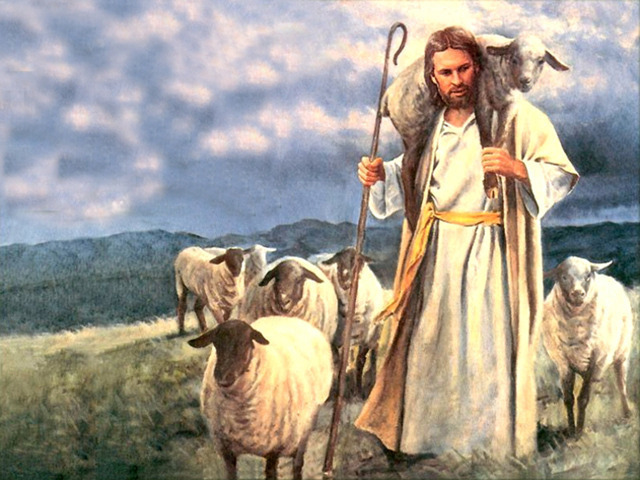
Luke 15:3-7 So he told them this parable: (4) “What man of you, having a hundred sheep, if he has lost one of them, does not leave the ninety-nine in the open country, and go after the one that is lost, until he finds it? (5) And when he has found it, he lays it on his shoulders, rejoicing. (6) And when he comes home, he calls together his friends and his neighbors, saying to them, ‘Rejoice with me, for I have found my sheep that was lost.’ (7) Just so, I tell you, there will be more joy in heaven over one sinner who repents than over ninety-nine righteous persons who need no repentance.

THEN a shepherd has at last overtaken his poor, silly, wandering sheep, he does not straightway fall to scolding or beating it for having cost him so much toil and trouble. No; but he observes that it is very weary, that it has torn itself among thorns, and cut itself among jagged rocks, and therefore he first tenderly sees to its wounds, and then bears it back to the fold in his own arms. Poor trembling sinner, the gospel has at length laid hold upon you; you cannot longer run into the paths of sin, grace has stopped your mad career, and made you tremble at the guilt of sin. Continue reading

How to Discern : Who’s Who? (Part 5/6)

Acts 17:11 Now these Jews were more noble than those in Thessalonica; they received the word with all eagerness, examining the Scriptures daily to see if these things were so.

By Pastor Anton Bosch 

Who’s Who?  (Part  5/6)

It is important that we check every word we hear or read against the plumbline of the Bible. In addition, we need to check the source of the information as well. We must check two things: The message and the man.

Many times we will hear messages that sound spot-on, and may even be doctrinally correct, but the speaker is a deceiver. Remember, the Devil will present truth in order to get you on his hook. No Mormon or Jehovah’s Witness will knock on your door and begin the conversation by saying that they have come to present another Gospel and another Jesus. They all begin by affirming that they believe exactly what you believe. The problem is that by the time they get around to the lie it is often too late. Our only defense is not to listen to a single word from someone we have not checked out thoroughly first. Mormons and JWs are easy to recognize by their outward appearance. But how do we recognize someone who appears to be an evangelical, Bible believing preacher? Here are a few hints:

First, who is he and where does he come from? In other words who does he relate to and who has influenced his thinking? This can easily be established from his bio, personal history or curriculum vitae. Where did he train? Where does he fellowship? Who is he in relationship with? Who does he quote? Who quotes him? If he has a website, look at the other sites he provides links to. These questions will often reveal a lot about the messenger. Obviously, he may have had bad connections in the past and may have repented. If he has repented from former evil associations, has he publicly repudiated those links and doctrines and broken fellowship with them? If he has, his past should not be held against him; but, at the same time, some of those influences may continue to taint his thinking and one should be on the alert for signs thereof. “Evil company corrupts good habits” (1Corinthians 15:33) and a man can be known by the friends he keeps. Continue reading

How to Discern : Orthodoxy ( Part 3/6)

By Pastor Anton Bosch 

Orthodoxy ( Part 3/6)

The Roman church has for a long time believed that only the “clergy” may interpret the Bible. In fact, until recently, they did not even allow translations of the Bible into the common language of the people because they did not believe that ordinary people were equipped to read the Bible, let alone interpret it.

Since the Reformation, the Bible has been made available to ordinary people and now anyone in the free world is able to read, study and own Bibles. But the pendulum has swung to the other extreme so that today every Tom, Dick and Harry feels he has the right to interpret the Bible as he feels fit. This is an equal but opposite error to that of the Roman clerical system.

It is therefore important that we understand that while each of us has the privilege of reading the Bible for ourselves, no individual has the right to interpret the Scriptures as he wishes. We can all understand the Bible, and the Spirit will lead us into all Truth, but it is not up to us to formulate our own “new” doctrine. There is a body of truth that is not open for reinterpretation. We refer to this as “orthodox” teaching. “Orthodox” means “conforming to established and traditional doctrine”. (Not to be confused with Eastern Orthodox churches.) Continue reading

How to Discern : Understanding the Bible (Part 2/6)

By Pastor Anton Bosch 

Understanding the Bible

Many people will agree that the Bible is the authoritative Word of God. The problem however is often how it is interpreted. How can we be sure that our understanding is the right one?

In discerning truth from error, we must begin by understanding Truth for ourselves. Many people try to discover the Truth by analyzing and dissecting error. You simply cannot do that. It is like someone trying to drive a car by looking only in the rearview mirror while trying to move forward. You cannot see where you are going by looking where others have gone wrong. So before we try to judge error or someone else’s doctrine, we need to be sure about what we believe. I agree, that many are prompted by the rise of some error to study truth. But, if you want to learn the truth on some matter, you will only learn it by studying the Bible, not by studying the mistakes of others. So what must I do to understand?

First I must ask God for wisdom. “If any of you lacks wisdom, let him ask of God, who gives to all liberally and without reproach, and it will be given to him” (James 1:5). The same Spirit Who inspired the men to write the Bible (2Timothy 3:16, 2Peter 1:21), is available to help us understand what is written. The Bible is not an academic book which can be studied in an intellectual way only. Yes, the Bible is logically sound and intellectually deep, but it is primarily a spiritual book in which God speaks to His people. And His Spirit will lead, guide and counsel us so we may come “into all truth” (John 16:13). Studying the Bible is both an academic and spiritual exercise. Read it in a “spiritual” way without applying sound reasoning and you will not discover the Truth. But study it as academic literature without the Spirit’s help and you will most certainly end in error. Pray David’s prayer every time you approach the Word: “Open thou mine eyes, that I may behold wondrous things out of thy law” (Psalm 119:18). Continue reading

How to Discern : How to Smell a Rat (Part 1 /6)

By Pastor Anton Bosch 

 How to Smell a Rat (Part 1 /6)

A toddler will eat anything. It does not matter if it is nutritious or poison, it has no ability to discern between food and poison.

As Christians mature in the faith they should learn to discern between spiritual poison and spiritual food. “But solid food belongs to those who are of full age, that is, those who by reason of use have their senses exercised to discern both good and evil” (Hebrews 5:14). The problem is that the vast majority of modern-day “Christians” are either not born again or have been kept in a perpetual state of babyhood and thus are unable to discern the difference between truth and error. Because of this, and because we have a new generation of church-goers who do not know the Bible, false teachers have multiplied and millions believe anything these preachers say.

Discriminating between truth and error is really not that difficult as long as we abide by a few basic principles. The first of these is that truth is absolute. I use the term “absolute” as the opposite of “relative”. For most people – Christian and non-Christian – truth is relative. We hear: Continue reading

Beware False Prophets

Do not think it is the obvious that we can now who is a false teacher/prophet, it is those who profess to be believers who can lead you astray. Mat_7:15 “Beware of false prophets, who come to you in sheep’s clothing but inwardly are ravenous wolves.

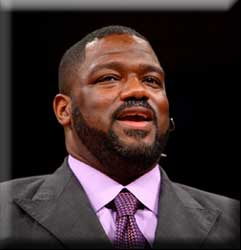
This is an excellent sermon and exposition done by Pastor Vodie Baucham.

Please listen here :

OR DOWNLOAD SERMON HERE

Voddie Baucham 

Some sermon exert noted I jotted down :
Though the culture at large has a problem with judging, Christians are not only allowed to do so, we are commanded to do so. In this portion of the Sermon on the Mount, Jesus informs us that we must learn to discern and expose false teaching and false teachers.

False prophets are not always easy to spot.D A Carson ” Warnings against false prophets are necessarily based on the conviction that not all prophets are true, that truth can be violated and that the gospels enemies usually conceal their hostility and try to pass them selves of as fellow believers” (Quote used by Voddie) Continue reading

For Whom Did Christ Die? – The Children Of God

John 11:52 and not for the nation only, but also to gather into one the children of God who are scattered abroad.

By Don Fortner 

John11:52
Our great, sin-atoning Substitute laid down his life and died for the children of God. According to the prophecy of Caiaphas, Christ was to die, not for the nation of the Jews only, but to “gather together in one the children of God that were scattered abroad” throughout the Gentile world. Redemption and adoption belong to the same people. Those who are predestinated to adoption by Christ are said to have redemption in him through his blood (Eph 1:5,7). This blessing of adoption, in the full enjoyment of it, in the resurrection, is called “the redemption of the body”. The resurrection is called the redemption of our bodies because redemption, in so far as the application of it is concerned, will not be complete until our very bodies are redeemed from all the consequences of Adam’s fall (Rom 8:23Eph. 1:144:30). Continue reading

Smith Wigglesworth and New Apostolic Reformation (NAR) Run…….


Smith Wigglesworth – The Facts Continue reading