Charles H. Spurgeon ~ Quotes On Love For Brethren

Thank you Sister Rain for sharing this.

HOW THE APOSTLES DIED?

DO YOU KNOW HOW THE APOSTLES DIED?

WOW~~NO ONE EVER Said it would be easy!

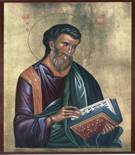
Matthew

Suffered martyrdom in Ethiopia, killed by a sword wound

Mark

Died in Alexandria, Egypt, after being dragged by horses through the streets until he was dead.

Continue reading

Our Bible: The Most Critical Issue

By J Sidlow Baxter from the website of Dr Paul M Elliot

As J. Sidlow Baxter wrote, in a time when the most basic structures of civilized society are crumbling, “the crying need just now is for prophets, not just preachers; for ministers, not just managers; for men with a passion to put our dear old Bible back where it ought to be in the Christian faith, in the Protestant pulpit.”

Editor’s note: The late British pastor and evangelist J. Sidlow Baxter wrote the following article over twenty years ago, when he was in his late eighties. Some of the allusions are historically dated, but the message rings loud and clear. It is even more relevant under present world conditions than when it was first written. – Dr. Paul Elliott

Continue reading

Houses Built on Sand

By Prof. Johan Malan, Mossel Bay, South Africa (August 2011)

A house built on sand is a house without a proper foundation – it is bound to collapse when it is battered by heavy storms, despite its solid appearance above the ground. The same principle applies to individuals and nations: without a sound spiritual and moral foundation they are heading for disaster when afflicted by the storms of life (cf. Matt. 7:24-27). Jesus Christ is the only true foundation that offers lasting stability against all the storms which are incessantly unleashed from an evil world: “For no other foundation can anyone lay than that which is laid, which is Jesus Christ” (1 Cor. 3:11).

The unpleasant fact about our present situation is that, despite a small minority of evangelical Christians, we are essentially living in a post-Christian world which has rejected the only true foundation. Politicians are the architects of a nation’s ideological foundation and they, as well as the electorate who agree with them and have elected them to positions of authority, must take the responsibility when things go horribly wrong. Everywhere in the world problems are rapidly mounting and they sure spell disaster. We already find ourselves in a situation in which most countries are heading for a major collapse in all spheres of public life – political, social, economic, moral, as well as religious. The signs of a dramatic breakdown are there for all to see.

Continue reading

The Beauty of Holiness

by Arthur W. Pink

“Worship the LORD in the beauty of holiness” (Psa. 29:2). Holiness is the antithesis of sin, and the beauty of holiness is in direct contrast from the ugliness of sin. Sin is a deformity, a monstrosity. Sin is repulsive, repellent to the infinitely pure God: that is why He selected leprosy, the most loathsome and horrible of all diseases, to be its emblem. When the Prophet was Divinely inspired to depict the condition of degenerate Israel it was in these words, “From the sole of the foot even unto the head there is no soundness in it; but wounds, and bruises, and putrifying sores” (Isa. 1:6). O that sin were sickening and hateful to us: not merely its grosser forms, but sin itself. At the opposite extreme from the hideousness of sin is “the beauty of holiness.” Holiness is lovely in the sight of God: necessarily so. It is the reflection of His own nature, for He is “glorious in holiness” (Exo. 15:11). O that it may be increasingly attractive to and earnestly sought after by us. Perhaps the simplest way of bringing out the beauty of holiness will be to contrast it from the beauties of time and sense.

First, the beauty of holiness is imperceptible to the natural man, and therein it differs radically from the beauties of mere nature. He

Continue reading

Did Paul Always Name Names?

Dr Paul M Elliott

Previous post : Is It Wrong to Name Names?

Did Paul Always Name Names?  

Paul frequently singled out individuals for correction, condemnation, or commendation. But in many other cases made powerful points about sound doctrine and godly living without naming names.

In response to our previous article, Is It Wrong to Name Names?, readers have mentioned a significant related point: While the Apostle Paul did name names in many cases, both for correction and commendation, there were also many other cases when he did not – but dealt with the issues at hand just as vigorously.

The Un-Named Galatian Heretics

Continue reading

Judging Others: The Verse Pagans Love to Quote

Re-posting an old but important post.

Grace to You – John MacArthur

It should be noted that this passage has erroneously been used to suggest that believers should never evaluate or criticize anyone for anything. Our day hates absolutes, especially theological and moral absolutes, and such simplistic interpretation provides a convenient escape from confrontation. Members of modern society, including many professing Christians, tend to resist dogmatism and strong convictions about right and wrong. Many people prefer to speak of all-inclusive love, compromise, ecumenism, and unity. To the modern religious person those are the only “doctrines” worth defending, and they are the doctrines to which every conflicting doctrine must be sacrificed. Continue reading

Is It Wrong to Name Names?

Dr Paul M Elliott

Some readers criticize us for citing, by name, individuals and institutions that promote heretical doctrines. They tell us that naming names is “unloving”. We respond that Scripture does not support this accusation. Consider the example of the Apostle Paul.

What is the Truly Loving Thing to Do?

Paul considered it vital to demonstrate his deep agape love for Christ and His church by warning believers to beware of those who would seek to “overthrow the faith of some” (2 Timothy 2:18). Paul’s consistent policy was to name names, recognizing that speaking in generalities is not always enough.

So great was Paul’s concern for the Galatian church’s departure into legalism – “another gospel, which is not another” (1:7) – that he cited the example of a fellow apostle’s temporary departure from soundness:

Continue reading

Do all dogs really go to heaven?

John MacArthur – Grace to You

Psalms 8:4-8; Isaiah 11:6-9

Our pets are precious to us. And sometimes it is difficult to imagine heaven without them. One Canadian broadcaster even wrote, “I was quite shaken by this revelation: an afterworld that deprived me of my dog seemed to me less than heaven.”

Though we can appreciate that man’s attachment to his pet, we have to look to the Bible for an answer to the question of animals in heaven. Obviously, the Bible doesn’t give a direct answer. But it does provide information about heaven and animals to guide us to a better-informed discussion of the matter.

Continue reading

New Citizenship, New Bodies, A Secure Inheritance

By Dr Paul M Elliott

Part three of a series. Read part two.

We come now to our last question: What does adoption promise the believer in the life to come? To answer that question it is important for us to understand one other element in the kind of legal adoption that the Apostle Paul speaks of in Romans, Galatians, and Ephesians.

That final important element has three aspects: inheritance rights, citizenship rights and responsibilities, and the restoration of the marred image of God.

A Rich Inheritance

Under the Roman law that Paul is using as his metaphor, the adopted son was given the right to the Father’s property. He was given an inheritance. The father’s property was his by right of adoption. And that is true for us. We have an inheritance. Our inheritance is our Father’s property — all the riches that are in Christ Jesus. The spiritual riches of life in Him now, and the riches of the new heavens and new earth in the life to come. And the Holy Spirit, Ephesians chapter one tells us, is the guarantee or the down-payment of that inheritance.

Continue reading

New Privileges, New Relationships, New Responsibilities


By Dr Paul M Elliot

Part two of a series. Read part one.

What does adoption mean for the saints during this present life?

A New Relationship with God the Father

First, we have a new relationship with God the Father. Because of what Christ has done, God the condemning Judge is now God our loving Father. He is not only “the God and Father of our Lord Jesus Christ” as Scripture tells us in several places, but He is the God and Father of us all, Paul tells us in Ephesians chapter four, because we are in Christ. When Jesus met Mary Magdalene after His resurrection He said to her in John chapter 20, “Do not cling to Me, for I have not yet ascended to My Father; but go to My brethren and say to them, ‘I am ascending to My Father and your Father, and to My God and your God.’ ”

Scripture tells us that because of our adoption, God our Father is now approachable. Through the intercession of the risen Christ, seated at His right hand, we have access to the Father. When Jesus taught His disciples how to pray, He taught them to pray, “Our Father who art in heaven, hallowed be Thy name.” And so the writer to the Hebrews tells us, “Let us therefore come boldly to the throne of grace, that we may obtain mercy and find grace to help in time of need.” God our Father wants us to come to Him. He wants us to fellowship with Him. He wants to care for us. He hears and answers prayer.

Continue reading

What Does It Mean to Be Adopted by God?

By Dr Paul M Elliot


Part one of a series. Read part two.

This precious doctrine is often neglected in contemporary preaching. In a three-part series we shall examine three related questions: How are believers adopted by God? What does adoption mean for the believer’s present life? What does adoption mean for the life to come? We’ll also examine some current false teachings about adoption.

A Key Passage

One of the key passages that presents this wonderful doctrine is Galatians 3:26-4:7 —

For you are all sons of God through faith in Christ Jesus. For as many of you as were baptized into Christ [this speaks of Spirit baptism, not water baptism] have put on Christ. There is neither Jew nor Greek, there is neither slave nor free, there is neither male nor female; for you are all one in Christ Jesus. And if you are Christ’s, then you are Abraham’s seed, and heirs according to the promise.

Now I say that the heir, as long as he is a child, does not differ at all from a slave, though he is master of all, but is under guardians and stewards until the time appointed by the father. Even so we, when we were children, were in bondage under the elements of the world. But when the fullness of the time had come, God sent forth His Son, born of a woman, born under the law, to redeem those who were under the law, that we might receive the adoption as sons.

And because you are sons, God has sent forth the Spirit of His Son into your hearts, crying out, “Abba, Father!” Therefore you are no longer a slave but a son, and if a son, then an heir of God through Christ.

Continue reading

Fellowship or Fight?

By Phil Johnson

One thing you’ll quickly notice if you make even a casual study of historical theology is this: the history of the church is a long chronicle of doctrinal development that runs from one profound controversy to the next.

In one sense it is sad that the history of the church is so marred by doctrinal conflicts, but in another sense that is precisely what the apostles anticipated. Even while the New Testament was still being written, the church was contending with serious heresies and dangerous false teachers who seemed to spring up everywhere. This was so much a universal problem that Paul made it one of the qualifications of every elder that he be strong in doctrine and able to refute those who contradict (Titus 1:9). So the church has always been beset by heretics and false teachings, and church history is full of the evidence of this.

Continue reading

Is It Accurate to Say That God Loves Sinners, But Hates Sin?

 By Dr Paul M Elliot

Church history records a variety of strongly-held positions on this question. Some have said that God loves all mankind equally. Others have said that God only loves His elect. Still others have said that God loves all men, but loves believers in a special way. What is the truth?

In the final analysis, we must be careful to say what Scripture says about the love of God and His attitude toward sin — no more, but also no less. And on the authority of Scripture, we must conclude that it is accurate to say that God loves sinners, but hates sin — but also that those who persist in their sin will personally experience the eternal wrath of God.

While We Were Still Sinners”

Romans 5:8 alone is a sufficient basis for the assertion that God does indeed love sinners: “God demonstrates His own love toward us, in that while we were still sinners, Christ died for us.” If God did not love sinners, He would not have sent His Son to die for them. But it is important to explain further.

Continue reading

The True Pattern of Love

~ J.C. Ryle

The love of the Bible will show itself in the general spirit and demeanor of a believer. It will make them kind, unselfish, good-natured, good-tempered, and considerate of others. It will make them gentle, friendly, and courteous in all the daily relations of private life, thoughtful for others comfort, tender for others feelings, and more anxious to give pleasure than to receive. True love never envies others when they prosper, nor rejoices in the calamities of others when they are in trouble. At all times it will believe, hope, and try to put to good use the actions of others. And even at the worst, it will be full of pity, mercy, and compassion. Would we like to know where the true pattern of love like this can be found? We have only to look at the life of our Lord Jesus Christ, as described in the Gospels, and we will see it perfectly exemplified.


Practical Religion, “Charity”, [Carlisle, PA: Banner of Truth, 1998], 171, 172.