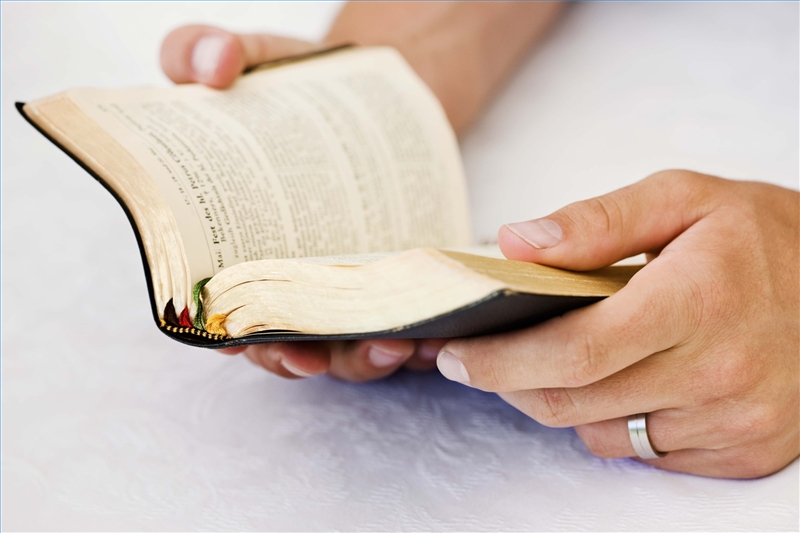
Exposing Apostasy: The Right Motivation, The Right Standard

By Dr Paul M Elliott

Part four of a series. Read part three.

The only Biblical motivation for confronting apostasy is love for Christ and His church, and the only standard for judging apostasy is the truth of God’s Word.

In this series our theme is an examination of five keys to a Biblically loving response to apostasy. In this article we shall focus on key number two: You need to be absolutely clear about the Biblical motivation for the proper response to apostasy. The proper response, the Biblical response, is based upon genuine Christian love – agape love.

Continue reading

Understanding What Apostasy Is – And Is Not

By Dr Paul M Elliott

Part three of a series. Read part two.

To properly confront it, you must understand what apostasy is, and is not, according to Scripture.

In our first article, I explained the reason for this series: Today, every Bible-believing Christian faces a disturbing reality. Survey after survey shows that there is a high statistical probability that you will, at some point, need to take a stand against apostasy within your own church.

We saw, in Colossians chapter two and 1 John chapter three, that the proper motivation for such an act of courage and faith is agape love. The Bible defines this as a self-sacrificial love that appreciates the preciousness of your fellow believers in the body of Christ, a love that demonstrates itself through active concern for their spiritual safety. Demonstrating such love may require you to make the self-sacrifice of putting your personal reputation on the line by sounding the alarm against apostasy.

Continue reading

Five Keys to a Biblically Loving Response to Apostasy

By Dr Paul M Elliott

Part two of a series. Read part one.

According to the Word of God, what is the loving response to apostasy? To answer that question, five things must be absolutely clear in your mind as a believer.

A Disturbing Reality

As we noted in our first article in this series, every Christian needs to face a disturbing reality: In today’s postmodern church environment, there is a high statistical probability that at some point you will need to stand up and expose apostasy within your church. The time may well come when you will need to sound an alarm because the word of man is being substituted for the Word of God in the life and ministry of the church. The time may well come when you will need to wave a red flag because there is false teaching, because the one true Gospel is being watered down, or a false gospel has taken its place.

Continue reading

Free Will—A Slave


Delivered on Sabbath Morning, December 2, 1855, by the
REV. C. H. Spurgeon

At New Park Street Chapel, Southwark.

“And ye will not come to me, that ye might have life.”—John 5:40.

This is one of the great guns of the Arminians, mounted upon the top of their walls, and often discharged with terrible noise against the poor Christians called Calvinists. I intend to spike the gun this morning, or, rather, to turn it on the enemy, for it was never theirs; it was never cast at their foundry at all, but was intended to teach the very opposite doctrine to that which they assert. Usually, when the text is taken, the divisions are: First, that man has a will. Secondly, that he is entirely free. Thirdly, that men must make themselves willing to come to Christ, otherwise they will not be saved. Now, we shall have no such divisions; but we will endeavour to take a more calm look at the text; and not, because there happen to be the words “will,” or “will not” in it, run away with the conclusion that it teaches the doctrine of free-will. It has already been proved beyond all controversy that free-will is nonsense. Freedom cannot belong to will any more than ponderability can belong to electricity. They are altogether different things. Free agency we may believe in, but free-will is simply ridiculous. The will is well known by all to be directed by the understanding, to be moved by motives, to be guided by other parts of the soul, and to be a secondary thing. Philosophy and religion both discard at once the very thought of free-will; and I will go as far as Martin Luther, in that strong assertion of his, where he says, “If any man doth ascribe aught of salvation, even the very least, to the free-will of man, he knoweth nothing of grace, and he hath not learnt Jesus Christ aright.” It may seem a harsh sentiment; but he who in his soul believes that man does of his own free-will turn to God, cannot have been taught of God, for that is one of the first principles taught us when God begins with us, that we have neither will nor power, but that he gives both; that he is “Alpha and Omega” in the salvation of men.

Continue reading

Charles H. Spurgeon ~ Quotes On Love For Brethren

Thank you Sister Rain for sharing this.

Our Bible: The Most Critical Issue

By J Sidlow Baxter from the website of Dr Paul M Elliot

As J. Sidlow Baxter wrote, in a time when the most basic structures of civilized society are crumbling, “the crying need just now is for prophets, not just preachers; for ministers, not just managers; for men with a passion to put our dear old Bible back where it ought to be in the Christian faith, in the Protestant pulpit.”

Editor’s note: The late British pastor and evangelist J. Sidlow Baxter wrote the following article over twenty years ago, when he was in his late eighties. Some of the allusions are historically dated, but the message rings loud and clear. It is even more relevant under present world conditions than when it was first written. – Dr. Paul Elliott

Continue reading

Enjoying God’s Creation — Charles Spurgeon


“Where the birds make their nests; The stork has her home in the fir trees. The high hills are for the wild goats; The cliffs are a refuge for the rock badgers.” — Psalm 104:17-18.

Charles Spurgeon (1834-1892)


Psalm 104 is all through a song of nature, the adoration of God in the great outward temple of the universe. Some in these modern times have thought it to be a mark of high spirituality never to observe nature; and I remember sorrowfully reading the expressions of a godly person, who, in sailing down one of the most famous rivers in the world closed his eyes, lest the picturesque beauties of the scene should divert his mind from scriptural topics. This may be regarded by some as profound spirituality; to me it seems to savor of absurdity. There may be persons who think they have grown in grace when they have attained to this; it seems to me that they are growing out of their senses. To despise the creating work of God—what is it but, in a measure, to despise God Himself? “Whoso mocketh the poor despiseth his Maker.”

Continue reading

Do Not Meddle With God’s Word

 
Quoting Charles Spurgeon . . .

Take care my dear friends, how any of you meddle with God’s Word.I have heard of folks altering passages they did not like. It will not do, you know, you cannot alter them; they are really just the same.Our only power with the Word of God is simply to let it stand as it is, and to endeavour by God’s grace to accommodate ourselves to that.

We must never try to make the Bible bow to us, in fact we cannot, for the truths of divine revelation are as sure and fast as the throne of God.If a man wants to enjoy a delightful prospect, and a mighty mountain lies in his path, does he commence cutting away at its base, in the vain hope that ultimately it will become a level plain before him? No, on the contrary, he diligently uses it for the accomplishment of his purpose by ascending it, well knowing this to be the only means of obtaining the end in view.

So must we do; we cannot bring down the truths of God to our poor finite understandings; the mountain will never fall before us, but we can seek strength to rise higher and higher in our perception of divine things, and in this way only may we hope to obtain the blessing. (Sermon 241)

______________________________________________________

Source :    http://www.oldtruth.com/blog.cfm/id.2.pid.504

_____________________________________________________

Judging Others: The Verse Pagans Love to Quote

Re-posting an old but important post.

Grace to You – John MacArthur

It should be noted that this passage has erroneously been used to suggest that believers should never evaluate or criticize anyone for anything. Our day hates absolutes, especially theological and moral absolutes, and such simplistic interpretation provides a convenient escape from confrontation. Members of modern society, including many professing Christians, tend to resist dogmatism and strong convictions about right and wrong. Many people prefer to speak of all-inclusive love, compromise, ecumenism, and unity. To the modern religious person those are the only “doctrines” worth defending, and they are the doctrines to which every conflicting doctrine must be sacrificed. Continue reading

Do all dogs really go to heaven?

John MacArthur – Grace to You

Psalms 8:4-8; Isaiah 11:6-9

Our pets are precious to us. And sometimes it is difficult to imagine heaven without them. One Canadian broadcaster even wrote, “I was quite shaken by this revelation: an afterworld that deprived me of my dog seemed to me less than heaven.”

Though we can appreciate that man’s attachment to his pet, we have to look to the Bible for an answer to the question of animals in heaven. Obviously, the Bible doesn’t give a direct answer. But it does provide information about heaven and animals to guide us to a better-informed discussion of the matter.

Continue reading

New Citizenship, New Bodies, A Secure Inheritance

By Dr Paul M Elliott

Part three of a series. Read part two.

We come now to our last question: What does adoption promise the believer in the life to come? To answer that question it is important for us to understand one other element in the kind of legal adoption that the Apostle Paul speaks of in Romans, Galatians, and Ephesians.

That final important element has three aspects: inheritance rights, citizenship rights and responsibilities, and the restoration of the marred image of God.

A Rich Inheritance

Under the Roman law that Paul is using as his metaphor, the adopted son was given the right to the Father’s property. He was given an inheritance. The father’s property was his by right of adoption. And that is true for us. We have an inheritance. Our inheritance is our Father’s property — all the riches that are in Christ Jesus. The spiritual riches of life in Him now, and the riches of the new heavens and new earth in the life to come. And the Holy Spirit, Ephesians chapter one tells us, is the guarantee or the down-payment of that inheritance.

Continue reading

They Did Not Expect To Die That Day

From On The Box US – Tony Miano

Full permission received to place this video –  Thank you On The Box US . 🙂

Please visit On the Box for more video clips. The preachers are Ray Comfort & Tony Miano .

Modern Spirituality and Your Mind

1Jn 4:1  Beloved, do not believe every spirit, but test the spirits to see whether they are from God, for many false prophets have gone out into the world.

Listen to the sermon here :

By Voddie Baucham

This whole idea about having a peace about something being from God is a totally pagan idea, will we have peace at times when we are in the will of God? yes, will we we have a peace at times when we aren’t in the will of God yep, how do you know which is from God

Voddie Baucham says it this way:

Continue reading

New Privileges, New Relationships, New Responsibilities


By Dr Paul M Elliot

Part two of a series. Read part one.

What does adoption mean for the saints during this present life?

A New Relationship with God the Father

First, we have a new relationship with God the Father. Because of what Christ has done, God the condemning Judge is now God our loving Father. He is not only “the God and Father of our Lord Jesus Christ” as Scripture tells us in several places, but He is the God and Father of us all, Paul tells us in Ephesians chapter four, because we are in Christ. When Jesus met Mary Magdalene after His resurrection He said to her in John chapter 20, “Do not cling to Me, for I have not yet ascended to My Father; but go to My brethren and say to them, ‘I am ascending to My Father and your Father, and to My God and your God.’ ”

Scripture tells us that because of our adoption, God our Father is now approachable. Through the intercession of the risen Christ, seated at His right hand, we have access to the Father. When Jesus taught His disciples how to pray, He taught them to pray, “Our Father who art in heaven, hallowed be Thy name.” And so the writer to the Hebrews tells us, “Let us therefore come boldly to the throne of grace, that we may obtain mercy and find grace to help in time of need.” God our Father wants us to come to Him. He wants us to fellowship with Him. He wants to care for us. He hears and answers prayer.

Continue reading

What Does It Mean to Be Adopted by God?

By Dr Paul M Elliot


Part one of a series. Read part two.

This precious doctrine is often neglected in contemporary preaching. In a three-part series we shall examine three related questions: How are believers adopted by God? What does adoption mean for the believer’s present life? What does adoption mean for the life to come? We’ll also examine some current false teachings about adoption.

A Key Passage

One of the key passages that presents this wonderful doctrine is Galatians 3:26-4:7 —

For you are all sons of God through faith in Christ Jesus. For as many of you as were baptized into Christ [this speaks of Spirit baptism, not water baptism] have put on Christ. There is neither Jew nor Greek, there is neither slave nor free, there is neither male nor female; for you are all one in Christ Jesus. And if you are Christ’s, then you are Abraham’s seed, and heirs according to the promise.

Now I say that the heir, as long as he is a child, does not differ at all from a slave, though he is master of all, but is under guardians and stewards until the time appointed by the father. Even so we, when we were children, were in bondage under the elements of the world. But when the fullness of the time had come, God sent forth His Son, born of a woman, born under the law, to redeem those who were under the law, that we might receive the adoption as sons.

And because you are sons, God has sent forth the Spirit of His Son into your hearts, crying out, “Abba, Father!” Therefore you are no longer a slave but a son, and if a son, then an heir of God through Christ.

Continue reading