Worthy Examples To The World

From Strength for Today by John MacArthur

“Let love of the brethren continue.” – Hebrews 13:1

To be a testimony to the world, Christians need to live what they profess.

The nineteenth-century preacher Alexander Maclaren once said, “The world takes its notion of God most of all from those who say they belong to God’s family. They read us a great deal more than they read the Bible. They see us; they only hear about Jesus Christ.” Sound biblical doctrine, as important a foundation as it is, is inadequate by itself to influence the world toward Christ’s gospel.

Continue reading

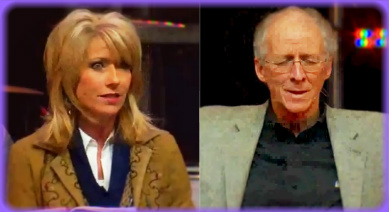
Beth Moore and John Piper Lead Lectio Divina-Lite at Passion 2012

By on Jan 6, 2012

Apprising Ministries has been warning for years concerning the evil effects of the neo-liberal in the Emerging Church aka the Emergent Church.

It’s an incontrovertible fact that right from its hatching in hell corrupt Contemplative Spirituality/Mysticism (CSM), such as that taught by Living Spiritual Teacher and Quaker mystic Richard Foster along with his spiritual twin and Southern Baptist minister Dallas Willard, was a core doctrine.

Spreading as a spiritual cancer throughout apostatizing evangelicalism, we even see that it’s slithered all the way into the New Calvinst neo-reformed camp e.g. as in Acts 29 Network And Reformed Counter Reformation Spirituality? One of the fruits of CSM is a blurring of doctrinal lines, which is particularly dangerous in this time of postmodernism and growing spiritual blindness.

Continue reading

Beth Moore recommends “JESUS CALLING” Book Claiming Direct Divine Revelation !

By

on Dec 21, 2011

The largely pretending to be Protestant evangelical community continues its pilgrimage back to the legalistic spiritual bondage of apostate Roman Catholicism and its evil author the Church of Rome.

As an online apologetics and discernment work Apprising Ministries does what we can to document this woeful walk away from the truths recaptured during the Lord’s Reformation.

How sad He must be to see James Robison And Rick Warren Working To Reverse The Protestant Reformation. Bottom line is this: If sinful ecumenicists like Robison and Warren are right, then the Reformers were wrong.

Beyond question Southern Baptist Bible teacher Beth Moore still remains enormously popular within today’s anything goes evanjellyfish.

Continue reading

Who Were the Magi?

Bible Q & A With John MacArthur

Few biblical stories are as well known, yet so clouded by myth and tradition, as that of the magi, or wise men, mentioned by Matthew. During the Middle Ages legend developed that they were kings, that they were three in number, and that their names were Casper, Balthazar, and Melchior. Because they were thought to represent the three sons of Noah, one of them is often pictured as an Ethiopian. A twelfth-century bishop of Cologne even claimed to have found their skulls.

The only legitimate facts we know about these particular magi are the few given by Matthew in the first twelve verses of chapter 2. We are not told their number, their names, their means of transportation to Palestine, or the specific country or countries from which they came. The fact that they came from the east would have been assumed by most people in New Testament times, because the magi were primarily known as the priestly-political class of the Parthians-who lived to the east of Palestine.

Continue reading

The Certainty of Judgment

John MacArthur – Grace to You

“If the word spoken through angels proved unalterable, and every transgression and disobedience received a just recompense, how shall we escape if we neglect so great a salvation?” (Heb. 2:2-3).

Today the majority believes that God is a God of love and grace, but not of justice. One brief look at Hebrews 2:2-3 ought to convince anyone otherwise. The writer’s point is this: Since the Old Testament makes it clear that transgression and disobedience met with severe and just punishment, how much more so will equal or greater punishment be rendered under the New Testament, which was revealed by the Lord Jesus Christ Himself?

Continue reading

Six Ways Satan Is Stealing Christmas

John MacArthur – Grace to You

Selected Scriptures December 21, 2009

Six Ways Satan is Stealing ChristmasThe majority of people in the world will miss the next Christmas. But how can that be? How can anyone miss Christmas, given the amount of advertising, publicity, and promotion the holiday receives each year? Because although many celebrate Christmas every year, most don’t know what it’s about. In spite of all the media promotion of Christmas, the majority of people will miss it because it has become so obscured.

For those of us who know and love the Lord Jesus Christ, Christmas is a time to focus on His birth. But even we can get caught up in the swirl of activity around Christmastime and can miss it in a practical sense. Satan has so cluttered the Christian concept of Christmas with such needless paraphernalia that its true meaning is easily lost.

A Brief History of Christmas

Most scholars doubt that December 25 th is the true date of Christ’s birth. There is no biblical support for it, and some against it. That date was decided upon by the church in Rome in the fourth century. They had a specific reason for doing so.

Continue reading

John Calvin’s , Christmas Observance

By Bob Vincent

Many people who profess to be Calvinists are surprised to learn that while John Calvin was opposed to the bad things that have sometimes come to be associated with Christmas, he wasn’t against keeping the holiday as a celebration of the birth of Christ and saw it as a matter of liberty for the churches and the individual.

We can gain insight into Calvin’s views by reading two letters, one written on January 2, 1551; the other in March of 1555.  The relevant portions are below, followed by the full contents of both letters.  One may observe that Calvin’s understanding of the Regulative Principle of Worship is not so much focused on the kind of uniform, narrowly limited kind of worship that came to be the legacy of Puritanism, but on protecting the liberty of local congregations and individuals.  One must never forget that liberty of conscience, under the authority of the Lord Jesus Christ speaking in the Scripture, is a fundamental of fundamentals for John Calvin.

Continue reading

Charismatic Chaos – John MacArthur

Charismatic Chaos Part 1

Continue reading

Apostles’ Creed

This creed arose out of the early Western church and should be thought of as a summary of the Apostles’ teaching rather than directly attributable to them.  Originally it was essentially a baptismal confession and had several variations.  The form in use today dates from the eighth century.

Continue reading

Avoiding Empty Philosophies – Tearing Down Strongholds

Bible Q & A With John MacArthur

2 Corinthians 10

For the weapons of our warfare are not of the flesh, but divinely powerful for the destruction of fortresses. We are destroying speculations and every lofty thing raised up against the knowledge of God, and we are taking every thought captive to the obedience of Christ, (2 Corinthians 10:4–5)

To successfully fight the spiritual war requires weapons from the heavenly arsenal. Only those divinely powerful weapons are suited for the destruction of the enemies’ fortresses. That term would convey to the New Testament reader the thought of a formidable stronghold. Corinth, like most major cities in Greece, had an acropolis. Located on a mountain near the city, the acropolis was a fortified place into which the inhabitants could retreat when attacked. Ochuroma (fortresses) was also used in extrabiblical Greek to refer to a prison. People under siege in a fortress were imprisoned there by the attacking forces. The word was also used to refer to a tomb.

Continue reading

Genesis 1: Fact or Framework?

John MacArthur – Grace to You

The Framework HypothesisOne popular view held by many old-earth advocates is known as the “framework hypothesis.” This is the belief that the “days” of creation are not even distinct eras, but overlapping stages of a long evolutionary process. According to this view, the six days described in Genesis 1 do not set forth a chronology of any kind, but rather a metaphorical “framework” by which the creative process is described for our finite human minds.

This view was apparently first set forth by liberal German theologians in the nineteenth century, but it has been adopted and propagated in recent years by some leading evangelicals, most notably Dr. Meredith G. Kline of Westminster theological seminary.

The framework hypothesis starts with the view that the “days” of creation in Genesis 1 are symbolic expressions that have nothing to do with time. Framework advocates note the obvious parallelism between days one and four (the creation of light and the placing of lights in the firmament), days two and five (the separation of air and water and the creation of fish and birds to inhabit air and water), and days three and six (the emergence of the dry land and the creation of land animals)–and they suggest that such parallelism is a clue that the structure of the chapter is merely poetic.

Thus, according to this theory, the sequence of creation may essentially be disregarded, as if some literary form in the passage nullified its literal meaning.

Continue reading

Should Christians have Christmas trees?

Christians and Christmas TreesJohn MacArthur

December 17, 2009

As the Christmas Season approaches, questions like this sometimes arise. Like everything in life, it is important to approach these issues with biblical discernment.

In this case, we see nothing wrong with the traditional Christmas tree. However, some have taught that it’s wrong for anyone to have a Christmas tree in their home. But are their reasons valid? We don’t think so. Let’s look at the two most common objections people make against having a Christmas tree.

First, some object on the basis that Christmas trees have pagan origins. It is believed that Boniface, English missionary to Germany in the eighth century, instituted the first Christmas tree. He supposedly replaced sacrifices to the god Odin’s sacred oak with a fir tree adorned in tribute to Christ. But certain other accounts claim that Martin Luther introduced the Christmas tree lighted with candles. Based on that information you could say the Christmas tree has a distinguished Christian pedigree.

However, even if a pagan background were clearly established, that wouldn’t necessarily mean we could not enjoy the use of a Christmas tree. Perhaps the following analogy will help.

Continue reading

Christian Duty in a Pagan Culture

John MacArthur – Grace to You

In an increasingly secular and ungodly culture, many Christians wonder about their role and duty. Should we lobby for rights that have traditionally belonged to us? Should we make every effort to implement a Christian agenda? Should we completely reform the government? The Bible speaks clearly about our duty, and it’s all about governingour character.

Over a quarter of a century ago the late apologist and Christian thinker Francis Schaeffer asked the question, “How should we then live?” in his landmark book of the same title. The relevance of that question has not changed. If anything, it has only become more urgent for believers at the dawn of a new century and millennium.

Society has taken a nosedive into greater and greater evil, debauchery, violence, and corruption, and outside the church, the landscape seems filled with “modern barbarians.” The temptation is strong for believers to jump into the cultural fray as self-righteous social/political reformers and condescending moralizers. All the while those self-styled Christian activists forget or ignore their true mission in the world and completely miss the answer to Schaeffer’s question–an answer that God’s Word spells out quite clearly.

Continue reading

Christmas is coming! Quite so—but what is “Christmas?”

Xmas

by A. W. Pink

“Thus says the Lord—Do not learn the way of the heathen…for the CUSTOMS of the people are vain.” Jeremiah 10:1-3

Christmas is coming! Quite so—but what is “Christmas?” Does not the very term itself denote it’s source— “Christ-mass.” Thus it is of Roman origin, brought over from paganism. But, says someone, Christmas is the time when we commemorate the Savior’s birth. It is? And WHO authorized such commemoration? Certainly God did not. The Redeemer bade His disciples “remember” Him in His death, but there is not a word in scripture, from Genesis to Revelation, which tells us to celebrate His birth. Moreover, who knows when, in what month, He was born? The Bible is silent thereon. It is without reason that the only “birthday” commemorations mentioned in God’s Word are Pharaoh’s (Gen. 40:20) and Herod’s (Matt. 14:6)? Is this recorded “for our learning?” If so, have we prayerfully taken it to heart?

Continue reading

The Christian’s Sufficiency In Christ

John Calvin

Institutes of the Christian Religion

We see that our whole salvation and all its parts are comprehended in Christ [Acts 4:12]. We should therefore take care not to derive the least portion of it from anywhere else. If we seek salvation, we are taught by the very name of Jesus that it is “of him” [1 Cor 1:30]. If we seek any other gifts of the Spirit, they will be found in his anointing. If we seek strength, it lies in his dominion; if purity, in his conception; if gentleness, it appears in his birth. For by his birth he was made like us in all respects [Heb. 2:17] that he might learn to feel our pain [cf. Heb. 5:2].

Continue reading