John Gill (23 November 1697 – 14 October 1771) was an English Baptist pastor, biblical scholar, and theologian who wrote the following that expresses what every true Christian believes:
Jesus
How can we know when it is best to forgive or confront?
Matthew 18
John MacArthur
That’s a good question because most people seem to err on one side or the other. Some people think it is best to overlook every offense and take pride in their tolerance. However, Paul confronted the Corinthians for tolerating sin in the church and rebuked them for failing to deal with a man living in sin (1 Cor. 5).
On the other side of the issue are people who confront over any slight infraction and make themselves intolerable. Are there any biblical principles to help us make the right choice? Yes! Here are six guidelines to help you know whether to forgive or confront.
How To Become Fishers of Men
by
C. H. SPURGEON
(1834-1892)
“And Jesus saith unto them, Follow me, and I will make you fishers of men.”—Matthew 4:19.
When Christ calls us by his grace we ought not only to remember what we are, but we ought also to think of what he can make us. It is, “Follow me, and I will make you.” We should repent of what we have been, but rejoice in what we may be. It is not “Follow me, because of what you are already.” It is not “Follow me, because you may make something of yourselves;” but, “Follow me, because of what I will make you.” Verily, I might say of each one of us as soon as we are converted, “It doth not yet appear what we shall be.” It did not seem a likely thing that lowly fishermen would develop into apostles; that men so handy with the net would be quite as much at home in preaching sermons and in instructing converts. One would have said, “How can these things be? You cannot make founders of churches out of peasants of Galilee.” That is exactly what Christ did; and when we are brought low in the sight of God by a sense of our own unworthiness, we may feel encouraged to follow Jesus because of what he can make us. What said the woman of a sorrowful spirit when she lifted up her song? “He raiseth up the poor out of the dust, and lifteth up the beggar from the dunghill, to set them among princes.” We cannot tell what God may make of us in the new creation, since it would have been quite impossible to have foretold what he made of chaos in the old creation. Who could have imagined all the beautiful things that came forth from darkness and disorder by that one fiat, “Let there be light?” And who can tell what lovely displays of everything that is divinely fair I lay yet appear in a man’s formerly dark life, when God’s grace has said to him, “Let there be light?” O you who see in yourselves at present nothing that is desirable, come you and follow Christ for the sake of what he can make out of you. Do you not hear his sweet voice calling to you, and saying, “Follow me, and I will make you fishers of men?”
God Doesn’t Change
“Thou art the same,
and Thy years will not come to an end.”
– Psalm 102:27
God never changes, so He can be trusted to do what He says.
God alone is unchanging (or as the theologians say, immutable). The psalmist says, “Even [the heavens and earth] will perish, but Thou dost endure. . . . Thou art the same, and Thy years will not come to an end” (Ps. 102:26-27). Though Israel deserved destruction for its sin, God was faithful to His covenant with Abraham, saying, “I, the Lord, do not change; therefore you, O sons of Jacob, are not consumed” (Mal. 3:6). James calls God “the Father of lights, with whom there is no variation, or shifting shadow” (1:17).
What about those verses that say God changed His mind (e.g., Amos 7:3, 6; Jonah 3:10)? Let’s look at an example. Jonah warned the wicked city of Nineveh of impending judgment. The city immediately repented, and “when God saw their deeds, that they turned from their wicked way, then God relented concerning the calamity which He had declared He would bring upon them. And He did not do it” (3:10). Who changed? The people of Nineveh! God’s nature to punish evil and reward good remained the same, but the object changed.
For the Love of the Truth
Selected Scriptures
To acknowledge that the church often needs to fight for truth is not to suggest that the gospel–our one message to a lost world–is somehow a declaration of war. It most certainly is not; it is a manifesto of peace and a plea for reconciliation with God (2 Corinthains 5:18-20). Conversely, those who are not reconciled to God are at war with Him all the time, and the gospel is a message about the only way to end that war. So ironically, the war to uphold the truth is the only hope of peace for the enemies of God.
Psalm 65
O God of Our Salvation
To the choirmaster. A Psalm of David. A Song.
65:1 Praise is due to you, [1] O God, in Zion,
and to you shall vows be performed.
2 O you who hear prayer,
to you shall all flesh come.
3 When iniquities prevail against me,
you atone for our transgressions.
4 Blessed is the one you choose and bring near,
to dwell in your courts!
We shall be satisfied with the goodness of your house,
the holiness of your temple!
The Greatness of Being a Slave

The Greatness of Being a Slave
Mark 10:35-45
The most profound reality for every believer is a relationship with Jesus Christ. He is our Savior, our teacher, and our friend. But the Bible teaches that at the most basic level Jesus is our Lord, our Master, which means we are His slaves.
Peruse most Bible translations and it’s easy to miss that crucial reality. That’s because many find the notion of slavery to be a cruel and embarrassing concept. John MacArthur’s new book, Slave, uncovers the conspiracy, bringing the doctrine of our slavery to Christ to its proper place in our thinking.
Embrace for yourself what the Bible really teaches about slavery—your relationship with Jesus Christ will never be the same.
http://www.gty.org/Shop/Books/451170_Slave-The-Hidden-Truth-About-Your-Identity-in-Christ-Hardcover
STUDY GUIDE:”BEWARE THE PRETENDERS”

Part 1 of 6 Jude 1-2
THE ETERNAL SECURITY OF THE CHRISTIAN
by John F. MacArthur
A. The Analysis of the Epistle
The book of Jude is probably one of the most neglected books in the Bible. In spite of its short length, it is extremely important. The beginning of the Church Age is described in the Acts of the Apostles; its end is dealt with in the Epistle of Jude (which somebody has titled, “The Acts of the Apostates”). The book of Acts describes the deeds and teachings of men of God who began to build the church, and Jude, the last New Testament epistle, relates the deeds and teachings of evil men who will be living when the Church Age comes to an end. In fact, it is the only book in the Bible that is devoted to discussing the great apostasy (departure from the faith) that is to come before the return of Jesus Christ.
In the gospels, our Lord predicted that people under the name of Christianity would turn their backs on the truth. Paul, Peter, and John, along with Jude and James explicitly state or imply the reality of that apostasy. The Epistle of Jude plays a very important part in developing a complete understanding of that event. It details God’s attitude toward those who depart from the faith.
Hermeneutics in Everyday Life
From the Beacon Deacon Web Site
Suppose you’re traveling to work and you see a stop sign. What do you do? That depends on how you exegete the stop sign.
1. A postmodernist deconstructs the sign (knocks it over with his car), ending forever the tyranny of the north-south traffic over the east-west traffic.
Modern Reformation
The Pelagian Captivity of the Church
R. C. Sproul
Everlasting Gospel from Atheist Central

Ray Comfort
But those 100 or so celebrities were just the tip of the iceberg of those who died in the past year. If statistics hold true, more than 54 million died in 2010, and 54 million will die in 2011. If my number comes up, I’m ready. Are you?
Here then is the “everlasting gospel” one more time for 2010. I hope you will listen. I would be so delighted to hear that you have given up battling against God, and surrendered to His will:
Each of us will die because we have broken God’s moral Law. Let’s see if you have broken
While I’m Waiting
John Waller – While I’m Waiting
I’m waiting
I’m waiting on You, Lord
And I am hopeful
I’m waiting on You, Lord
Though it is painful
But patiently, I will wait
I will move ahead, bold and confident
Taking every step in obedience
While I’m waiting
I will serve You
While I’m waiting
I will worship
While I’m waiting
I will not faint
I’ll be running the race
Even while I wait
The Dangers of Postmodernism

Article removed by Admin
An Interfaith Movement is Taking Root Worldwide
PSALM 23
PSALM 23
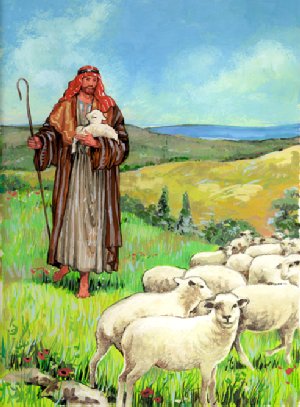
1 A Psalm of David. The LORD is my shepherd; I shall not want.
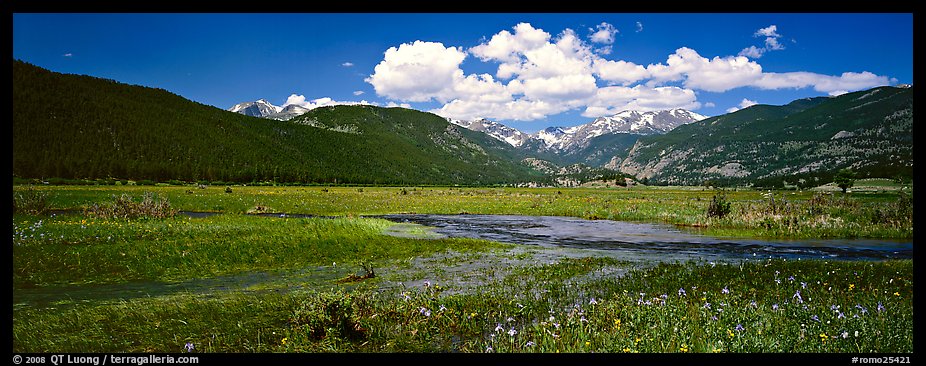
2 He maketh me to lie down in green pastures: he leadeth me beside the still waters.
3 He restoreth my soul: he leadeth me in the paths of righteousness for his name’s sake.
4 Yea, though I walk through the valley of the shadow of death, I will fear no evil: for thou art with me; thy rod and thy staff they comfort me.
5 Thou preparest a table before me in the presence of mine enemies: thou anointest my head with oil; my cup runneth over.
6 Surely goodness and mercy shall follow me all the days of my life: and I will dwell in the house of the LORD for ever.
PSALM 23
1 ‘n Psalm van Dawid. Die HERE is my herder; niks sal my ontbreek nie.
2 Hy laat my neerlê in groen weivelde; na waters waar rus is, lei Hy my heen.
3 Hy verkwik my siel; Hy lei my in die spore van geregtigheid, om sy Naam ontwil.
4 Al gaan ek ook in ‘n dal van doodskaduwee, ek sal geen onheil vrees nie; want U is met my: u stok en u staf dié vertroos my.
5 U berei die tafel voor my aangesig teenoor my teëstanders; U maak my hoof vet met olie; my beker loop oor.
6 Net goedheid en guns sal my volg al die dae van my lewe; en ek sal in die huis van die HERE bly in lengte van dae.