Know Thy Enemy

Grace to You

Know Thy Enemy

Wednesday, February 09, 2011

Are you ready to kill?

That’s a stark question, and it demands qualification, but killing is a regular part of the Christian life. There’s an aspect of being a Christian that’s downright violent.

You see, God commands us to hunt down and kill all remaining sin—to terminate it with extreme prejudice. Want proof? Here’s what Paul said in Romans 8:

So then, brethren, we are under obligation. Not to the flesh, to live according to the flesh—for if you are living according to the flesh, you must die; but if by the Spirit you are putting to death the deeds of the body, you will live. For all who are being led by the Spirit of God, these are sons of God (vv. 12-14)

Continue reading

How can we know when it is best to forgive or confront?

Matthew 18

John MacArthur

Grace to You

That’s a good question because most people seem to err on one side or the other. Some people think it is best to overlook every offense and take pride in their tolerance. However, Paul confronted the Corinthians for tolerating sin in the church and rebuked them for failing to deal with a man living in sin (1 Cor. 5).

On the other side of the issue are people who confront over any slight infraction and make themselves intolerable. Are there any biblical principles to help us make the right choice? Yes! Here are six guidelines to help you know whether to forgive or confront.

Continue reading

God Doesn’t Change

“Thou art the same,
and Thy years will not come to an end.”
Psalm 102:27

God never changes, so He can be trusted to do what He says.

God alone is unchanging (or as the theologians say, immutable). The psalmist says, “Even [the heavens and earth] will perish, but Thou dost endure. . . . Thou art the same, and Thy years will not come to an end” (Ps. 102:26-27). Though Israel deserved destruction for its sin, God was faithful to His covenant with Abraham, saying, “I, the Lord, do not change; therefore you, O sons of Jacob, are not consumed” (Mal. 3:6). James calls God “the Father of lights, with whom there is no variation, or shifting shadow” (1:17).

What about those verses that say God changed His mind (e.g., Amos 7:3, 6; Jonah 3:10)? Let’s look at an example. Jonah warned the wicked city of Nineveh of impending judgment. The city immediately repented, and “when God saw their deeds, that they turned from their wicked way, then God relented concerning the calamity which He had declared He would bring upon them. And He did not do it” (3:10). Who changed? The people of Nineveh! God’s nature to punish evil and reward good remained the same, but the object changed.

Continue reading

Answering the Hard Questions About Forgiveness

Answering the Hard Questions About Forgiveness

Selected Scriptures

John MacArthur

For You, Lord, are good, and ready to forgive, and abundant in lovingkindness to all who call upon You. Ps. 86:5

I know a young man (we’ll call him Jim) who believes he was mistreated by afellow Christian several yearsago. There was a dispute about who was wrong in the incident. Jim brought the matter to the elders of his church for resolution. The elders attempted to investigate the matter but ultimately concluded there was insufficient evidence to determine who was at fault. It was one person’s word against the other’s, with no other witnesses. The elders finally advised both Jim and the other party to forgive one another and put the dispute behind them.

Continue reading

Christian Love


Quote by D L Moody

Galations 5

IT speaks in Galatians about love, the fruit of the Spirit being love, joy, peace, gentleness, long suffering,meekness and temperance. The way this writer has put it — and I think it is very beautiful — is that joy is love exultant, peace is love in repose, and long suffering is love enduring. It is all love, you see, a gentleness is love in society, and goodness is love in action, and faith is love on the battle-field, and meekness is love at school, and temperance is love in training.

Continue reading

Persistent Prayer

From Holy Trinity Lutheran Church, Hacienda Heights, California.

A sermon by Rev. William Cwirla. Luke 18:1-8 / 21 Pentecost (Proper 23) / 17 October 2010 /

In Nomine Iesu

Persistence. That’s the key idea in today’s Gospel. Persistent prayer. Think of how easily we get discouraged. We quit when things don’t go our way. We leave when things get uncomfortable. When the going gets rough, we check out. We pray, and when God doesn’t deliver on our terms, we hang up and stop talking. We have a case of spiritual ADD, I’m afraid. Our attention wanders, our prayers falter, we are easily discouraged.

Jesus told a parable about persistence in prayer. It comes immediately after Jesus’ teaching His disciples about the suddenness and speediness of His coming, and how there will be no time to get things in order, and how for the remainder of this life they should be like a bunch of buzzards and live off His death, for “where the body is, there the vultures will gather.” Continue reading

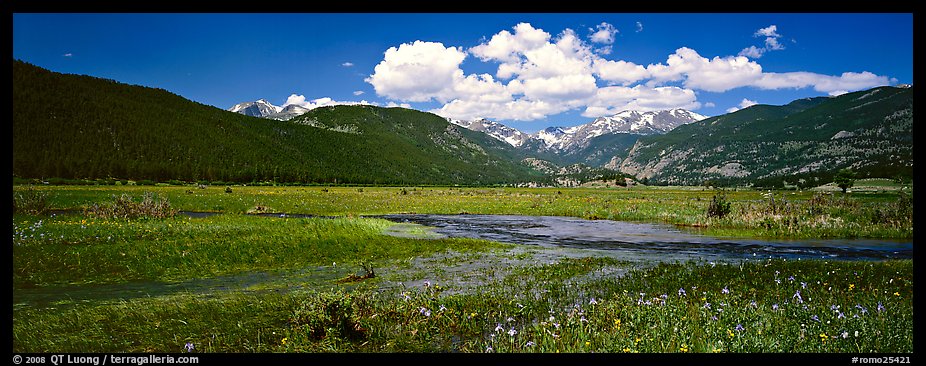
What is the river of life?

Placed by Avalon 

The precise phrase “river of life” does not appear in the Bible. However, Revelation 22:1-2 does refer to “the river of the water of life, as clear as crystal, flowing from the throne of God and of the Lamb.” The Apostle John, in his vision of the New Jerusalem, describes the river as flowing “down the middle of the great street of the city.”

The “water of life” referred to here cannot be physical water as we know it because Revelation 21:1 tells us there is “no longer any sea.” He goes on to say that there is no need for sun or moon because the glory of God and the Lamb give it light (Revelation 21:23). This would indicate that the hydrological cycle as we know it on earth does not exist in the New Jerusalem. Therefore, the water flowing from the throne is literally the water of eternal life, crystal clear to reflect the glory of God in a dazzling, never-ending stream. The fact that the stream emanates from the throne tells us that eternal life flows from God to His people.

Continue reading