Christian Legalism (Part 3): The foolish ignorance of opposing God’s Grace

Grant Swart

“But we know that the law is good, if a man use it lawfully; Knowing this, that the law is not made for a righteous man, but for the lawless and disobedient “ (1 Tim. 1:8-9).

At the heart of Christian legalism is a denial of the truth of the Gospel, and therefore a denial of God’s Sovereignty, of His Son and of the work of His Holy Spirit. It places God’s people into cruel, oppressive bondage and replaces the perfection and completion of the salvific work of Jesus Christ, with sick, depraved human traditions. Speaking out against the error of legalism, as I have done previously in Parts 1 and 2 of this article, by accepting the example set by Jesus, in no way constitutes creating a licence to sin. There are no two things in the world more directly opposed to one another than law and grace.

Righteousness and our acceptance by God can never come by way of legalism. Neither can justification, nor sanctification. By no means do I intend to indicate hereby that true, saved believers are antinomian (against the law), which seems to have become a fashionable term being bandied about with much self-righteous zeal. The boundaries which govern that which constitutes true antinomianism are subject to a million varied interpretations, remain practically undefined and are all subject to human interpretation. However, many legalists seem to be under the impression that every true believer who opposes legalism and works based salvation, or for that matter is found to have committed sin, is by definition antinomian.  Continue reading
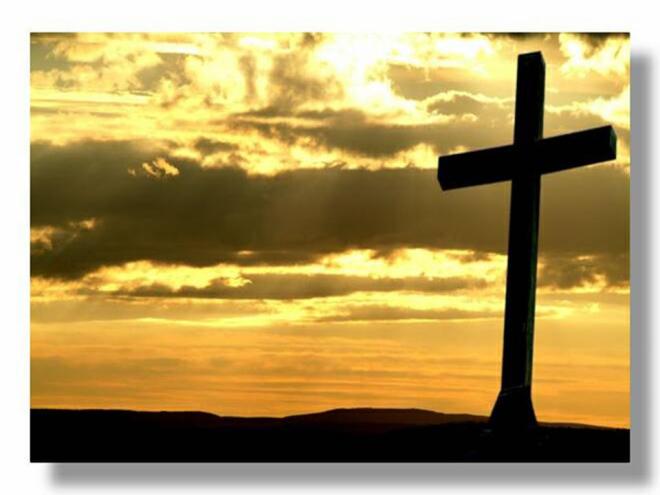
The Cross of Jesus is offensive

Eugene Vermeulen

The Cross of Jesus is offensive

It offends those who reject it. It offends the politically correct and it offends even the believer. It offends our pride and our independence. It offends our notion that we determine our own fate, that we can decide for ourselves what is right and wrong.

It offends our belief that freedom is gained by promoting self, not from humility and servanthood. It offends the self-pity of our own pain & misery.

It offends comfortable religion. It offends believers when they don’t want to return to it for complete forgiveness and acceptance. It offends everyone who will not put it as the central focus of their lives. It offends all of humanity everywhere with its simple claim that we are a fallen race, that we cannot achieve salvation or enlightenment on our own – that God came in human form to redeem us from our hopelessness.

It offends me more often than I’d like to admit. Even so, I embrace its offense, because it shows me that I still have dying to do.

This irrational offense shows that something greater is at work here, that there is a war being waged for the souls of men. Therefore I will embrace the Cross of Jesus Christ. I will embrace the offense and stand counted with those who admit their sin and failing and fall on it for salvation.

Without the Cross I am nothing and life holds no real meaning. Because of the Cross there is hope and there is life, joy and power, not only in this life, but for all eternity. The Cross is a divine epiphany, a thought greater than what the human mind can conceive – that God could redeem a fallen race in such a radical, selfless way. It is love undeserved, that causes sinners to take on the very nature of God.

No historical event has impacted as many people so mystifyingly and profoundly. It is a wonder that, if not true, should be true. It cannot be fathomed or rationalized, only experienced. It stands as a monument and triumph above every other event in the history of mankind. Thank you for the Cross, My Lord , My Saviour, My Friend.

(The above article was posted here by Grant, with much gratitude to its author, Eugene Vermeulen)

Why Discernment Ministries Fail (and Succeed) (1)

Grant Swart

SHINY FAKE GOLD-PLATED COINS

Regrettable and diverse are the failures of an overabundance of internet based “discernment” ministries, websites, programs and blogs. Frequently, these self-titled so-called discernment ministries are highly visible, easily accessible and are presented to the world as being representative of the truth. These presentations are the creations of self-appointed “watchmen” who claim divine inspiration for their discernment ability over and above that which is available to the average Christian believer. In addition, these “watchmen” defend their position, which by the very nature of their “ministries” cannot be described as biblical, with an aggressive fervour which borders on occultic fanaticism.

Undeniably, there has always been a biblical imperative for true watchmen to guard against and warn the faithful in the church about attacks launched by the Evil one and his followers against the truth. Continue reading

Who are you, O man, who answers back to God?

Predestination a loving doctrine (Romans 9)

Romans 9:9-24 is one of the most intriguing and thought provoking passages in the Bible. Yet, it is often not given the serious consideration that it needs when dealing with the issue of God’s sovereignty and our salvation. This short but powerful section asks some pointed questions often raised in the argument against predestination. . . and then answers them. In addition, there is a simple theological test that you can take. The test is not by my devising; rather, it is imbedded in the passage and is authored by God.

Let’s begin. (Note: all scripture quotations are from the NASB.)

For this is a word of promise: ‘At this time I will come, and Sarah shall have a son.’ 10And not only this, but there was Rebekah also, when she had conceived twins by one man, our father Isaac; 11for though the twins were not yet born, and had not done anything good or bad, in order that God’s purpose according to His choice might stand, not because of works, but because of Him who calls,12it was said to her, ‘The older will serve the younger.’ 13Just as it is written, ‘Jacob I loved, but Esau I hated.'” (NASB) Continue reading

Tim Challies and Ann Voskamp: The New Sensation Seekers

By Grant Swart

Thank you for forwarding the two links to me. I have read them and I still cannot fault Tim Challies’ original critique of Ann Voskamp’s rubbish, just as I could not do at my first reading of it.

Below are a few points I would like to make, although these do not represent all points which need to be made regarding this unsavoury matter.

1. I have never attached much value to what Tim Challies has written on previous occasions, although I have not read all of his work. I never felt the need to pay attention to his opinions, not because he is a bad author, which he is not, but simply because I have always found his work lacking in substance and based more on human reasoning and not particularly on Scripture. He seems to prefer being the modern man with modernised needs, slightly besotted with technology and the social media and less concerned with the reality of the Truth. Continue reading

Bible Punchers, you arrogant, fundamentalist Bible believing Christians!


Grant Swart

It seems to be far safer to proclaim chance or cosmic fate than to proffer the truth held in Scripture to devotees of the post-modern, word of faith, pseudo-charismatic gospel. Apparently, Bible believing Christians who dare to quote truth from Scripture are misguided, self-centered, overly enthusiastic and arrogant Bibliolaters. Even worse, they are regarded as fantastical red fairies who place way too much emphasis on the Word of God. According to any number of variations of post-modern thinkers, the same God who provided us with His written Word, also made sure that the church had charismatic opponents who could operate from within and who have been armed with personal revelation to refute those who advocate adherence to sola Scriptura.

Additionally, what is being most recklessly proclaimed by these morally enthused opponents, is the belief that Scripture can be interpreted in many ways, and that understanding of Scripture is reliant on the private message which the individual receives from Bible text. Many pastors and elders in the post-modern church deceptively proclaim that the Bible is simply a collection of rough guidelines and historic illustrations, which may or may not be relevant to the individual Christian’s life. Continue reading

What makes one a Christian?


Grant Swart

Why do Christians believe in Jesus Christ and, more importantly, HOW do they come to believe and trust in Him for salvation?

Was it a simply because of a decision that they made by themselves?

Do those who become Christians simply look at their situation, evaluate it by means of their intellect, and come to the conclusion that they should trust Him or else they will be doomed to hell?

Was it because of something they overheard, or read, or was it because of a warning that they received from another Christian?

If it were any of the above, why do so many more intelligent people not believe in Jesus Christ?

What is it that makes the difference between those who believe and those who do not? Continue reading

Torah Observance – Opposing God, Following Blind Men

Grant Swart

In keeping with previous articles on this blog regarding the Hebrew Roots Movement, the following article serves to further illustrate the severe and often deadly error in the religious teachings of the Hebrew Roots Movement (HRM). It clearly contrasts the deceiving practice of Torah Observance, as practiced by the HRM, against Christianity.

It draws our attention to the fact that the HRM does not complete or compliment Christianity, it does not fill in missing pieces, but rather it downplays and nullifies the atonement of Christ and overthrows the New Covenant and the perfect sacrifice of the Lamb of God. The teachings of the HRM remove all possibility of salvation by grace through faith.

The HRM and Christianity are not similar faiths that differ in non-essential aspects. The HRM and Christianity do not simply read from the same Book and interpret essential doctrines in different ways. Christianity does not lack that which is found in the practices and belief system of the HRM. Torah Observance is not an alternative form of Christianity and it cannot be practiced in conjunction with Christianity, it is a regressive form of religion in which there can be no forgiveness of sin or salvation.  Continue reading

POLL: Which three Books in the Bible are the most important to you? (Please choose 3)

Grant Swart

In a more light-hearted poll, we create a hypothetical situation which could leave some of us with a difficult choice. Although the scenario is totally fictional and most unlikely, it is nevertheless something to think about, and have a little fun with while watching how our fellow readers regard the various books of the Christian Bible.

For those who might have forgotten the numbers, there are a total of 66 books in the canon of the Christian Bible, 39 in the Old Testament and 27 in the New Testament. There are 1189 chapters in those 66 books containing 31,173 verses and approximately 773,692 words. The Roman Catholic and Eastern Orthodox versions of the Bible also contain a collection of uninspired books written during the “silent centuries” (400BC – 27AD). Christians reject the Apocrypha as having not been inspired by God and view all these books as secular uninspired history written by men without the aid of God. But, that is not the subject of this poll, as we covered the subject of the Apocrypha in another poll last year.

Our fantasy situation is this. You will be compelled by the ruling authorities to go to a foreign country for an extended period of time to pick pink striped bananas, count goats and to disprove reports which say that Elvis is selling second-hand pizzas in that country. There you will find yourself among a population consisting of mostly unbelievers and people who follow false religions. So, you will have to do some evangelizing and Bibles will be scarce. Continue reading

POLL: What do you think are the four most controversial issues being discussed by Christians IN GENERAL today?


Grant Swart

(This is Part 3,  the final poll in a 3 part series.  Please see older posts on this blog for the results of the previous 2 polls)

The results of the previous two polls in this series have been tallied and voting is now closed on them, but only on those two polls. Voting will remain open on all other polls. Thank you to all the readers who participated in those polls. This will be the final poll in this series, the result of which should give us a good idea what the most controversial subject being discussed among Christians today, is.

The previous polls which I am referring to here were “What do you think are the four most controversial THEOLOGICAL issues being discussed among Christians today?” and “What do you think are the four most controversial CULTURAL issues being discussed among Christians today?. As I said I would, in the article which accompanied both those polls, I have combined the winning results you voted for of those two polls into one final poll here.

Anyone can vote in this poll, even if you did not vote in the previous polls.  This is also a multi-choice poll, you may vote for the four issues you regard as the most controversial.

Please refer to the article accompanying the previous two polls if you would like further information regarding the nature of and reasoning behind the content of the three polls.

The ten issues included as choices in this poll are the ten most voted for issues from the previous polls (the top 5 from each group).


Copyright © For the Love of His Truth 2008 – 2013  All Rights Reserved. No part of this page or its images may be reproduced without Grant and Elmarie Swart’s  express consent. See our contact us page for email details.

The (Im)Morality of Tattoos

Grant Swart

(with sincere appreciation to Lorne Zelyck)

The (Im)Morality of Tattoos was originally an assignment for a Contemporary Moral Issues class offered at Phoenix Seminary. After the original writing, it was modified to also address the ethicality of body piercings. The modified version was published as “Under the Needle: An Ethical Evaluation of Tattoos and Body Piercings” in The Christian Research Journal (Vol. 28/ No. 06/ 2005) available at http://www.equip.org. The author (Lorne Zelyck) reserves all editorial rights and privileges of this paper.

The (Im)Morality of Tattoos


I. A Brief Historical Timeline of Tattoos

In October 1991, a five thousand year old corpse was found frozen in a glacier between Italy and Austria. The body of this man (later called Otzi) is considered the best preserved corpse of the Bronze Age every found, and dates to around 3300 B.C. The skin of Otzi has become of great interest because it bears several tattoos: a cross, six straight lines fifteen centimeters long, and numerous parallel lines.1 Continue reading

Tattoo and the Christian

Grant Swart

Firstly, before we get into the meat of this subject, and before it gets under our skin, allow me to sketch a light-hearted yet honest picture from a personal perspective, on a subject which seems to be very weighty and of great legalistic importance to some. (Please excuse the puns, …yes, I know). 

Ever so often a question regarding the tattoo and the Christian crosses our path, and with equal regularity disagreements over the issue are likely to follow. With even greater regularity, people from all walks of life sporting tattoos of a myriad of shapes, colours and sizes cross our path. Tattoos have become a societal norm, but do they present a problem to the believer? For some, it has become a controversial phenomenon which, as is almost always the case in matters of this nature, Satan has been able to use to cause disunity and division among believers.

Personally, I have Continue reading

JUST GOD’S GRACE (Five Solas: Warriors code for Christ)

If you are like-minded, come alongside and we’ll travel together. If you’re of another mind, please get out of the way. For it is written: “Can two walk together, except they be agreed?” (Amos 3:3, KJV)”

Grant Swart

God placed in my path the accompanying short article, which I found in a magazine at an overnight lodge on my regular travels around South Africa. In the article, the author, Pastor Paul Walker of the Elm Avenue Baptist Church in Colorado, describes the very personal grief he experienced due to the loss of a beloved grandchild.

What sets the article apart from most others of this nature, is the statement it also makes regarding the positive effect which such pain and hurt can, and more importantly should have, on the truly saved. Continue reading

NOTE: Those who could only choose 1 item in the Poll on Theological issues, can now vote again.

POLL: What do you think are the four most controversial THEOLOGICAL issues being discussed among Christians today?


Grant Swart

(This is Part 2 of a two part poll. Please also vote in Part 1 in the previous post below)


Strange, this, but true. I suppose one should ascribe it to the exhausted misnomer, “human nature”, or more simply to the way we mostly think. With regularity, it is the more controversial subjects which attract the most attention on most blogs, forums and discussion groups in the social media. This tendency, a norm within secular circles, inevitably seems to apply to many Christian discussions, as well.

This is a Christian blog regarding fundamentals of the Christian faith, therefore, one would expect that the majority of the regular readers here would be from of the fundamental Christian camp. Even so, previous polls which I have placed on this blog regarding the more controversial issues are those which have, by far, received the most votes. Polls regarding the less controversial, and dare I say it, the more scholarly topics, generate less interest.

Are all the issues listed appropriate subjects for Christian discussion? Continue reading