The Safest Place

Charles  Haddon  Spurgeon

And I give unto them eternal life; and they shall never perish, neither shall any man pluck them out of my hand. (John 10:28)
We believe in the eternal security of the saints. First, because they are Christ’s, and He will never lose the sheep which He has bought with His blood and received of His Father.

Next, because He gives them eternal life, and if it be eternal, well then, it is eternal, and there can be no end to hell, and heaven, and God. If spiritual life can die out, it is manifestly not eternal life, and that effectually shuts out the possibility of an end.

Observe, further, that the Lord expressly says, “They shall never perish.” As long as words have a meaning, this secures believers from perishing. The most obstinate unbelief cannot force this meaning out of this sentence.

Then, to make the matter complete, He declares that His people are in His hand, and He defies all their enemies to pluck them out of it. Surely it is a thing impossible even for the fiend of hell. We must be safe in the grasp of an almighty Savior. Be it ours to dismiss carnal fear as well as carnal confidence and rest peacefully in the hollow of the Redeemer’s hand.

______________________________________________

HL : http://www.sermonindex.net/modules/articles/index.php?view=article&aid=1309

Maturity in Essentials and Non-Essentials

By Pastor John Samson

“In essentials, unity; in non-essentials, liberty; and in all things, charity.” – Augustine

Doctrine divides! It divides truth from error. It divides the true teacher from the false teacher; the spirit of truth from the spirit of error; and the true Christ from the Anti-Christ.

In the Church, Christians hold differing views about important, yet non-essential matters. Let me explain. There are doctrines in the Bible that while very important, are not essential to salvation. For instance, whether or not someone believes in the baptism of infants or whether or not God still heals today, I think are important issues; yet, what someone believes about these is not essential to someone being included or excluded from the kingdom of God. Someone is not a “false teacher” who takes a different position on these issues. The same is true for doctrines such as whether someone is “pre-trib,” “mid-trib,” or “post-trib” in their belief about the end times, or for those who take different positions on the millennnium – “a”, “pre” or “post.” Sincere, godly, dedicated believers believe different things about these issues, but it does not mean that one person is saved and another damned because they have a different view.

Continue reading

Who Were the Magi?

Bible Q & A With John MacArthur

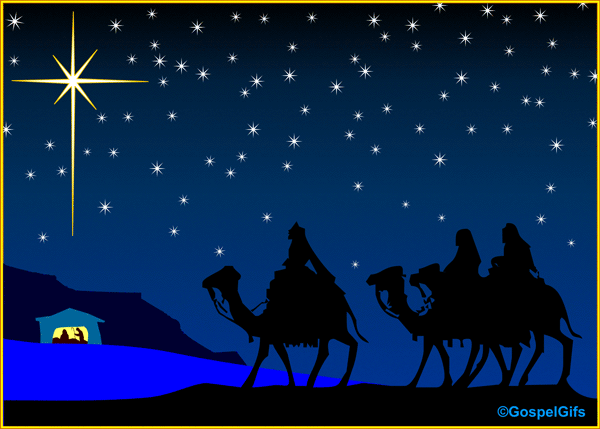
Few biblical stories are as well known, yet so clouded by myth and tradition, as that of the magi, or wise men, mentioned by Matthew. During the Middle Ages legend developed that they were kings, that they were three in number, and that their names were Casper, Balthazar, and Melchior. Because they were thought to represent the three sons of Noah, one of them is often pictured as an Ethiopian. A twelfth-century bishop of Cologne even claimed to have found their skulls.

The only legitimate facts we know about these particular magi are the few given by Matthew in the first twelve verses of chapter 2. We are not told their number, their names, their means of transportation to Palestine, or the specific country or countries from which they came. The fact that they came from the east would have been assumed by most people in New Testament times, because the magi were primarily known as the priestly-political class of the Parthians-who lived to the east of Palestine.

Continue reading

Six Ways Satan Is Stealing Christmas

John MacArthur – Grace to You

Selected Scriptures December 21, 2009

Six Ways Satan is Stealing ChristmasThe majority of people in the world will miss the next Christmas. But how can that be? How can anyone miss Christmas, given the amount of advertising, publicity, and promotion the holiday receives each year? Because although many celebrate Christmas every year, most don’t know what it’s about. In spite of all the media promotion of Christmas, the majority of people will miss it because it has become so obscured.

For those of us who know and love the Lord Jesus Christ, Christmas is a time to focus on His birth. But even we can get caught up in the swirl of activity around Christmastime and can miss it in a practical sense. Satan has so cluttered the Christian concept of Christmas with such needless paraphernalia that its true meaning is easily lost.

A Brief History of Christmas

Most scholars doubt that December 25 th is the true date of Christ’s birth. There is no biblical support for it, and some against it. That date was decided upon by the church in Rome in the fourth century. They had a specific reason for doing so.

Continue reading

The Truth of the Nativity

John MacArthur – Grace to You

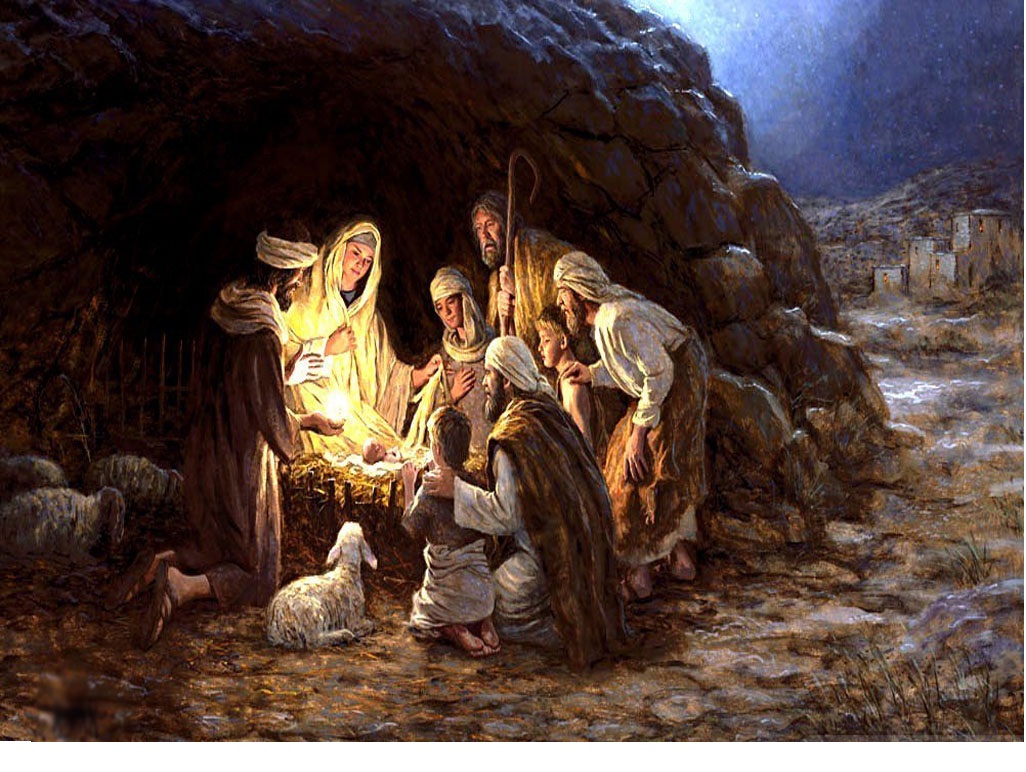
The story of the first Christmas is so beloved that singers and storytellers across the centuries have embellished and elaborated and mythologized the story in celebration. However, most people now don’t know which details are biblical and which are fabricated. People usually imagine the manger scene with snow, singing angels, many worshipers, and a little drummer boy. None of that is found in the biblical account.

Christmas has become the product of an odd mixture of pagan ideas, superstition, fanciful legends, and plain ignorance. Add to that the commercialization of Christmas by marketers and the politicization of Christmas in the culture wars, and you’re left with one big mess. Let’s try to sort it out. The place to begin is in God’s Word, the Bible. Here we find not only the source of the original account of Christmas, but also God’s commentary on it.

Continue reading

Here’s a side to the Christmas story that isn’t often told

From – Truth for Today  ~  A Daily Touch of God’s Grace , by John MacArthur

~ 25 December ~ Devotional ~

Why was Jesus Born?

For even the Son of Man did not come to be served, but to serve , and to give His life a ransom for many. Mark 10:45

Here’s a side to the Christmas story that isn’t often told: Those soft little hands, fashioned by the Holy Spirit in Mary’s womb, were made so that nails might be driven through them. Those baby feet, pink and unable to walk, would one day walk up a dusty hill to be nailed to a cross. That sweet infant’s head with sparkling eyes and eager mouth was formed so that someday men might force a crown of thorns onto it. That tender body, warm and soft, wrapped in swaddling clothes, would one day be ripped open by a spear.

Jesus was born to die.

Don’t think I’m trying to put a damper on your Christmas spirit. Far from it – for Jesus’ death , though devised and carried out by men with evil intentions, was in no sense a tragedy. In fact , it represents the greatest victory over evil anyone has ever accomplished.

~John MacArthur~

This Devotional book available here

How is the Church like the moon?

Dr Paul M Elliot

Like the moon, the Church shines with reflected light – is bigger than it looks – is the “lesser light to rule the night” – affects the world greatly but silently – has different phases – and at times, has its eclipses!

Just as God “appointed the moon for seasons,” He has appointed the Church for His eternal purpose. Commenting on Psalm 104:19, Dr. J. Sidlow Baxter draws some pithy parallels between the moon and the Church:

A scoffer who was as empty of truth as he was full of bluff derisively remarked, “Religion is all moonshine.” Unwittingly he came close to uttering a remarkable similitude. The moon and the Christian Church have much in common! What the one is to the physical world the other is to the spiritual; and we should be dark indeed without either! Trace the parallel.

The moon shines with reflected light. It has no light in itself. It shines with the reflected light of the sun. So the Church reflects the light of Christ. Apart from Him it has no light to give. In these days when the ecumenical movement gives large prominence to the so-called “world church”, and talks more about it than about HIM, it is well to remember that the Church was never put into the world to witness to itself. It can only give light as it forgets itself in reflecting Christ….

Continue reading

What the Bible Says about The DOCTRINES OF GRACE

Taken by Avalon - Vernelle Imaging

Romans 9:20-24

(20) But who are you, O man, to answer back to God? Will what is molded say to its molder, “Why have you made me like this?”  (21)  Has the potter no right over the clay, to make out of the same lump one vessel for honorable use and another for dishonorable use?  (22)  What if God, desiring to show his wrath and to make known his power, has endured with much patience vessels of wrath prepared for destruction,  (23)  in order to make known the riches of his glory for vessels of mercy, which he has prepared beforehand for glory–  (24)  even us whom he has called, not from the Jews only but also from the Gentiles?

Nathan Pitchford

“Ever since the Serpent first tempted Eve in the garden by casting doubt on God’s word and his character as he had revealed himself to her, mankind has always been engaged in the idolatrous pursuit of fashioning a god after his own imagination…There is no cure for this, but to cast off all our prior ideas of who we think God should be, or what we think he should mean when he speaks of his love, his grace, his justice, and his salvation, and to go to His Word for all our answers.” (from the Introduction)

DOCTRINES OF GRACE – CATEGORIZED SCRIPTURE LIST

God has recently given us the opportunity to discuss some theological issues with other Christians who believe differently than we do on a number of points, most notably the doctrines of grace. In such a circumstance, given the overwhelming supply of scriptural evidence that comes to bear on the topic, it seemed to me that the best approach would be a simple categorized scripture list: the fact that the entire paper would be scriptures, with the exception of a few brief explanatory notes, would underscore the truth that this is God’s own word and teaching; and the fact that it would be categorized would facilitate the ready comparison of scripture with scripture so as to lead one to a full-orbed understanding of the biblical teaching. Although I found a few good scripture lists of that nature available online, none of them was laid out in quite the progression that I was looking for, and so I developed my own. I’m posting it

Continue reading

You Will Know Them by Their Fruit


John MacArthur – Bible Q & A

You will know them by their fruits. Grapes are not gathered from thorn bushes, nor figs from thistles, are they? Even so, every good tree bears good fruit; but the bad tree bears bad fruit. A good tree cannot produce bad fruit, nor can a bad tree produce good fruit. Every tree that does not bear good fruit is cut down and thrown into the fire. So then, you will know them by their fruits. (Matthew 7:16–20)

After warning about false prophets, Jesus tells us what to watch for in identifying them. Because they are so extremely deceptive and dangerous ravenous spiritual and moral wolves in sheep’s clothing-the Lord would hardly have left us without means of determining who they are.

Jesus assures us that we will know them by their fruits. A fruit tree may be beautiful, decorative, and offer pleasant shade in the summer. But its primary purpose is to bear fruit, and it is therefore judged by what it produces and not by how it looks. (That understanding is the key to interpreting John 15 properly.)

Continue reading

In His Hands

In His Hands


‘Twixt gleams of joy and clouds of doubt
Our feelings come and go;
Our best estate is tossed about
In ceaseless ebb and flow.
No mood of feeling, form of thought

Is constant for a day;
But thou, 0 Lord, thou changest not:
The same thou art alway.

Continue reading

What is the Meaning of Anathema? Can a Church Pronounce an Anathema Upon Me?

By Dr Paul M Elliott

Our series on the subject of how Christians should deal with false teaching in the church generated some followup questions from readers. We take up the first today: “What is the meaning of anathema? Can a church pronounce an anathema upon a person or group?”

Several Related Questions

Continue reading

Is Your Church a Spiritual Titanic?

By Dr Paul M Elliott

Part 12 of a series. Read part 11

In our current series we’ve been addressing these questions: “My church is no longer true to the Word of God on essential Christian truths. What should I do? Should I leave? Should I stay and try to fight error? Will I be guilty of schism if I do either one?”

Presently we’re dealing with some of the un-Biblical responses that are common today. In this installment we focus on the untenable position of those who say that there is safety in remaining in a larger church or denomination despite its errors, rather than becoming part of the remnant that comes out and separates from apostasy. Today many Evangelical and Reformed church-goers believe it is safer to remain on a large but apostate sinking ship, rather than trust their lives to the safety of a small but sound Gospel lifeboat.1

The Safety of a Large But Sinking Ship?

Continue reading

Is It Wrong to Leave a Church Because It Hasn’t Officially Endorsed the Heresy Within It?

By Dr Paul M Elliott

Part 11 of a series. Read part 10.

Our current series addresses these questions: “My church is no longer true to the Word of God on essential Christian truths. What should I do? Should I leave? Should I stay and try to fight error? Will I be guilty of schism if I do either one?”

Presently we’re dealing with some of the un-Biblical responses that are common today. In this installment we focus on the untenable position of those who say that a church doesn’t become a heretical body unless it officially endorses heresy.1

Another Fallacious Argument

Continue reading

Who Has the Right to Call False Teaching Heresy?

By Dr Paul M Elliott

Part 10 of a series. Read part 9.

Our current series addresses these questions: “My church is no longer true to the Word of God on essential Christian truths. What should I do? Should I leave? Should I stay and try to fight error? Will I be guilty of schism if I do either one?”

Contrary to what many church leaders are saying today, the Bible assigns the right — and responsibility — to call false teaching by its right name, not to a handful of theological specialists, but to every believer.1

The Definition of Heresy

Continue reading

Should You Stay and Fight?

By Dr Paul M Elliott

Part 9 of a series. Read part 8.

Our current series addresses these questions: “My church is no longer true to the Word of God on essential Christian truths. What should I do? Should I leave? Should I stay and try to fight error? Will I be guilty of schism if I do either one?”

Scripture tells us that to “stay and fight” in a church that has become apostate is itself an act of schism that God condemns. He declares, “You are separating yourself from Me.”1

Can the Battle Be Won From Within?

Continue reading