The Certainty of Judgment

John MacArthur – Grace to You

“If the word spoken through angels proved unalterable, and every transgression and disobedience received a just recompense, how shall we escape if we neglect so great a salvation?” (Heb. 2:2-3).

Today the majority believes that God is a God of love and grace, but not of justice. One brief look at Hebrews 2:2-3 ought to convince anyone otherwise. The writer’s point is this: Since the Old Testament makes it clear that transgression and disobedience met with severe and just punishment, how much more so will equal or greater punishment be rendered under the New Testament, which was revealed by the Lord Jesus Christ Himself?

Continue reading

Six Ways Satan Is Stealing Christmas

John MacArthur – Grace to You

Selected Scriptures December 21, 2009

Six Ways Satan is Stealing ChristmasThe majority of people in the world will miss the next Christmas. But how can that be? How can anyone miss Christmas, given the amount of advertising, publicity, and promotion the holiday receives each year? Because although many celebrate Christmas every year, most don’t know what it’s about. In spite of all the media promotion of Christmas, the majority of people will miss it because it has become so obscured.

For those of us who know and love the Lord Jesus Christ, Christmas is a time to focus on His birth. But even we can get caught up in the swirl of activity around Christmastime and can miss it in a practical sense. Satan has so cluttered the Christian concept of Christmas with such needless paraphernalia that its true meaning is easily lost.

A Brief History of Christmas

Most scholars doubt that December 25 th is the true date of Christ’s birth. There is no biblical support for it, and some against it. That date was decided upon by the church in Rome in the fourth century. They had a specific reason for doing so.

Continue reading

The Truth of the Nativity

John MacArthur – Grace to You

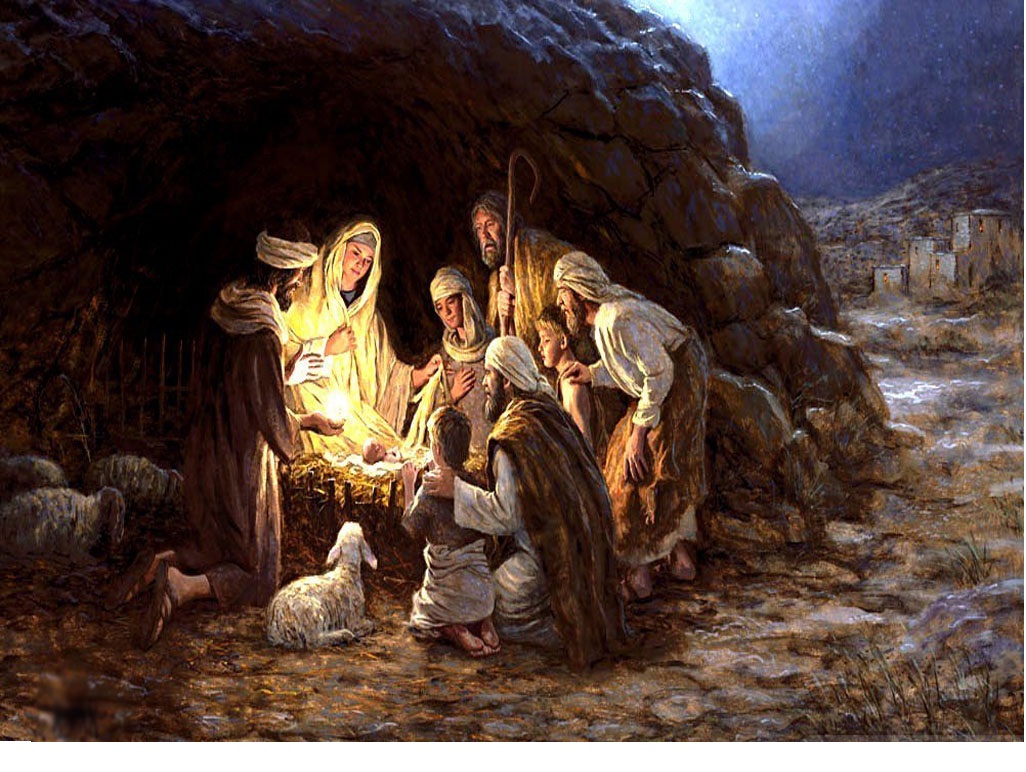
The story of the first Christmas is so beloved that singers and storytellers across the centuries have embellished and elaborated and mythologized the story in celebration. However, most people now don’t know which details are biblical and which are fabricated. People usually imagine the manger scene with snow, singing angels, many worshipers, and a little drummer boy. None of that is found in the biblical account.

Christmas has become the product of an odd mixture of pagan ideas, superstition, fanciful legends, and plain ignorance. Add to that the commercialization of Christmas by marketers and the politicization of Christmas in the culture wars, and you’re left with one big mess. Let’s try to sort it out. The place to begin is in God’s Word, the Bible. Here we find not only the source of the original account of Christmas, but also God’s commentary on it.

Continue reading

Exaltation Follows Humility

From – Strength for Today – John MacArthur

“Therefore also God highly exalted Him, and bestowed on Him the name which is above every name, that at the name of Jesus every knee should bow, of those who are in heaven, and on earth, and under the earth, and that every tongue should confess that Jesus Christ is Lord, to the glory of God the Father.” – Philippians 2:9-11

God will exalt the humble.

Having plumbed the depths of Christ’s humiliation (Phil. 2:5-8), Paul now soars to the heights of His exaltation (vv. 9-11). Like Paul, the apostle Peter affirmed that the great theme of Old Testament prophecy was the sufferings of Christ and the glory to follow (1 Peter 1:11). Regarding Christ, the writer of Hebrews says that “for the joy set before Him [He] endured the cross, despising the shame, and has sat down at the right hand of the throne of God” (Heb. 12:2). Christ understood His sufferings in light of His exaltation.

Continue reading

Apostles’ Creed

This creed arose out of the early Western church and should be thought of as a summary of the Apostles’ teaching rather than directly attributable to them.  Originally it was essentially a baptismal confession and had several variations.  The form in use today dates from the eighth century.

Continue reading

Avoiding Empty Philosophies – Tearing Down Strongholds

Bible Q & A With John MacArthur

2 Corinthians 10

For the weapons of our warfare are not of the flesh, but divinely powerful for the destruction of fortresses. We are destroying speculations and every lofty thing raised up against the knowledge of God, and we are taking every thought captive to the obedience of Christ, (2 Corinthians 10:4–5)

To successfully fight the spiritual war requires weapons from the heavenly arsenal. Only those divinely powerful weapons are suited for the destruction of the enemies’ fortresses. That term would convey to the New Testament reader the thought of a formidable stronghold. Corinth, like most major cities in Greece, had an acropolis. Located on a mountain near the city, the acropolis was a fortified place into which the inhabitants could retreat when attacked. Ochuroma (fortresses) was also used in extrabiblical Greek to refer to a prison. People under siege in a fortress were imprisoned there by the attacking forces. The word was also used to refer to a tomb.

Continue reading

Genesis 1: Fact or Framework?

John MacArthur – Grace to You

The Framework HypothesisOne popular view held by many old-earth advocates is known as the “framework hypothesis.” This is the belief that the “days” of creation are not even distinct eras, but overlapping stages of a long evolutionary process. According to this view, the six days described in Genesis 1 do not set forth a chronology of any kind, but rather a metaphorical “framework” by which the creative process is described for our finite human minds.
This view was apparently first set forth by liberal German theologians in the nineteenth century, but it has been adopted and propagated in recent years by some leading evangelicals, most notably Dr. Meredith G. Kline of Westminster theological seminary.

The framework hypothesis starts with the view that the “days” of creation in Genesis 1 are symbolic expressions that have nothing to do with time. Framework advocates note the obvious parallelism between days one and four (the creation of light and the placing of lights in the firmament), days two and five (the separation of air and water and the creation of fish and birds to inhabit air and water), and days three and six (the emergence of the dry land and the creation of land animals)–and they suggest that such parallelism is a clue that the structure of the chapter is merely poetic.

Thus, according to this theory, the sequence of creation may essentially be disregarded, as if some literary form in the passage nullified its literal meaning.

Continue reading

Here’s a side to the Christmas story that isn’t often told

From – Truth for Today  ~  A Daily Touch of God’s Grace , by John MacArthur

~ 25 December ~ Devotional ~

Why was Jesus Born?

For even the Son of Man did not come to be served, but to serve , and to give His life a ransom for many. Mark 10:45

Here’s a side to the Christmas story that isn’t often told: Those soft little hands, fashioned by the Holy Spirit in Mary’s womb, were made so that nails might be driven through them. Those baby feet, pink and unable to walk, would one day walk up a dusty hill to be nailed to a cross. That sweet infant’s head with sparkling eyes and eager mouth was formed so that someday men might force a crown of thorns onto it. That tender body, warm and soft, wrapped in swaddling clothes, would one day be ripped open by a spear.

Jesus was born to die.

Don’t think I’m trying to put a damper on your Christmas spirit. Far from it – for Jesus’ death , though devised and carried out by men with evil intentions, was in no sense a tragedy. In fact , it represents the greatest victory over evil anyone has ever accomplished.

~John MacArthur~

This Devotional book available here

The Christian’s Sufficiency In Christ

John Calvin

Institutes of the Christian Religion

We see that our whole salvation and all its parts are comprehended in Christ [Acts 4:12]. We should therefore take care not to derive the least portion of it from anywhere else. If we seek salvation, we are taught by the very name of Jesus that it is “of him” [1 Cor 1:30]. If we seek any other gifts of the Spirit, they will be found in his anointing. If we seek strength, it lies in his dominion; if purity, in his conception; if gentleness, it appears in his birth. For by his birth he was made like us in all respects [Heb. 2:17] that he might learn to feel our pain [cf. Heb. 5:2].

Continue reading

Confronting Error with Condemnation, Not Conversation

Grace to You – John MacArthur

And now we come to the Word of God again, and Luke 20 is our text…Luke 20. We have arrived at the end of this chapter and we’ll look at the final three verses…Luke chapter 20 verses 45 through 47. Let me establish them in your mind, follow as I read. Luke chapter 20 beginning at verse 45.

“And while all the people were listening, He said to the disciples, ‘Beware of the scribes who like to walk around in long robes and love respectful greetings in the marketplaces, and chief seats in the synagogues and places of honor at banquets, who devour widows’ houses and for appearances sake offer long prayers. These will receive greater condemnation.”

Strong words. Unmistakable words. Backing up a little bit from this text and approaching it from afar off, we need to be reminded that the Bible warns us about false teachers from beginning to end. There have always been and there always will be false religious leaders who operate for Satan. They operate out of the kingdom of darkness, but they operate as if they are messengers from God.

Continue reading

Hyper-Calvinism: the perennial misnomer

GRANT SWART

In response to those who often refer to a group of people mistakenly labeled “hyper”-Calvinists, I felt it imperative to outline a few important distinctions between true Calvinist doctrine and what is referred to as “hyper”-Calvinism. If the 17 points I have listed below are those which supposedly distinguish and constitute “hyper”-Calvinism, then by that very implication, those points cannot also be what Calvinists believe. If those are the points which allegedly separate “hyper”-Calvinists from Calvinists, then those points cannot be ascribed to both sides, for then they would not be distinguishing points.

Nowhere in Calvin’s theology did he teach any of the 17 points which I list toward the end of this article, yet these points are perennially ascribed to those who agree with the doctrines of Grace. I might remind the reader here that TULIP was not Calvin’s invention, but was an acronym for the pronouncements of the Synod of Dort (1618) tasked with defending biblical doctrine, not Calvinism per se, against obvious destructive heresies of the time. Even so, it is clear that, when the doctrines as laid out in the five points of Calvinism or TULIP are understood, none of the distinguishing 17 points as I have listed below can be ascribed to TULIP. It is quite clear therefore that the term “hyper”-Calvinism is a misnomer and has no foundation in or relation to true Calvinism.

“Hyper”-Calvinism is a term which has been brandished as a whimsical weapon by those who Continue reading

ON THE HEART OF THE GOSPEL


2Co 5:21  For our sake he made him to be sin who knew no sin, so that in him we might become the righteousness of God.

Mathew Henry CC –

2Co 5:16-21
The renewed man acts upon new principles, by new rules, with new ends, and in new company. The believer is created anew; his heart is not merely set right, but a new heart is given him. He is the workmanship of God, created in Christ Jesus unto good works. Though the same as a man, he is changed in his character and conduct. These words must and do mean more than an outward reformation. The man who formerly saw no beauty in the Saviour that he should desire him, now loves him above all things. The heart of the unregenerate is filled with enmity against God, and God is justly offended with him. Yet there may be reconciliation. Our offended God has reconciled us to himself by Jesus Christ. By the inspiration of God, the Scriptures were written, which are the word of reconciliation; showing that peace has been made by the cross, and how we may be interested therein. Though God cannot lose by the quarrel, nor gain by the peace, yet he beseeches sinners to lay aside their enmity, and accept the salvation he offers. Christ knew no sin. He was made Sin; not a sinner, but Sin, a Sin-offering, a Sacrifice for sin. The end and design of all this was, that we might be made the righteousness of God in him, might be justified freely by the grace of God through the redemption which is in Christ Jesus. Can any lose, labour, or suffer too much for Him, who gave his beloved Son to be the Sacrifice for their sins, that they might be made the righteousness of God in him?


A Survey of Heresies

I have worked through all these sermons/teachings and have found them very informative and detailed. I am sharing here for you the reader and my hope is you gain better Biblical understanding about false teachings and their origins.

By Phil Johnson

It’s important for Christians to have a grasp of heresies that the church has battled over the centuries, because they often return with new clothing, and the unprepared Christian is likely to fall into these old pits. Phil does an excellent job of looking at some of the major heresies that are revisiting the church today: Socinianism, Arianism, Pelagianism, Gnosticism, and Judaizing. This is an excellent 6 part series that will shore up some weak points in the church today.

Continue reading

How is the Church like the moon?

Dr Paul M Elliot

Like the moon, the Church shines with reflected light – is bigger than it looks – is the “lesser light to rule the night” – affects the world greatly but silently – has different phases – and at times, has its eclipses!

Just as God “appointed the moon for seasons,” He has appointed the Church for His eternal purpose. Commenting on Psalm 104:19, Dr. J. Sidlow Baxter draws some pithy parallels between the moon and the Church:

A scoffer who was as empty of truth as he was full of bluff derisively remarked, “Religion is all moonshine.” Unwittingly he came close to uttering a remarkable similitude. The moon and the Christian Church have much in common! What the one is to the physical world the other is to the spiritual; and we should be dark indeed without either! Trace the parallel.

The moon shines with reflected light. It has no light in itself. It shines with the reflected light of the sun. So the Church reflects the light of Christ. Apart from Him it has no light to give. In these days when the ecumenical movement gives large prominence to the so-called “world church”, and talks more about it than about HIM, it is well to remember that the Church was never put into the world to witness to itself. It can only give light as it forgets itself in reflecting Christ….

Continue reading

Spiritual Deception, Revival and Angus Buchan (South Africa’s Charismatic “Hajj”)

Prof. Johan Malan, South Africa (May 2010)

Spiritual deception and apostatising keep on proliferating as we are moving deeper into the end-time. We know that the Spirit of truth wants to guide us into all the truth of God’s Word – including the correct understanding of end-time prophecies (John 16:13). On the opposite side there is the spirit of error who is intent on deceiving people spiritually with a view to preparing them on the coming of the Antichrist (1 John 4:1-6). More than ever before we need discernment to be able to observe the full counsel of God and to allow the Holy Spirit to teach us and keep us from all forms of deception.

It is not always easy to keep our ways pure in all respects by correct discernment of these two spiritual influences since there is, by the devil’s doing, a grey area between them. Satan has the ability to present himself as an angel of light, thereby also deceiving Christians with noble intentions (2 Cor. 11:13-15; Matt. 24:4-5,24). It is one of his main objectives to confuse   believers by inciting them to entertain erroneous views on Christ and the Bible. There are many examples of such satanic influence in the Bible.

Peter was conscious of the fact that Jesus is the Messiah and Son of God and honestly thought that he made a very positive statement when he expressed himself against the idea of Christ’s crucifixion. However, it was clearly evident that he was deceived by Satan to take this stand (Matt. 16:14-23). Maybe Peter can be excused for this action since he did not yet have the full enlightening of the Holy Spirit.

Continue reading