Is There Power in the Blood of the Pope?

By Dr. Paul M. Elliott

May 1, 2011 ─ In scenes evoking old Bela Lugosi vampire movies and trampling the blood of Christ underfoot, Pope Benedict XVI, along with officials of the Roman Catholic church-state and a crowd of 1.5 million, worshipped the body, blood, and images of Pope John Paul II during beatification ceremonies at the Vatican. More than fifty heads of state were present for the ceremony. At the end of this article are pictures of the macabre ritual.

The Worship of Saints

The ceremony marked a major step in the Vatican’s move to confer the status of “sainthood” on the dead Pope. Roman Catholicism practices what it calls the veneration of saints. In Roman Catholic terminology it is called “the cult of the saints”. Rome encourages a level of devotion to so-called saints that can truly be called worship, and in fact Roman Catholic literature speaks of the worship of saints.

Continue reading

Bell’s Inferno

Grace to You Blog (a follow up) Friday, April 21, 2011

If anyone advocates a different doctrine and does not agree with sound words, those of our Lord Jesus Christ, and with the doctrine conforming to godliness, he is conceited and understands nothing; but he has a morbid interest in controversial questions and disputes about words, out of which arise envy, strife, abusive language, evil suspicions, and constant friction between men of depraved mind and deprived of the truth, who suppose that religion is a means of gain (1 Timothy 6:3-5).

No one in all the Scriptures had more to say about hell than Jesus. No stern messenger of doom from the era of the Judges, no fiery Old Testament prophet, no writer of imprecatory psalms, and no impassioned apostle (including the Boanerges brothers)—not even all of them combined—mentioned hell more frequently or described it in more terrifying terms than Jesus.

Continue reading

How to Treat False Teachers, Part 2

John MacArthur – Grace to You

1 Timothy 1:7-11

Let’s open our Bibles this morning to 1 Timothy chapter 1.  We’re looking again at verses 3 through 11.  The opening charge that is given from the Apostle Paul to Timothy to carry out a work in the church and the region around the church in Ephesus.

Now as I mentioned last time, the primary objective that Paul has in mind with Timothy in the writing of this epistle is to encourage Timothy to bring the church to a place of sound doctrine and godly living.  He is concerned about the impact of false teachers, not only what they say but what they model by way of a life style.  And he is greatly concerned that Timothy reverse the impact of these false teachers.  In so writing to Timothy he has left us a letter which all of us in the church of Jesus Christ today, or in any era, can benefit from because we all face the same potential encroachment of false teaching and unholy living.

Continue reading

How to Treat False Teachers, Part 1

John MacArthur – Grace to You

1 Timothy 1:3-6

Turn in your Bible to the first chapter of 1 Timothy.  We have recently begun a study of 1 Timothy.  We’ve had a couple of messages getting started, looking at the introduction, and now we come in this next section to verses 3 through 11.  This section has to do with dealing with false teachers.  I want us to take verses 3 through 11 as a unit, but we’re going to divide it between two weeks, this Lord’s day and next.

Let me introduce our study today by reminding you of something I’m sure you’re very much aware of.  In John’s gospel chapter 8 and verse 44, it reminds us that Satan is not only a murderer but Satan is also a liar.  One of the manifestations of the lying intent of Satan is the proliferation of false teachers that besiege the gospel and the church through all the history of the church’s life.  False prophets and false teachers are a part and parcel of the battle the church has to fight in every age.

Continue reading

Rob Bell: “Evangelical and orthodox to the bone?” Hardly.

Grace to You Blog (a follow up) Thursday, April 14, 2011

Rob Bell is reminiscent of the Rich Young Ruler in Mark 10:17-27. He has a warped view of goodness. He talks as if his own standard of good is the norm, and Bell even suggests that God is not good if He sends people to hell.Jesus’ reply to the young inquirer (“No one is good except God alone”—v. 18) says God himself alone is the standard of true good, not any creature—certainly not a fallen creature.The Young Ruler was not saved, nor can any person be who thinks his or her own preferences determine what is truly good. That kind of arrogance reflects a damning egotism.

n his books, sermons, and videos, Rob Bell has consistently promoted views that are antithetical to biblical Christianity and hostile to historic evangelical principles.

Continue reading

John MacArthur’s Speaks out Regarding Rob Bell

Grace to You Blog

Rob Bell: a Brother to Embrace, or a Wolf to Avoid?
Tuesday, April 12, 2011

If Christopher Hitchens or Deepak Chopra penned a book that scoffed at the biblical teaching on hell, we would not be surprised. So why would anyone be shocked or confused when Rob Bell writes Love Wins? Has Bell shown any more commitment to gospel truth, or any more devotion to the principle of biblical authority than Hitchens or Chopra?

Is Rob Bell truly a Christian, or is he one of those dangerous deceivers Scripture warns us about repeatedly (Acts 20:29; 2 Corinthians 11:13-15; Colossians 2:8; 2 Peter 2:1; etc.)?

It’s a fair—and necessary—question. Christ’s famous warning about wolves in sheep’s clothing is given to us as an imperative: “Beware of the false prophets, who come to you in sheep’s clothing, but inwardly are ravenous wolves. You will know them by their fruits” (Matthew 7:15-16). Our Lord clearly expects His true disciples to be able to spot spiritual imposters and wolves in sheep’s clothing—especially those who are purveyors of deadly false doctrines.

Continue reading

Why would someone hate the word Exegesis? part 3

John MacArthur – Grace to You

How to Study Your Bible

Psalms 1:1-2; Deuteronomy 29:29; 1 Corinthians 8:1

Introduction

Truly the Bible is magnificent. Early twentieth-century evangelist Billy Sunday pictured the Bible like a majestic palace. He wrote,

I entered through the portico of Genesis and walked down through the Old Testament’s art gallery, where I saw the portraits of Joseph, Jacob, Daniel, Moses, Isaiah, Solomon and David hanging on the wall; I entered the music room of the Psalms and the Spirit of God struck the keyboard of my nature until it seemed to me that every reed and pipe in God’s great organ of nature responded to the harp of David, and the charm of King Solomon in his moods.

Continue reading

Who’s Afraid of the Big, Bad Heretic?

Evangelical Apathy and the Danger of False Teaching
by John MacArthur

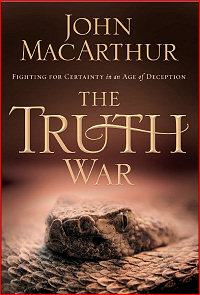
The following is excerpted from The Truth War (Nelson, 2007, pp. 165-68)

Why do so many evangelicals act as if false teachers in the church could never be a serious problem in this generation? Vast numbers seem convinced that they are “rich, have become wealthy, and have need of nothing’; and do not know that [they] are wretched, miserable, poor, blind, and naked” (Revelation 3:17).

In reality, the church today is quite possibly more susceptible to false teachers, doctrinal saboteurs, and spiritual terrorism than any other generation in church history. Biblical ignorance within the church may well be deeper and more widespread than at any other time since the Protestant Reformation. If you doubt that, compare the typical sermon of today with a randomly-chosen published sermon from any leading evangelical preacher prior to 1850. Also compare today’s Christian literature with almost anything published by evangelical publishing houses a hundred years ago or more.

Continue reading

Is Roman Catholicism Biblical?

John MacArthur – Grace to You

In today’s spirit of ecumenism, many evangelicals have called for the Protestant Church to lay aside its differences with Rome and pursue unity with the Catholic Church. Is that possible? Is Roman Catholicism simply another facet of the body of Christ that should be brought into union with its Protestant counterpart? Is Roman Catholicism simply another Christian denomination?

Continue reading