DO YOU KNOW HOW THE APOSTLES DIED?
WOW~~NO ONE EVER Said it would be easy!
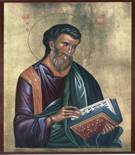
Matthew
Suffered martyrdom in Ethiopia, killed by a sword wound
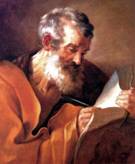
Mark
Died in Alexandria, Egypt, after being dragged by horses through the streets until he was dead.

DO YOU KNOW HOW THE APOSTLES DIED?
WOW~~NO ONE EVER Said it would be easy!
Matthew
Suffered martyrdom in Ethiopia, killed by a sword wound
Mark
Died in Alexandria, Egypt, after being dragged by horses through the streets until he was dead.

By J Sidlow Baxter from the website of Dr Paul M Elliot
As J. Sidlow Baxter wrote, in a time when the most basic structures of civilized society are crumbling, “the crying need just now is for prophets, not just preachers; for ministers, not just managers; for men with a passion to put our dear old Bible back where it ought to be in the Christian faith, in the Protestant pulpit.”
Editor’s note: The late British pastor and evangelist J. Sidlow Baxter wrote the following article over twenty years ago, when he was in his late eighties. Some of the allusions are historically dated, but the message rings loud and clear. It is even more relevant under present world conditions than when it was first written. – Dr. Paul Elliott
from a discussion with Christianity.com Editor Alex Crain and Grace To You‘s John MacArthur, discussing Dr. MacArthur’s 2011 book Slave: The Hidden Truth about Your Identity in Christ.

There are three major origin-of-life worldviews, atheistic evolution (also commonly known as Darwinian evolution and naturalistic evolution), theistic evolution and special creation.
Atheistic evolution says that there is no God and that life can and did emerge naturally from preexisting, non-living building blocks under the influence of natural laws (like gravity, etc), although the origin of those natural laws is not explained. Special creation says that God created life directly, either from nothing or from preexisting materials.
Theistic evolution says one of two things. The first option is that there is a God, but He was not directly involved in the origin of life. He may have created the building blocks, He may have created the natural laws, He may even have created these things with the eventual emergence of life in mind, but at some point early on He stepped back and let His creation take over. He let it do what it does, whatever that is, and life eventually emerged from non-living material. This view is similar to atheistic evolution in that it presumes a naturalistic origin of life.
The second alternative of theistic evolution is that God did not perform just one or two miracles to bring about the origin of life as we know it. His miracles were constant. He led life step by step down a path that took it from primeval simplicity to contemporary complexity, similar to Darwin’s evolutionary tree of life (fish begot amphibians who begot reptiles who begot birds and mammals, etc). Where life was not able to evolve naturally (how does a reptile’s limb evolve into a bird’s wing naturally?), God stepped in. This view is similar to special creation in that it presumes that God acted supernaturally in some way to bring about life as we know it.
Special creation says that God created life directly, either from nothing or from preexisting materials, exactly according to the Genesis account over a literal six day period.
Share with us your views on which of these three is true of how, what we see today in the universe, came to be. Please feel free to leave us a comment on the subject, in support your view.
– Grant Swart

by Arthur W. Pink
“Worship the LORD in the beauty of holiness” (Psa. 29:2). Holiness is the antithesis of sin, and the beauty of holiness is in direct contrast from the ugliness of sin. Sin is a deformity, a monstrosity. Sin is repulsive, repellent to the infinitely pure God: that is why He selected leprosy, the most loathsome and horrible of all diseases, to be its emblem. When the Prophet was Divinely inspired to depict the condition of degenerate Israel it was in these words, “From the sole of the foot even unto the head there is no soundness in it; but wounds, and bruises, and putrifying sores” (Isa. 1:6). O that sin were sickening and hateful to us: not merely its grosser forms, but sin itself. At the opposite extreme from the hideousness of sin is “the beauty of holiness.” Holiness is lovely in the sight of God: necessarily so. It is the reflection of His own nature, for He is “glorious in holiness” (Exo. 15:11). O that it may be increasingly attractive to and earnestly sought after by us. Perhaps the simplest way of bringing out the beauty of holiness will be to contrast it from the beauties of time and sense.
First, the beauty of holiness is imperceptible to the natural man, and therein it differs radically from the beauties of mere nature. He

“Where the birds make their nests; The stork has her home in the fir trees. The high hills are for the wild goats; The cliffs are a refuge for the rock badgers.” — Psalm 104:17-18.
Psalm 104 is all through a song of nature, the adoration of God in the great outward temple of the universe. Some in these modern times have thought it to be a mark of high spirituality never to observe nature; and I remember sorrowfully reading the expressions of a godly person, who, in sailing down one of the most famous rivers in the world closed his eyes, lest the picturesque beauties of the scene should divert his mind from scriptural topics. This may be regarded by some as profound spirituality; to me it seems to savor of absurdity. There may be persons who think they have grown in grace when they have attained to this; it seems to me that they are growing out of their senses. To despise the creating work of God—what is it but, in a measure, to despise God Himself? “Whoso mocketh the poor despiseth his Maker.”

A very timely letter !!
Prof. Johan Malan, Mossel Bay, South Africa (2011.08.24)
(The original version of this article may be read on Sandy Simpson’s website: http://www.deceptioninthechurch.com/page2.html )
Dear Peter
I address this Open Letter to you in response to your article, The New Apostolic Reformation: an Update (Aug. 19, 2011).
Evangelical Christians everywhere, but particularly also here in South Africa, have to take issue with you for deceptively presenting the NAR as a movement which subscribes to “all the standard classic statements of Christian doctrine”, for creating false expectations of introducing God’s kingdom on earth by, among others, using an unbiblical form of strategic spiritual warfare, for completely negating biblical prophecies on the end-time, and also for associating a Christian reformation with the African Independent Church Movement.
I will briefly substantiate these four objections:

Take care my dear friends, how any of you meddle with God’s Word.I have heard of folks altering passages they did not like. It will not do, you know, you cannot alter them; they are really just the same.Our only power with the Word of God is simply to let it stand as it is, and to endeavour by God’s grace to accommodate ourselves to that.
We must never try to make the Bible bow to us, in fact we cannot, for the truths of divine revelation are as sure and fast as the throne of God.If a man wants to enjoy a delightful prospect, and a mighty mountain lies in his path, does he commence cutting away at its base, in the vain hope that ultimately it will become a level plain before him? No, on the contrary, he diligently uses it for the accomplishment of his purpose by ascending it, well knowing this to be the only means of obtaining the end in view.
So must we do; we cannot bring down the truths of God to our poor finite understandings; the mountain will never fall before us, but we can seek strength to rise higher and higher in our perception of divine things, and in this way only may we hope to obtain the blessing. (Sermon 241)
______________________________________________________
_____________________________________________________

Dr Paul M Elliott
Previous post : Is It Wrong to Name Names?
Did Paul Always Name Names?
Paul frequently singled out individuals for correction, condemnation, or commendation. But in many other cases made powerful points about sound doctrine and godly living without naming names.
In response to our previous article, Is It Wrong to Name Names?, readers have mentioned a significant related point: While the Apostle Paul did name names in many cases, both for correction and commendation, there were also many other cases when he did not – but dealt with the issues at hand just as vigorously.
The Un-Named Galatian Heretics

Re-posting an old but important post.
It should be noted that this passage has erroneously been used to suggest that believers should never evaluate or criticize anyone for anything. Our day hates absolutes, especially theological and moral absolutes, and such simplistic interpretation provides a convenient escape from confrontation. Members of modern society, including many professing Christians, tend to resist dogmatism and strong convictions about right and wrong. Many people prefer to speak of all-inclusive love, compromise, ecumenism, and unity. To the modern religious person those are the only “doctrines” worth defending, and they are the doctrines to which every conflicting doctrine must be sacrificed. Continue reading

Dr Paul M Elliott
Some readers criticize us for citing, by name, individuals and institutions that promote heretical doctrines. They tell us that naming names is “unloving”. We respond that Scripture does not support this accusation. Consider the example of the Apostle Paul.
What is the Truly Loving Thing to Do?
Paul considered it vital to demonstrate his deep agape love for Christ and His church by warning believers to beware of those who would seek to “overthrow the faith of some” (2 Timothy 2:18). Paul’s consistent policy was to name names, recognizing that speaking in generalities is not always enough.
So great was Paul’s concern for the Galatian church’s departure into legalism – “another gospel, which is not another” (1:7) – that he cited the example of a fellow apostle’s temporary departure from soundness:
John Calvin devoted much time in his extensive (exhaustive) teachings to animals and nature. Here is one link which describes this briefly, there are more, of course: http://findarticles.com/p/articles/mi_qa3817/is_199903/ai_n8845145/?tag=mantle_skin;content
It becomes obvious from this, and from much work of other similarly great theologians, that far too little attention is given to teaching on these matters in the church. People have become obsessed with human earthly matters and how to deal with those things from the point of view of the church. Adaptation to a comfortable life while attempting to conform to biblical standards.
This is a reality, even though the natural world is a subject which affects every moment of Christian’s lives, as we play our part in all of creation. It is also a very common topic of informal discussion among church members. I feel it deserves far more attention from the Continue reading

Our pets are precious to us. And sometimes it is difficult to imagine heaven without them. One Canadian broadcaster even wrote, “I was quite shaken by this revelation: an afterworld that deprived me of my dog seemed to me less than heaven.”
Though we can appreciate that man’s attachment to his pet, we have to look to the Bible for an answer to the question of animals in heaven. Obviously, the Bible doesn’t give a direct answer. But it does provide information about heaven and animals to guide us to a better-informed discussion of the matter.


 For the Love of His Truth