Some Things Are Not Negotiable

A W Tozer

WILL ROGERS ONCE OPINED that a sure way to prevent war would be to abolish peace conferences.

Of course Will, as usual, had his tongue in his cheek; he meant only to poke fun at the weak habit of substituting talk for action. Still there is more than a little uncomfortable truth in his remark.

This above all others is the age of much talk. Hardly a day passes that the newspapers do not carry one or another of the headlines “Talks to Begin” or “Talks to Continue” or “Talks to Resume.” The notion back of this endless official chatter is that all differences between men result from their failure to understand each other; if each can discover exactly what the other thinks they will find to their delight that they are really in full agreement after all. Then they have only to smile, shake hands, go home and live happily ever after.

Continue reading

Do You Pray for the Lost?

John MacArthur – Grace to You – Bible Q & A

Before Jesus gave up His spirit as He hung on the cross, He took time to pray for those who were murdering Him. He prayed, “Father, forgive them; for they do not know what they are doing” (Luke 23:34).

God began to answer His prayer on the Day of Pentecost as some three thousand people repented and were baptized that day, and there have been countless multitudes that have been saved through the centuries. In response to Jesus’ intercession for the transgressors (Isaiah 53:12), God has snatched many souls from eternal death.

Continue reading

Not Easily Offended

By  D.L. Moody

In the 119th Psalm and the 165th verse, we find “Great peace have they who love thy law: and nothing shall offend them.” The study of God’s Word will secure peace. You take Christians who are rooted and grounded in the Word of God, and you find they have great peace; but it is these who don’t study their Bible, and don’t know their Bible, who are easily offended when some little trouble comes, or some little persecution, and their peace is all disturbed; just a little breath of opposition, and their peace is all gone.
Continue reading

Daring to Stand for Truth

By A.W. Tozer

The nearer we draw to the heart of God the less taste we will have for controversy.

Continue reading

The free grace of God (John Gill)

John Gill (23 November 1697 – 14 October 1771) was an English Baptist pastor, biblical scholar, and theologian who wrote the following that expresses what every true Christian believes:

Continue reading

How can we know when it is best to forgive or confront?

Matthew 18

John MacArthur

Grace to You

That’s a good question because most people seem to err on one side or the other. Some people think it is best to overlook every offense and take pride in their tolerance. However, Paul confronted the Corinthians for tolerating sin in the church and rebuked them for failing to deal with a man living in sin (1 Cor. 5).

On the other side of the issue are people who confront over any slight infraction and make themselves intolerable. Are there any biblical principles to help us make the right choice? Yes! Here are six guidelines to help you know whether to forgive or confront.

Continue reading

How To Become Fishers of Men

by
C. H. SPURGEON
(1834-1892)

“And Jesus saith unto them, Follow me, and I will make you fishers of men.”—Matthew 4:19.

When Christ calls us by his grace we ought not only to remember what we are, but we ought also to think of what he can make us. It is, “Follow me, and I will make you.” We should repent of what we have been, but rejoice in what we may be. It is not “Follow me, because of what you are already.” It is not “Follow me, because you may make something of yourselves;” but, “Follow me, because of what I will make you.” Verily, I might say of each one of us as soon as we are converted, “It doth not yet appear what we shall be.” It did not seem a likely thing that lowly fishermen would develop into apostles; that men so handy with the net would be quite as much at home in preaching sermons and in instructing converts. One would have said, “How can these things be? You cannot make founders of churches out of peasants of Galilee.” That is exactly what Christ did; and when we are brought low in the sight of God by a sense of our own unworthiness, we may feel encouraged to follow Jesus because of what he can make us. What said the woman of a sorrowful spirit when she lifted up her song? “He raiseth up the poor out of the dust, and lifteth up the beggar from the dunghill, to set them among princes.” We cannot tell what God may make of us in the new creation, since it would have been quite impossible to have foretold what he made of chaos in the old creation. Who could have imagined all the beautiful things that came forth from darkness and disorder by that one fiat, “Let there be light?” And who can tell what lovely displays of everything that is divinely fair I lay yet appear in a man’s formerly dark life, when God’s grace has said to him, “Let there be light?” O you who see in yourselves at present nothing that is desirable, come you and follow Christ for the sake of what he can make out of you. Do you not hear his sweet voice calling to you, and saying, “Follow me, and I will make you fishers of men?”

Continue reading

God Doesn’t Change

“Thou art the same,
and Thy years will not come to an end.”
Psalm 102:27

God never changes, so He can be trusted to do what He says.

God alone is unchanging (or as the theologians say, immutable). The psalmist says, “Even [the heavens and earth] will perish, but Thou dost endure. . . . Thou art the same, and Thy years will not come to an end” (Ps. 102:26-27). Though Israel deserved destruction for its sin, God was faithful to His covenant with Abraham, saying, “I, the Lord, do not change; therefore you, O sons of Jacob, are not consumed” (Mal. 3:6). James calls God “the Father of lights, with whom there is no variation, or shifting shadow” (1:17).

What about those verses that say God changed His mind (e.g., Amos 7:3, 6; Jonah 3:10)? Let’s look at an example. Jonah warned the wicked city of Nineveh of impending judgment. The city immediately repented, and “when God saw their deeds, that they turned from their wicked way, then God relented concerning the calamity which He had declared He would bring upon them. And He did not do it” (3:10). Who changed? The people of Nineveh! God’s nature to punish evil and reward good remained the same, but the object changed.

Continue reading

Answering the Hard Questions About Forgiveness

Answering the Hard Questions About Forgiveness

Selected Scriptures

John MacArthur

For You, Lord, are good, and ready to forgive, and abundant in lovingkindness to all who call upon You. Ps. 86:5

I know a young man (we’ll call him Jim) who believes he was mistreated by afellow Christian several yearsago. There was a dispute about who was wrong in the incident. Jim brought the matter to the elders of his church for resolution. The elders attempted to investigate the matter but ultimately concluded there was insufficient evidence to determine who was at fault. It was one person’s word against the other’s, with no other witnesses. The elders finally advised both Jim and the other party to forgive one another and put the dispute behind them.

Continue reading

For the Love of the Truth

For the Love of the Truth

John MacArthur

Grace to You

Selected Scriptures

To acknowledge that the church often needs to fight for truth is not to suggest that the gospel–our one message to a lost world–is somehow a declaration of war. It most certainly is not; it is a manifesto of peace and a plea for reconciliation with God (2 Corinthains 5:18-20). Conversely, those who are not reconciled to God are at war with Him all the time, and the gospel is a message about the only way to end that war. So ironically, the war to uphold the truth is the only hope of peace for the enemies of God.

Continue reading

A Living Lesson on Forgiveness

John MacArthur

Grace to You

Philemon 1-3

We are going to begin this morning a study of a brand new book in the New Testament, the book of Philemon. And I want you to turn to it, it’s just very brief, one chapter, 25 verses, a lesson on forgiveness. The little book of Philemon, for those of you who are wandering around in the index of your Bible, is tucked between Titus and Hebrews.

Of all of the human qualities that make men in any sense like God, none is more divine than forgiveness. God is a God of forgiveness. In fact, in Exodus chapter 34 God identifies Himself in that way. Verse 6 says, “Then the Lord passed by in front of Him and proclaimed,” this is the Lord speaking of Himself, “The Lord, the Lord God compassionate and gracious, slow to anger and abounding in loving kindness and truth who keeps loving kindness for thousands who forgives iniquity, transgression and sin.” He says I am the God of forgiveness. That is who I am.

Solomon said, “It is a man’s glory to overlook a transgression,” Proverbs 19:11. Man is never more like God than when he forgives

Continue reading

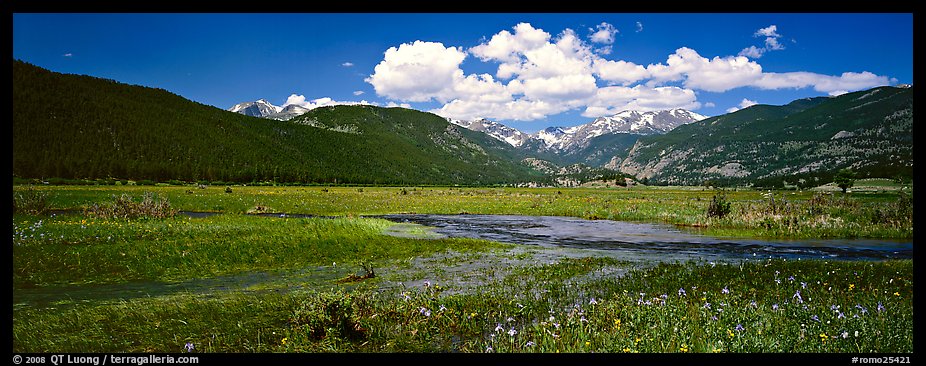
Meadow verses in the Bible

Psalm 65:13
The meadows are clothed with flocks, the valleys also are covered with grain; they shout for joy and sing together.

Continue reading

Psalm 65

O God of Our Salvation

To the choirmaster. A Psalm of David. A Song.

65:1 Praise is due to you, [1] O God, in Zion,
and to you shall vows be performed.
2 O you who hear prayer,
to you shall all flesh come.
3 When iniquities prevail against me,
you atone for our transgressions.
4 Blessed is the one you choose and bring near,
to dwell in your courts!
We shall be satisfied with the goodness of your house,
the holiness of your temple!

Continue reading

The Greatness of Being a Slave

The Greatness of Being a Slave

John MacArthur

Mark 10:35-45

The most profound reality for every believer is a relationship with Jesus Christ. He is our Savior, our teacher, and our friend. But the Bible teaches that at the most basic level Jesus is our Lord, our Master, which means we are His slaves.

Peruse most Bible translations and it’s easy to miss that crucial reality. That’s because many find the notion of slavery to be a cruel and embarrassing concept. John MacArthur’s new book, Slave, uncovers the conspiracy, bringing the doctrine of our slavery to Christ to its proper place in our thinking.

Embrace for yourself what the Bible really teaches about slavery—your relationship with Jesus Christ will never be the same.

http://www.gty.org/Shop/Books/451170_Slave-The-Hidden-Truth-About-Your-Identity-in-Christ-Hardcover

Continue reading

A Mighty Fortress in the Storm


A Mighty Fortress in the Storm – Psalm 46 God is our refuge and strength

1 God is our refuge and strength, a very present help in trouble.
2 Therefore will not we fear, though the earth be removed, and though the mountains be carried into the midst of the sea;
3 Though the waters thereof roar and be troubled, though the mountains shake with the swelling thereof. Selah.

Psalm 46 is a very well-known and comforting Psalm. It is well-known that Martin Luther would sing it when he felt discouraged or sore-tried in his fight against Rome. We read that there were moments when Luther would feel something akin to despair, and he would ask with the Psalmist: “Why art thou cast down, O my soul?” In such hours, he would say to Melanchthon, “Come, Philip, let us sing the 46th Psalm” and the two friends would sing it together using Luther’s famous paraphrase of it.

But this Psalm is not only a comfort in times of ecclesiastical or political conflict. It is of great comfort whenever we are facing an uncertain tomorrow or anticipate a severe trial.

Every Christian may sing this Psalm, for this Psalm is given by our Lord, that we may sing with Him. He speaks of Himself apart from us, but once in verse 10 where He says, “I am God.” But everywhere else, He puts Himself as one amongst us that we may sing with Him as ‘we’ and ‘us’.

Continue reading