Remembering Biblical Principles For Christian Women in the Digital World

Young Women and Discretion

by Walter E. Isenhour

“The aged women likewise, that they be in behaviour as becometh holiness . . .  that they may teach the young women to be sober . . . to be discreet, chaste . . .  that the word of God be not blasphemed” —Titus 2:3-5.

In the fifth verse of the second chapter of Titus the aged women are to teach young women “to be discreet.” What does it mean to be discreet? It means to be prudent, judicious, cautious; wise in conduct and management, especially as to matters of propriety and self-control.

A young woman who measures up to these qualities in mind, heart, soul, spirit, and life certainly rises above the degrading principles of sin and wickedness. Her life is one of nobility, beauty, usefulness, and sublimity. She sets examples before her husband, children, and neighbors that areworthy of emulation. They know her life is hid with Christ in God. She possesses the Spirit of our Lord, and this enables her to discern between the evil and the good, and to avoid evil, error, and anything and all things that would mislead her. She likewise shields her husband and children from evils and errors, sins and wickedness, that they are environed with. At least she warns and cautions them against such, and shows them the higher, better, holier, and more beautiful and worthwhile things in life.

The discreet woman is possessed with the spirit and ability to adopt “means to an end,” and of course this means that which brings her and the family to a good end. She avoids the means that would injure her life, character, soul, and influence, and that would likewise injure her family and those about her. She must realize that what she takes into her life will have its effect, through the years—and will bring her to a good end, only as the means are good. She knows that the good will work out right, while the bad will work out wrong. She realizes that the good is a means to a good end, but the bad is a means to a bad end. Therefore she takes into her very soul the good and rejects the bad. She is discreet. Those who know her realize that she is a woman of great and commendable discretion. Continue reading
But Spiritual Discernment is Wholly Lost Until we are Regenerated

by John Calvin

The following selection by John Calvin was taken from book 2, chapter 2 parts 18-21 ofThe Institutes of The Christian Religion, translated by by Henry Beveridge, Esq. A must read for all Christians who aspire to better understand the Bible’s teaching on man’s spiritual impotence prior to the regeneration of the Holy Spirit.

18. The limits of our understanding

We must now explain what the power of human reason is, in regard to the kingdom of God, and spiritual discernments which consists chiefly of three things – the knowledge of God, the knowledge of his paternal favour towards us, which constitutes our salvation, and the method of regulating of our conduct in accordance with the Divine Law. With regard to the former two, but more properly the second, men otherwise the most ingenious are blinder than moles. I deny not, indeed, that in the writings of philosophers we meet occasionally with shrewd and apposite remarks on the nature of God, though they invariably savour somewhat of giddy imagination. As observed above, the Lord has bestowed on them some slight perception of his Godhead that they might not plead ignorance as an excuse for their impiety, and has, at times, instigated them to deliver some truths, the confession of which should be their own condemnation. Still, though seeing, they saw not. Their discernment was not such as to direct them to the truth, far less to enable them to attain it, but resembled that of the bewildered traveller, who sees the flash of lightning glance far and wide for a moment, and then vanish into the darkness of the night, before he can advance a single step. So far is such assistance from enabling him to find the right path. Besides, how many monstrous falsehoods intermingle with those minute particles of truth scattered up and down in their writings as if by chance. In short, not one of them even made the least approach to that assurance of the divine favour, without which the mind of man must ever remain a mere chaos of confusion. To the great truths, What God is in himself, and what he is in relation to us, human reason makes not the least approach. (See Book 3 c. 2 sec. 14, 15, 16.) Continue reading

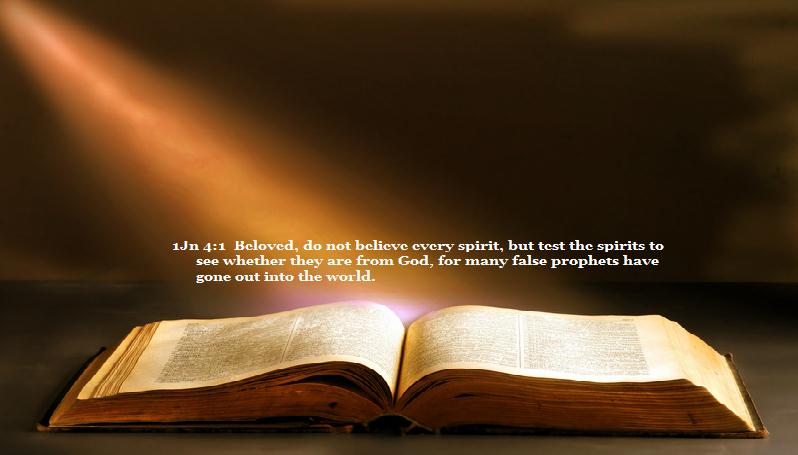
Beware False Prophets

Do not think it is the obvious that we can now who is a false teacher/prophet, it is those who profess to be believers who can lead you astray. Mat_7:15 “Beware of false prophets, who come to you in sheep’s clothing but inwardly are ravenous wolves.

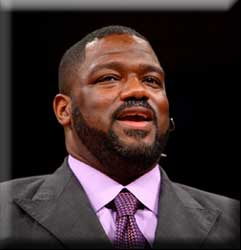
This is an excellent sermon and exposition done by Pastor Vodie Baucham.

Please listen here :

OR DOWNLOAD SERMON HERE

Voddie Baucham 

Some sermon exert noted I jotted down :
Though the culture at large has a problem with judging, Christians are not only allowed to do so, we are commanded to do so. In this portion of the Sermon on the Mount, Jesus informs us that we must learn to discern and expose false teaching and false teachers.

False prophets are not always easy to spot.D A Carson ” Warnings against false prophets are necessarily based on the conviction that not all prophets are true, that truth can be violated and that the gospels enemies usually conceal their hostility and try to pass them selves of as fellow believers” (Quote used by Voddie) Continue reading

POLL: Where do you stand on the issue of infant baptism?

Grant Swart

Infant baptism represents yet another controversial subject among many of those who regard themselves as being steadfastly of the Christian faith. It has continued to be divisive and a cause of much confusion ever since it started developing as a Christian sacrament over the first few hundred years of church history.

Infant baptism is sometimes referred to as, or can be confused with, a christening ceremony in which the baby is named and welcomed into the congregation. In certain instances the ceremonies are private and held between family members and close friends, but often it involves entire congregations and can be a very public affair. Christenings and infant baptisms generally require the infant to be sprinkled with water or to be bodily immersed in water. Neither of these are the same as the non-sacramental Continue reading

For Whom Did Christ Die? – The Children Of God

John 11:52 and not for the nation only, but also to gather into one the children of God who are scattered abroad.

By Don Fortner 

John11:52
Our great, sin-atoning Substitute laid down his life and died for the children of God. According to the prophecy of Caiaphas, Christ was to die, not for the nation of the Jews only, but to “gather together in one the children of God that were scattered abroad” throughout the Gentile world. Redemption and adoption belong to the same people. Those who are predestinated to adoption by Christ are said to have redemption in him through his blood (Eph 1:5,7). This blessing of adoption, in the full enjoyment of it, in the resurrection, is called “the redemption of the body”. The resurrection is called the redemption of our bodies because redemption, in so far as the application of it is concerned, will not be complete until our very bodies are redeemed from all the consequences of Adam’s fall (Rom 8:23Eph. 1:144:30). Continue reading

Christian Legalism (Part 3): The foolish ignorance of opposing God’s Grace

Grant Swart

“But we know that the law is good, if a man use it lawfully; Knowing this, that the law is not made for a righteous man, but for the lawless and disobedient “ (1 Tim. 1:8-9).

At the heart of Christian legalism is a denial of the truth of the Gospel, and therefore a denial of God’s Sovereignty, of His Son and of the work of His Holy Spirit. It places God’s people into cruel, oppressive bondage and replaces the perfection and completion of the salvific work of Jesus Christ, with sick, depraved human traditions. Speaking out against the error of legalism, as I have done previously in Parts 1 and 2 of this article, by accepting the example set by Jesus, in no way constitutes creating a licence to sin. There are no two things in the world more directly opposed to one another than law and grace.

Righteousness and our acceptance by God can never come by way of legalism. Neither can justification, nor sanctification. By no means do I intend to indicate hereby that true, saved believers are antinomian (against the law), which seems to have become a fashionable term being bandied about with much self-righteous zeal. The boundaries which govern that which constitutes true antinomianism are subject to a million varied interpretations, remain practically undefined and are all subject to human interpretation. However, many legalists seem to be under the impression that every true believer who opposes legalism and works based salvation, or for that matter is found to have committed sin, is by definition antinomian.  Continue reading

Smith Wigglesworth and New Apostolic Reformation (NAR) Run…….


Smith Wigglesworth – The Facts Continue reading

The Beatitudes and Christ

by Arthur Pink

The Beatitudes and Christ The Beatitudes and Christ Our meditations upon the Beatitudes would not be complete unless they turned our thoughts to the person of our blessed Lord. As we have endeavored to show, they describe the character and conduct of a Christian, and as Christian character is nothing more or less than being experimentally conformed to the image of God’s Son we must turn to Him for the perfect pattern. In the Lord Jesus Christ we find the brightest manifestations of the highest exemplifications of the different spiritual graces which are found, dimly reflected, in His followers. Not one or two but all of these perfections were displayed by Him, for Me is not only “lovely,” but “altogether lovely.” May the Holy Spirit who is here to glorify Him take now of the things of Christ and show them unto us.

First, “Blessed are the poor in spirit.” Most blessed is it to see how the Scriptures speak of Him who was rich becoming poor for our sakes, that we through His poverty might be rich. Great indeed was the poverty into which He entered. Born of parents who were poor in this world’s goods, He commenced His earthly life in a manger. During His youth and early manhood He toiled at the carpenter’s bench. After His public ministry had begun He declared that though the foxes had their holes and the birds of the air their nests, the Son of Man had not where to lay His head. If we trace out the Messianic utterances recorded in the Psalms by the Spirit of prophecy, we shall find that again and again He confessed to God His poverty of spirit: “I am poor and sorrowful” (Ps. 69:29); and, “Bow down thine ear, O Jehovah, for I am poor and needy” (Ps. 86:1); and again, “For I am poor and needy, and My heart is wounded within me” (Ps. 109:22). Continue reading

Does God So Love the World?

John MacArthur – Grace to You

Love is the best known but least understood of all God’s attributes. Almost everyone who believes in God these days sees Him as a God of love. I have even met agnostics who are quite certain that if God exists, He must be benevolent, compassionate, and loving.

All those things are infinitely true about God, of course, but not in the way most people think. Because of the influence of modern liberal theology, many suppose that God’s love and goodness ultimately nullify His righteousness, justice, and holy wrath. They envision God as a benign heavenly grandfather-tolerant, affable, lenient, permissive, devoid of any real displeasure over sin, who without consideration of His holiness will benignly pass over sin and accept people as they are. Continue reading