
Bible Q & A With John MacArthur
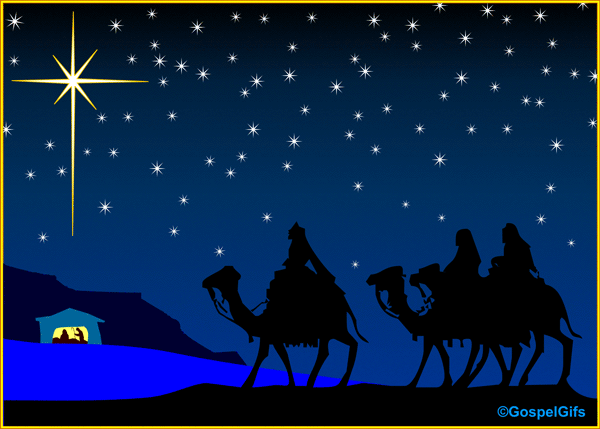
Few biblical stories are as well known, yet so clouded by myth and tradition, as that of the magi, or wise men, mentioned by Matthew. During the Middle Ages legend developed that they were kings, that they were three in number, and that their names were Casper, Balthazar, and Melchior. Because they were thought to represent the three sons of Noah, one of them is often pictured as an Ethiopian. A twelfth-century bishop of Cologne even claimed to have found their skulls.
The only legitimate facts we know about these particular magi are the few given by Matthew in the first twelve verses of chapter 2. We are not told their number, their names, their means of transportation to Palestine, or the specific country or countries from which they came. The fact that they came from the east would have been assumed by most people in New Testament times, because the magi were primarily known as the priestly-political class of the Parthians-who lived to the east of Palestine.

 For the Love of His Truth